 Gumroad



 Polar
 Kelviq
 Stan

United Kingdom seller taxes: digital income in 2026/27
 Tax year 2026/27
United Kingdom digital seller taxes generally start with the profit you make from trading, even when you serve customers overseas. For 2026/27, check Self Assessment, National Insurance and your own VAT position separately: EXNO handles the buyer’s consumption tax on its checkout, not your personal tax return.
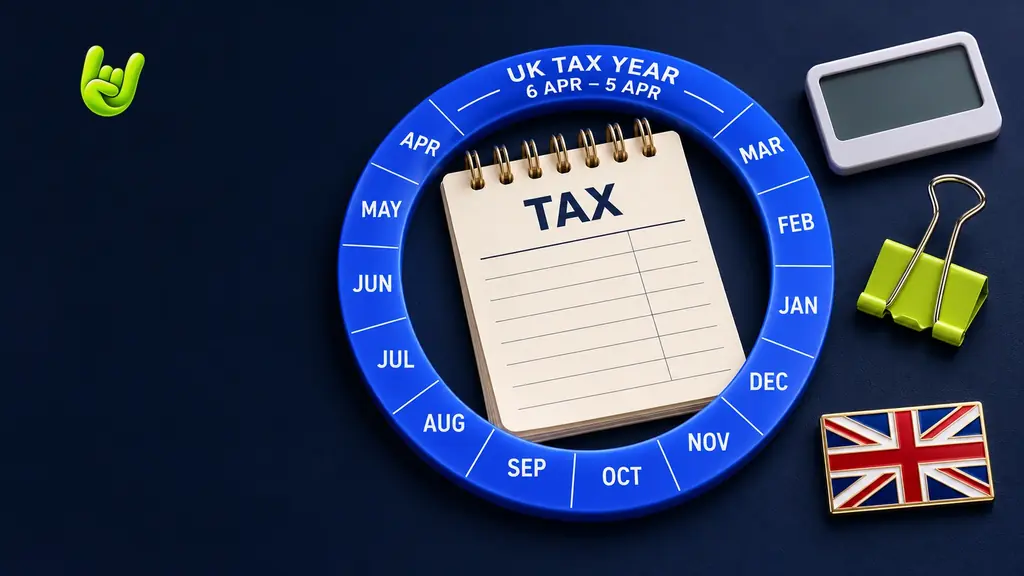
United Kingdom digital sellers: taxes at a glance, 2026/27
- Income
- Sole-trader profits enter Income Tax; residents normally report worldwide income. [1,3]
- Registration
- Generally register for Self Assessment when total gross trading income exceeds £1,000 in the tax year. Exceptions apply. [4,6]
- Income Tax rates
- England, Wales and Northern Ireland: 20%, 40%, 45%; Scotland: 19%, 20%, 21%, 42%, 45%, 48%. Standard Personal Allowance £12,570. [1,2]
- National Insurance
- Class 4: 6% and 2% above the applicable profit thresholds; Class 2 record protection depends on profits. [7]
- Buyer VAT or sales tax
- EXNO accounts for consumption tax charged to buyers through EXNO.
- Your VAT registration
- Test taxable turnover against £90,000, not net bank payouts; classify your supply to UK-established EXNO. [9,10]
- Annual filing
- Ordinary online return and balancing payment for 2026/27: 31 January 2028; additional MTD updates may apply. [17,20]
- EXNO payout currency
- GBP to an account in your own or registered company’s name.
Is selling digital products a taxable business?
Regularly earning from templates, software, recorded lessons or consulting can produce taxable trading profits in the United Kingdom. Your tax position follows the activity and your circumstances, not whether you call it a hobby, keep another job or leave earnings in a platform balance.
This guide focuses on individual sole traders. UK residents normally pay UK tax on income earned here and abroad; residence rules and specific reliefs can change that result. An overseas buyer does not, by itself, turn work performed through your UK business into exempt foreign income. [3,5]
The £1,000 trading allowance tests total gross trading income across your trades, before expenses, rather than the amount left in your bank. Eligible income at or below that amount may qualify for full relief, but exceptions and other reasons to file remain. Above it, compare claiming allowable actual costs with claiming the allowance instead; do not deduct both. [4]
Keep the distinction between business income and drawings clear. Paying your household bills from business funds does not create a business expense. A design subscription used for paid work may be relevant; a mixed personal/business bill needs its business portion identified. [8]
How do you register and recognize the MTD threshold?
You do not need to incorporate simply to sell online: a sole trader registers with HM Revenue and Customs, usually through Self Assessment. Separately check Making Tax Digital for Income Tax, because its qualifying-income threshold uses earlier gross income rather than this year’s profit or VAT turnover. [21]
- Record when trading starts. Keep income and cost evidence immediately, rather than waiting for a tax bill. Decide whether you are operating alone or through a different legal structure. [5]
- Use HMRC’s sole-trader registration route. Have your National Insurance number available. Already filing for another reason does not automatically register your new self-employment. Retain HMRC’s registration confirmation and tax reference. [6]
- Apply the notification deadline. If first required to file for 2026/27, ordinarily tell HMRC by 5 October 2027. If your obligation arose for 2025/26 and you missed 5 October 2026, act now rather than applying next year’s deadline. [17]
- Check digital reporting separately. Unless exempt, qualifying self-employment and property income over £50,000 in 2024/25 brings MTD from 6 April 2026. The corresponding tests are over £30,000 in 2025/26 for April 2027 and over £20,000 in 2026/27 for April 2028. [19]
MTD means compatible recordkeeping and quarterly updates, not four separate annual tax bills. An EXNO CSV supplies transaction evidence; it is not itself an HMRC filing or a declaration that your accounting software meets MTD requirements. [20]
A limited company changes the analysis: company profits and money taken by its owner require separate treatment. The sole-trader calculation below is not a Corporation Tax calculation or a recommendation to incorporate. [8]
How much Income Tax and National Insurance could you pay?
Your 2026/27 bill depends on annual profit, other income, available allowances and whether Scottish Income Tax applies. Income Tax and Class 4 National Insurance are separate calculations; the rate on your next pound of profit is not necessarily the effective rate on your entire business income.
| Income band, with standard allowance assumptions | Rate |
|---|---|
| Up to £12,570 Personal Allowance | 0% |
| £12,571–£50,270 | 20% |
| £50,271–£125,140 | 40% |
| Above £125,140 | 45% |
The allowance falls by £1 per £2 of adjusted net income above £100,000 and disappears at £125,140. Therefore, the simple band presentation does not give high earners an unreduced allowance. Employment income can already use the allowance and part of the lower bands. [1]
| Income range, assuming standard allowance where available | Rate |
|---|---|
| £12,571–£16,537 | 19% |
| £16,538–£29,526 | 20% |
| £29,527–£43,662 | 21% |
| £43,663–£75,000 | 42% |
| £75,001–£125,140 | 45% |
| Above £125,140 | 48% |
Class 4 is 6% on annual self-employed profits above £12,570 through £50,270, then 2% above £50,270. At profits of at least £7,105, Class 2 is treated as paid without a compulsory payment; below that, voluntary Class 2 is £3.65 a week for 2026/27. Check eligibility and whether a contribution improves your record before paying voluntarily. [7]
A simplified GBP sales-to-profit calculation
See EXNO’s fee structure.
- Subtract the combined £1,620 from £21,000 to find £19,380 of earnings, excluding buyer tax.
- Subtract £2,500 of other allowable business costs: assumed annual taxable profit is £16,796.80. This example uses actual expenses, not the trading allowance. [8]
- For an eligible England, Wales or Northern Ireland sole trader with no other income or adjustments, £16,796.80 − £12,570 = £4,226.80 taxable above the allowance. Income Tax at 20% is £845.36. [1]
- Class 4 on £4,226.80 at 6% is £253.61 rounded; combined illustrative liability is £1,098.97, before payments on account. [7,18]
This is a simplified example, not a forecast. It assumes the stated costs are deductible and all amounts belong in the same accounting period. Reconcile the contractual revenue and fee treatment with your accountant: do not report a net figure and deduct the same commission again.
What VAT does EXNO handle, and what remains yours?
EXNO’s buyer-facing VAT responsibility does not remove your separate UK VAT-registration test. EXNO is a UK company, so a UK creator must not treat the supply to EXNO as an export simply because the final buyer lives abroad or the order is priced in a foreign currency.
Customers purchase from EXNO as merchant of record. EXNO calculates, adds, collects and remits their applicable consumption tax, issues tax-number invoices to business buyers, and handles refunds and payment disputes; that buyer tax is not your income. For these EXNO transactions, you do not register in buyers’ countries to account for EXNO’s resale. Read the merchant-of-record distinction and EXNO’s payment responsibilities.
| EXNO handles | You handle |
|---|---|
| Consumption tax on EXNO’s sale to the buyer | Classification and value of your own supply to EXNO |
| Buyer invoices, refunds and payment disputes | Your tax registration, business records and applicable UK VAT returns |
| The EXNO checkout transaction | Obligations on independent sales through other channels |
For a UK-established business, registration normally becomes compulsory above £90,000 taxable turnover in the preceding 12 months, or when taxable turnover will exceed £90,000 in the next 30 days alone. Zero-rated turnover counts; exempt and out-of-scope supplies are different. The retrospective test requires notification within 30 days after the relevant month ends; the forward test has its own effective-date rule. [9]
Notice 741A’s general B2B rule locates a service where the business customer belongs, subject to exceptions. It does not specifically rule on your EXNO contract. Confirm the supply’s classification, taxable value, invoicing and threshold treatment with HMRC or a UK tax adviser rather than assuming a net payout is VAT turnover. [10]
The standard VAT rate is 20%, but qualifying electronic publications can be zero-rated; an audiobook or software product is not automatically an e-book. Mixed offerings need classification rather than applying one label to a whole catalog. [11,12]
How should GBP payouts and foreign-currency sales be recorded?
Receiving GBP does not eliminate the need to preserve foreign-currency transaction records. For a UK seller, EXNO is domestic; the question here is how your accounts translate and reconcile amounts, not whether an overseas customer or a dollar price creates a special foreign-income exemption.
HMRC accepts exchange rates used consistently with the relevant accounting rules, including reputable bank rates or its published monthly averages; its guidance does not mandate a single universal rate. Keep the currency, amount, date, source and method behind each conversion, and explain any difference between booked income and the later GBP settlement. [13]
Cash basis is the standard for eligible sole traders and partnerships: receipts and payments drive recognition, while traditional accounting uses a different basis. Do not assume moving an already-received balance into your bank always creates fresh income; establish when receipt occurs under your arrangement and accounting method. [14]
Save the GBP bank credit, payout reference and deductions alongside the matching sales. HMRC says to check whether your bank permits business transactions in the account you use; a personal account is not automatically suitable simply because you are a sole trader. [15]
Which records connect your EXNO sales to your tax return?
Keep enough evidence to reconstruct trading income, allowable costs and the movement into your bank, not just a year-end payout total. Self-employed records normally remain necessary for at least five years after the relevant 31 January submission deadline, with longer or different requirements in exceptional circumstances.
“You must make sure that: your records are accurate”
For an ordinary, on-time 2026/27 Self Assessment return, the retention rule means keeping records until at least 31 January 2033. VAT records normally require at least six years; keep the longer applicable period and retain evidence needed for an unresolved inquiry. [16,22]
- Order evidence: export EXNO’s sales CSV with date, product and status filters.
- Keep buyer tax apart from your earnings.
- Settlement evidence: match Payouts history and its total paid against bank statements. Use Home’s date/product views of earnings, net earnings and refunds to investigate differences, not to replace transaction records.
- Costs and adjustments: retain software receipts, contractor invoices, business-use calculations, currency evidence and the explanation for any correction. [8,15]
Keep a short reconciliation note for transactions around 5 April. The CSV uses UTC, so preserve the original timestamp and document your accounting cut-off rather than silently changing dates to make a bank statement match.
Which 2026/27 dates belong in your tax calendar?
The 2026/27 tax year runs from 6 April 2026 through 5 April 2027, but most annual filing and payment tasks occur afterward. Distinguish that return from the 2025/26 return due during this tax year, and add quarterly deadlines if Making Tax Digital applies.
| Date | Task |
|---|---|
| 31 January 2027 | Online 2025/26 return and balancing payment; first 2026/27 payment on account if applicable. |
| 31 July 2027 | Second 2026/27 payment on account if applicable. |
| 5 October 2027 | Ordinary first-time notification deadline for 2026/27. |
| 31 October 2027 | Ordinary paper 2026/27 return deadline where that filing route applies. |
| 31 January 2028 | Online 2026/27 return and balancing payment; first 2027/28 payment on account if applicable. |
| 7 August and 7 November 2026; 7 February and 7 May 2027 | 2026/27 MTD quarterly-update deadlines for those within the system. |
Payments on account normally include Income Tax and Class 4, with each installment based on half the preceding bill. They usually do not apply if the preceding bill was under £1,000 or more than 80% was collected outside Self Assessment. A first substantial January bill can therefore include both a balancing payment and an advance installment. [18]
Use your actual HMRC statement for the payable amount. Quarterly updates are reporting obligations; they do not replace the annual reconciliation or automatically turn those quarterly dates into payment dates. [18,20]
Which mistakes distort a UK digital seller’s tax position?
The expensive mistakes often come from applying the right number to the wrong base: bank receipts instead of turnover, profit instead of MTD qualifying income, or customer location instead of the location of your own supply. Label those measures separately before deciding which threshold you have crossed.
- Giving every platform its own trading allowance. The £1,000 test is across qualifying trades, not a fresh allowance for each catalog. [4]
- Using last year’s Scottish bands. The starter and basic limits for 2026/27 differ from 2025/26. [2]
- Calling all digital work zero-rated publishing. A downloadable software tool and an electronic book do not share a classification just because both arrive online. [12]
- Measuring VAT only at 5 April. The rolling turnover and next-30-days tests can trigger during the year. [9]
- Deducting fees twice. Reconcile the revenue basis and separate fee entries before transferring a platform net amount into tax software.
- Spending the whole first-year surplus. Leave room for payments on account, not merely the previous year’s balancing bill. [18]

Give a British storefront a public calling card
A UK illustrator can keep two kinds of links separate: a private receipt for the customer and a public destination for anyone who wants to browse the catalog. On the EXNO Pixel Wall, the second belongs beside an original image or a block of color.
A rectangle six cells wide and four high occupies 24 of the wall’s million pixels. At US$1 apiece, that is one US$24 purchase. Sellers can use earnings and others can pay by card; a rejected submission is refunded in full.

Frequently asked questions
These answers address common UK sole-trader situations rather than replacing a review of your full income and contracts. Start with the tax year, your residence and business structure, then distinguish a personal tax obligation from the consumption tax attached to an EXNO buyer’s order.
Do I get a separate Personal Allowance for my online business?
No. The Personal Allowance applies to your overall qualifying income, so a salary may already use it. Additional trading profits can consequently enter a higher band than a stand-alone example suggests. [1]
Can I claim the trading allowance and deduct EXNO fees?
Not for the same income when using the trading allowance instead of expenses. Compare the allowable-cost method with the allowance and keep the gross-income test separate from the resulting taxable profit. [4,8]
Does EXNO’s UK location mean my sale is automatically VAT-free?
No. The creator’s supply and EXNO’s onward sale require separate analysis. Review your contract, product classification and taxable turnover with HMRC or an adviser; an international final audience does not settle the domestic VAT question. [9,10]
Is an EXNO sales export enough for Making Tax Digital?
The CSV is useful evidence, but MTD requires the applicable digital records and submissions through compatible software. Check your qualifying income and exemption position before deciding whether the regime applies. [19,20]
Do Scottish sellers pay different National Insurance rates?
The distinct Scottish table here concerns Income Tax on non-savings, non-dividend income. The self-employed Class 4 calculation uses the UK National Insurance thresholds and rates, rather than substituting Scottish income-tax bands. [2,7]
General information, not tax or legal advice.
Sources
HMRC supplies the UK registration, VAT, National Insurance, currency and reporting rules used here; the Scottish Government’s current-rate page supplies the distinct Scottish bands. These official sources were checked on 19 November 2026, with 2026/27 figures distinguished from later reporting dates and scheduled MTD entry years.
- Income Tax rates, Personal Allowance and 2026/27 tax year· checked 19 November 2026
- Scottish Income Tax: current 2026/27 bands· checked 19 November 2026
- HMRC: residence and taxation of worldwide income· checked 19 November 2026
- HMRC: trading allowance and gross-income test· checked 19 November 2026
- GOV.UK: sole-trader responsibilities· checked 19 November 2026
- HMRC: registering as a sole trader· checked 19 November 2026
- HMRC: self-employed National Insurance, 2026/27· checked 19 November 2026
- HMRC: allowable business expenses· checked 19 November 2026
- HMRC: VAT registration and taxable turnover· checked 19 November 2026
- HMRC: place of supply of services, Notice 741A· checked 19 November 2026
- HMRC: VAT rates· checked 19 November 2026
- HMRC: electronic-publication zero rating· checked 19 November 2026
- HMRC: acceptable exchange rates for trading accounts· checked 19 November 2026
- HMRC: cash basis accounting· checked 19 November 2026
- HMRC: business records and bank evidence· checked 19 November 2026
- HMRC: self-employed record retention· checked 19 November 2026
- HMRC: Self Assessment filing deadlines· checked 19 November 2026
- HMRC: payments on account· checked 19 November 2026
- HMRC: when Making Tax Digital applies· checked 19 November 2026
- HMRC: Making Tax Digital quarterly timetable· checked 19 November 2026
- HMRC: MTD qualifying income before expenses· checked 19 November 2026
- HMRC: VAT record retention· checked 19 November 2026


Build a store with your records in order
Keep a clear tax calendar and a repeatable reconciliation alongside your catalog. When you are ready to sell digital products or services, start with an organized set of offers, a documented accounting method and the records you will need for your first return.











