 Gumroad



 Polar
 Kelviq
 Stan

Guide
Which digital product should you make first? Start with a buyer’s unfinished job
The strongest digital product ideas help a specific buyer finish a task they are already trying to do: prepare a class, quote a project, edit a recording or hand off a finished design. Shortlist a few offers you can legally create and realistically support, then test a small usable sample before building the full product. 78
Which digital product ideas solve a recognizable buyer task?
Start with a task someone already needs to complete, then choose a deliverable that makes that task easier to carry out. The fifteen ideas below are illustrative starting points, not proven markets: each names a buyer, something concrete to receive and a small test you could perform before expanding it.
Help someone plan
- Grant deadline calendar: for a small arts organization; a dated spreadsheet with official source links; verify one deadline against the funder’s page.
- Exhibition lighting worksheet: for an independent gallery organizer; a room-planning workbook; walk through one fictional room without claiming electrical or conservation advice.
- Community event weather plan: for volunteer coordinators; editable decision cards; rehearse a rain-related venue change.
- Research reading queue: for postgraduate students; a tagged reading tracker; retrieve one sample source by topic and review status.
Help someone teach
- Inclusive facilitation prompts: for workshop leaders; printable discussion cards with participation alternatives; trial one activity with volunteers.
- Spreadsheet chart clinic: for new office staff; a short recorded lesson and practice file; ask a learner to correct one misleading chart.
- Language listening exercise: for adult tutors; original recordings, transcript and questions; check every answer against the audio.
- One-off tool orientation: for a small team; a defined live training session and handout; rehearse its setup task with a beginner.
Help someone create
- Podcast transition cues: for independent producers; original short audio files and usage terms; test a transition under speech.
- Modular 3D display stands: for visualization artists; original model files with dimensions; assemble a sample scene in the stated software.
- Botanical border illustrations: for invitation designers; original transparent artwork; inspect edges on light and dark backgrounds.
- Documentary interview log: for editors; a timecoded logging template; find a sample clip from its recorded reference.
Help someone run a project
- Invoice scope worksheet: for freelance designers; a project-to-deliverable tracker; reconcile a sample milestone with its invoice description.
- Local exhibition venue dataset: for arts researchers; a dated, documented CSV; verify sample records and redistribution rights before inclusion.
- Asset filename checker: for small production teams; a benign script and test folder; flag a duplicate name without modifying source files.
How do you choose one idea worth developing first?
Filter ideas through evidence of demand, the alternatives buyers already use, your rights to the materials and the work required after each sale. Choose a small version you can test with the intended user rather than the idea with the longest feature list or the most fashionable format.
- Find the existing task. Ask potential buyers how they handled it last time and what remained difficult. Separate a polite reaction from evidence that the problem matters. 7
- Inspect alternatives. Compare free resources, manual work and paid offers. Browse EXNO Discover to study how related offers describe their audience, not as proof of demand or disclosed sales performance. 2
- Check permission and upkeep. Audit third-party assets and source data, then estimate support, corrections and refreshes. Public availability does not by itself establish redistribution rights. 8
- Test the smallest complete result. Give a representative user a sample and observe the intended task. Record confusion before expanding the product. 6
“Is there a desire for your product or service?”
Score the uncertainty before building the product
Compare ideas against evidence of a repeated need, a manageable first build, and a support burden you can sustain. A simple scoring sheet can reveal why an appealing idea deserves a smaller experiment, but it should organize your judgment rather than turn guesses into proof that someone will buy.
Use three ratings from one to five, with higher always better: stronger need evidence, faster build, and lighter support. Weight need twice: score = 2 × need + speed + support. The maximum is twenty. The examples below are fictional assessments, not customer research results.
| Specific idea | Need | Build speed | Low support | Weighted score |
|---|---|---|---|---|
| Printable workshop tool-check checklist with handwritten sign-off spaces | 4 | 5 | 4 | 17 |
| Audio pronunciation practice pack with transcripts and recorded examples | 3 | 3 | 4 | 13 |
| Custom inventory dashboard for one shop’s existing data | 5 | 1 | 1 | 12 |
The checklist scores 2 × 4 + 5 + 4 = 17. Its first experiment could be one usable sheet tested during a real workshop. For the audio pack, test a short lesson with intended learners before recording the series. For the dashboard, inspect a representative data sample and agree on one measurable task before accepting a custom build.
A high score cannot excuse missing rights to recordings, images, or source material. Nor does it replace a real prospective buyer: identify who needs the result and test that need before building. Revisit the ratings after each experiment.
Check EXNO’s product and delivery features to match the validated idea to a workable format, not to manufacture demand for an available tool.1
How do you test an idea before building the full product?
Look for a task people already spend time or money completing, then test a small usable version with someone who actually faces that task. Evidence comes from what they can accomplish, where they struggle, and whether they choose a clearly described pilot, not from collecting compliments about a polished mockup.
- Find the costly workaround. Ask how the task was completed last time, what failed, and what the person used instead. Compare existing alternatives and their prices. SBA’s planning guidance recommends investigating demand, competing options, and what customers pay, rather than treating enthusiasm as market size. 7
- Make one useful slice. Offer a functional worksheet, a short lesson with its exercise, or a small tested asset set. Label unfinished parts honestly. A low-fidelity preview should still let someone attempt the core task, not merely imagine a future product.
- Check the rights. Build your own expression of the idea and verify permissions for included text, images, code, and other components. A familiar concept is not permission to copy another seller’s implementation or redistribute their licensed assets. 8
- Observe, then invite. Ask the participant to complete the task without constant coaching. Record errors and missing instructions. Invite an opt-in pilot with a defined scope, price if any, and delivery date; do not invent preorders, testimonials, or customer counts to imply demand you have not established.
“Copyright protection extends only to expressions, and not to ideas”

Which responsibilities stay with you when you sell the idea?
You choose the problem, build the product, and remain responsible for its quality, rights, and promises; EXNO supplies the selling and payment infrastructure. Pick a delivery model you can maintain after launch, rather than turning every useful idea into a course, subscription, or ongoing service simply because those formats are available.
A downloadable reference pack can suit a bounded problem that buyers solve independently. Include instructions, supported formats, and a clear release version. EXNO’s private delivery makes the paid files available after payment, but it does not verify the accuracy of your spreadsheet, repair missing instructions, or grant rights to third-party content. Those checks belong in your production process. 16
Choose a hosted course when the learning sequence and lesson experience genuinely help. Choose a subscription only when you can sustain its continuing benefits and explain the renewal commitment. A service can be the better initial offer when buyers need individual judgment, but budget preparation, response time, and delivery capacity. Do not promise unlimited personal support merely to make a small product sound more valuable. 1
EXNO acts as merchant of record for checkout, customer transaction taxes, refunds, and payment disputes. That does not transfer responsibility for your content, fulfillment promises, or local business obligations. Write down which questions you will answer and show the buyer where to find the receipt or help if a paid download is missing. 45
Before setting a price, allow for production, support, and corrections as well as the platform’s charges. A higher price is not automatically a better business if it buys obligations you cannot reliably deliver. 3
Give your chosen idea a simple public signpost
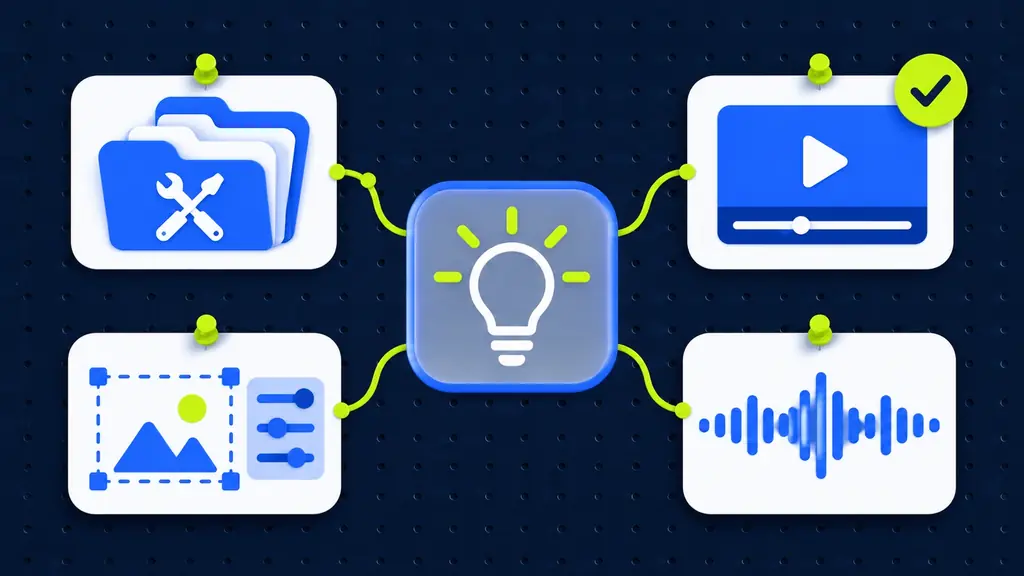
A small lightbulb makes a recognizable marker for an idea lab, but it does not tell someone which offer to try. If you give that marker a place on the EXNO Pixel Wall, link to a page showing one usable sample and ask visitors a question about the task it solves.
Budget separately for this experiment: one dollar buys one of the million available cells. A single card payment or a deduction from seller earnings pays for the chosen area. Add an optional title and destination, then allow for design review. Visits from the wall signal interest, not proven demand.

Questions that help turn an appealing idea into a workable offer
An idea becomes more useful when you can explain who needs it, what they receive and how you will know it works. These answers address early decisions about audience access, reusable work, permissions and maintenance without treating any format as automatically profitable or any marketplace listing as proof of sales.
What if I have useful skills but no audience?
Start with a buyer group you can reach respectfully for research, not a product that requires a large following before anyone can evaluate it. Ask about a recent task and offer a small sample for feedback where appropriate. Access to a few relevant testers can teach more than reactions from a large unrelated audience. 7
How can repeated service work become a reusable product?
Look for the stable part of the process: a checklist, worksheet, demonstration or reusable asset. Remove client information and confirm ownership or permission before repackaging anything created for someone else. Keep personalized judgment as a separately scoped service rather than pretending a template replaces it. 8
Does a similar free resource make my idea pointless?
No, but it changes what you must demonstrate. Your offer might provide a better fit for a particular workflow, clearer instructions or a tested combination of resources. Compare the buyer’s actual alternatives and explain the difference without claiming that convenience alone proves willingness to pay. 7
How much should I build before asking for feedback?
Build enough to demonstrate the promised result, not every possible variation. A single working worksheet or a short lesson with one exercise can reveal missing instructions. Label the sample’s limits so feedback concerns the intended product rather than features you never planned.
Can I sell information collected from public websites?
Check the source’s terms, applicable rights and any privacy concerns before collecting or redistributing material. A fact, a protected description and a licensed database are not interchangeable. Document provenance and permissions, and avoid assuming that public access authorizes commercial copying. 8
Should I promise updates to make the idea more attractive?
Only promise a maintenance scope you can sustain. A dated reference file, corrections to a specified release and ongoing refreshed data are different commitments. State the included period or update policy rather than using vague language that creates an indefinite obligation.
Which format should I choose if the same idea could be a PDF, tool or lesson?
Choose the format that helps the intended user complete the task with the least unnecessary setup. A checklist may fit an occasional review, while repeat calculations may justify a spreadsheet or script. Explain dependencies and test the delivered format rather than choosing the most elaborate option. 16
How can I judge whether the idea is affordable to maintain?
Estimate preparation, delivery, support and updates alongside selling costs, then examine a conservative sales scenario. More revenue is not the same as more profit or less work. Use current platform pricing and the actual commitment you promise, not an income target borrowed from another seller. 34
General information, not tax or legal advice.
References for researching demand and preparing an original offer
The SBA provides market research questions, while WIPO explains copyright principles and why permission depends on the work and circumstances. EXNO’s pages support the marketplace, preparation and selling references; the fifteen ideas and their tests are original illustrations, not demand rankings, verified customer outcomes or income forecasts.
- EXNO product and storefront features · Private digital file delivery, product editions, checkout links and storefront tools· checked 19 November 2026
- EXNO · The public marketplace where shoppers browse digital products by category· checked 19 November 2026
- EXNO seller pricing· checked 19 November 2026
- EXNO payments · The buyer transaction and EXNO’s merchant-of-record responsibilities· checked 19 November 2026
- EXNO Help Center · Seller and buyer workflows, including accessing purchased digital products· checked 19 November 2026
- EXNO: selling digital products · Publication and delivery steps after choosing a viable idea· checked 19 November 2026
- U.S. Small Business Administration: plan your business · Demand, existing alternatives, saturation and primary research questions for assessing an opportunity· checked 19 November 2026
- World Intellectual Property Organization: copyright FAQ · Copyright protects expressions rather than ideas and does not confer rights to copy others’ materials· checked 19 November 2026


Choose a small promise you can demonstrate
Pick one buyer task, prepare a complete sample and ask a relevant person to try the intended result. When you can explain the deliverable, its requirements and the work you will maintain, create the offer and refine it from evidence rather than adding unrelated ideas to the package.
Keep reading
Guide
How to add a product to your EXNO store
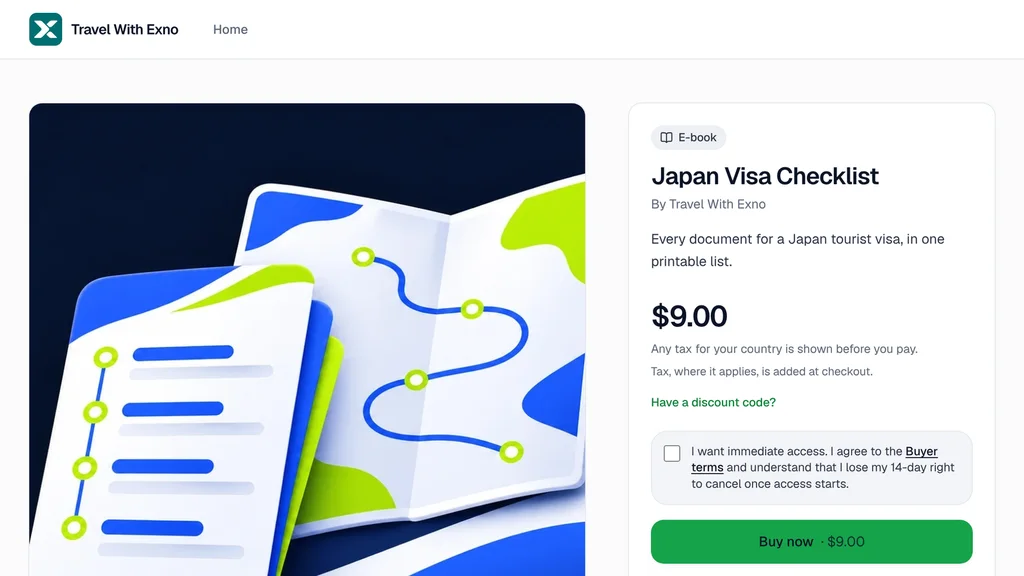
Adding a product takes a few minutes: you create it, write the page buyers see, set a price, add a cover and the files buyers get, and publish. The clips below show every step in a real EXNO store, Travel With Exno, as it adds a Japan visa checklist.
Read the guide
Guide
Where should you sell your digital products?
The best platform to sell digital products depends on what you deliver, how buyers find it, and who should handle the transaction. Shortlist Etsy for original digital designs, Shopify for a shop that also ships goods, Gumroad for direct creator sales, and EXNO for a mixed digital catalog with a storefront and marketplace.
Read the guide
Guide
What to do when a buyer disputes a digital product sale
Chargebacks on digital products happen when a buyer disputes a card payment through their card issuer rather than simply requesting a refund. On EXNO, submit the evidence for each case through the Disputes page; EXNO adds the order records and handles the response, while the disputed sale’s earnings wait for a decision.
Read the guide