 Gumroad



 Polar
 Kelviq
 Stan

Guide
What does a customer buy with a digital product license?
A digital product license tells the buyer who may use a file, for which projects, and what may be delivered to someone else. Selling a copy is not the same as transferring copyright. Name the allowed people, uses and outputs before checkout, then put the same terms in the download. A label such as “commercial” cannot answer those questions by itself. 786
Define the permitted use, not just the license label
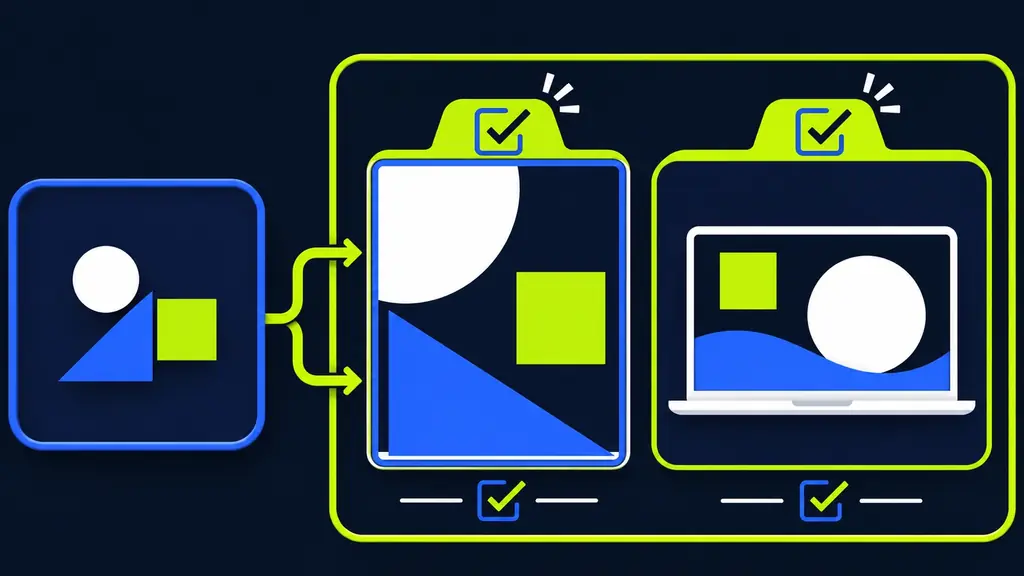
A personal license and a commercial license should tell buyers what they may do with the work, not merely which price to choose. Explain the permitted user, project and output, then distinguish using the asset in a finished result from redistributing the editable file or claiming ownership of its copyright.
These are proposed scope decisions, not universal definitions: a classroom, charity, client project or internal company presentation may need different permission under different terms. A paid license can still be narrow, and permission for commercial use does not inherently mean exclusivity or an assignment of ownership. 78
| Buyer’s intended use | Permission to describe | Boundary to clarify |
|---|---|---|
| Print an illustration at home | Personal display and permitted copies | Whether gifts or public display are included |
| Create a client’s presentation | Client work and delivery of the finished deck | Whether editable assets may pass to the client |
| Use a worksheet across a teaching team | Named educators, learners or organizational scope | Staff sharing versus public redistribution |
| Sell goods carrying a design | Merchandise use and any stated production limit | Finished goods versus resale of the design file |
Once those differences are real, use the EXNO product and edition features to present the choices clearly. A selectable edition is a way to communicate an offer, not a substitute for writing its permissions or verifying that you can grant them. 1
Check every ingredient before promising rights to someone else
The rights you sell must fit the rights you actually hold, including restrictions attached to photographs, fonts, illustrations and other ingredients. Build a short asset inventory before publishing an edition, so permission to use a component in your own project is not mistaken for permission to redistribute it to customers.
- Identify the source. Record what you created, what collaborators contributed and what came from third parties; keep the relevant permission or license version.
- Check the delivery form. Permission for a finished image may differ from permission to include an extractable font or stock photograph in an editable template.
- Preserve third-party terms. CC BY 4.0 permits commercial reuse under its conditions, including attribution, and prohibits restricting recipients’ licensed rights in that material. Do not relabel it as your exclusive proprietary asset. 9
- Resolve exclusions. CC BY-NC 4.0 limits its grant to noncommercial uses; your own commercial label cannot expand that grant. Obtain separate permission where needed or replace the component. 10
“Once you are the right owner of a work, you can provide authorization for others to use or exploit your work.”
Describe the permitted project, people, and files separately
A useful license tells buyers what they may create, who may work with the materials, and whether source files may leave their organization. Personal and commercial labels alone cannot answer those questions, so explain the actual permissions beside the offer and identify any third-party terms you cannot change.
The following hypothetical grants illustrate choices for original materials you control. Their numbers are not market norms, and enforceability depends on applicable law and the agreement; do not transplant them over an existing open license.
| Offering | Example grant | Source-file boundary |
|---|---|---|
| Personal printable artwork | One buyer may make three household display prints; no business promotion. | No redistribution of the downloadable artwork. |
| Commercial presentation template | One purchasing designer may create one finished presentation for one named client brand. | Client receives the finished PDF, not a reusable editable template; source handoff needs separate permission. |
| Internal design toolkit | Four named teammates within one organization may use the toolkit for its own brand. | Authorized teammates can use the working files internally; contractors and public source sharing are not included. |
Suppose the toolkit project involves three employees and two contractors. Five people need access, so a four-seat grant does not cover the headcount; additionally, the two contractors fall outside the stated internal scope. Buying one more seat would not by itself resolve that second problem. Ask for terms covering both the people and their roles before sharing files.
A commercial end-product permission does not necessarily allow selling the underlying assets. Conversely, a lawful open license may already permit uses your product description cannot withdraw. Identify components and their licenses rather than presenting one restrictive paragraph as overriding everything in the download.
Keep payment and permission distinct. Consult EXNO’s pricing for the transaction, but state the license grant in the offer itself: a larger payment does not automatically add seats, clients, or redistribution rights.2
Does permission to sell finished work include sharing the source?
Permission to use an asset in a finished product does not necessarily include permission to redistribute the asset itself, so describe those activities separately. Check the actual license for each component before promising editable files, commercial reuse, or redistribution, and do not replace third-party permissions with a broader claim of your own.
For example, a proprietary illustration license might allow a finished client brochure while excluding distribution of the original illustration library. That is an example of a possible contract boundary, not a universal rule. Ask whether buyers receive a finished output, editable source, or a reusable asset, and confirm that your upstream permissions support that delivery.
CC BY 4.0 is different from a source-restricted proprietary license: it permits sharing and adaptation, including commercial use, subject to its terms. When sharing, retain required attribution information, provide the license reference or link, and indicate modifications. Do not add restrictions that remove the permissions the license grants. 9
CC BY-NC 4.0 limits the licensed sharing and adaptation to NonCommercial purposes. Its definition focuses on whether the use is primarily directed toward commercial advantage or monetary compensation, not simply whether the user calls themselves a business. For a commercial use outside that grant, obtain separate permission rather than assuming attribution solves the restriction. 10
“Patent and trademark rights are not licensed under this Public License.”
What does EXNO handle, and what must the creator define?
The creator defines the product’s permissions, verifies ownership and third-party rights, and supplies files that match the offer; EXNO handles the customer transaction and private delivery infrastructure. Keep the license visible in the product description and delivered package so a successful checkout does not leave the buyer guessing what they may do.
Distinguish editions by meaningful rights or contents, not vague labels alone. If an edition permits client work, explain any relevant limits and whether the client receives editable assets. EXNO’s product editions and private file delivery can present and deliver your offer, but they do not create permission to sublicense material you do not control. 16
Include a dated license with the exact release and preserve the version supplied at purchase. Test the delivered package as a buyer: verify that the license opens, corresponds to the selected edition, and identifies any separately licensed components. Private access is a delivery mechanism, not proof of copyright ownership or a technical guarantee against copying.
EXNO acts as merchant of record for payments, customer transaction taxes, refunds, and payment disputes. The seller still needs to answer product-specific questions and correct inaccurate descriptions. If the issue concerns purchase access or a transaction, direct the buyer to the EXNO Help Center rather than requesting payment credentials or account passwords. 34
EXNO’s refund policy states that a refunded purchase ends access to the product and its license. Do not misrepresent that platform policy as revoking independently granted, irrevocable CC permissions for compliant users, or as remotely erasing downloaded files. Identify which purchased entitlement ended and which separately licensed components retain their own terms. 5910
Let the artwork suggest choice without claiming exclusivity
Layered cards with small rights tabs can give this topic a recognizable visual identity while leaving the actual permissions in readable product terms. The EXNO Pixel Wall is an optional place to promote that artwork, not a rights registry, ownership certificate or substitute for a buyer’s license.
Select space within a grid of one million cells at $1 each, paid once by card or EXNO earnings. Artwork goes through review and approval; a title and destination URL are optional. Use imagery you may publish and link to the public offer rather than private customer files.

Answer the buyer’s intended use before recommending an edition
License questions become easier to resolve when the buyer describes who will use the work, what will be delivered and whether anyone else receives the underlying files. These answers distinguish common permission questions without assigning universal meanings to personal or commercial labels, or replacing advice on a particular agreement.
Does buying the commercial edition make me the copyright owner?
A license permits specified uses; an assignment transfers rights rather than merely permitting use. Buying a download or choosing an edition should not be treated as an ownership transfer unless the actual agreement establishes one. Check the terms and obtain appropriate advice for an intended transfer. 7
Can a freelancer use a personally purchased asset for a client?
Look for permission covering client work rather than relying on who paid for the file. Clarify whether the client receives only a finished output or reusable source material, and whether either party needs a separate license. Ask before delivery if the published terms do not answer that use.
Does a school or nonprofit automatically qualify for personal use?
No universal label resolves that question. Read the applicable license and describe the intended distribution, audience and organizational use. For CC BY-NC material specifically, the definition concerns commercial advantage or monetary compensation rather than simply attaching a category to the purchaser. 10
Can commercial buyers resell the original download?
Do not assume that permission to make a commercial end product includes permission to redistribute its source assets. State separately whether buyers may sell finished outputs, share editable files or sublicense any component. The answer must also respect third-party licenses included in the package. 89
Can I sell a package containing CC BY material?
CC BY 4.0 allows commercial reuse subject to its conditions, including appropriate attribution and indication of changes. Identify the covered material and preserve recipients’ licensed rights instead of placing incompatible restrictions over the whole package. Other rights, such as privacy or trademark rights, may still need separate consideration. 9
Can I remove a public Creative Commons license later?
Do not promise that changing a listing retracts permissions already granted under an irrevocable CC license. Those permissions remain subject to that license’s conditions, including its termination provisions for noncompliance. Review the consequences before applying a public license, especially if you also sell separate permissions. 910
What if the purchased edition does not cover my intended project?
Ask the creator whether suitable permission is available before using the asset beyond its terms. Do not assume an automatic upgrade, credit or retroactive authorization. If the problem is the delivered product or how it was described, use EXNO’s support process and applicable refund policy rather than treating every mismatch as an unconditional refund. 35
Where can I get help with an order rather than a legal interpretation?
The EXNO Help Center is the starting point for purchase and access assistance. Give support the order details and explain the practical problem, while directing unresolved permission questions to the rights holder. Platform assistance does not turn an ambiguous license into legal clearance. 3
General information, not tax or legal advice.
Separate platform tools from copyright and license terms
WIPO explains copyright ownership, licensing and the need to examine permission for protected material, while the Creative Commons legal codes define those particular public licenses. EXNO’s sources describe product presentation, buyer support and refunds; they do not establish a universal personal-use definition or certify ownership of assets uploaded by a seller.
- EXNO: product features · Product and delivery options for presenting different offers· checked 19 November 2026
- EXNO: pricing · Transaction costs are separate from copyright permissions· checked 19 November 2026
- EXNO Help Center · Purchase and delivery support, not clearance of a seller’s rights· checked 19 November 2026
- EXNO: payments · EXNO’s documented merchant-of-record scope· checked 19 November 2026
- EXNO: refund policy · Access and the license under a refunded EXNO purchase end· checked 19 November 2026
- EXNO: selling digital products · Preparing a product listing and matching deliverables to its promise· checked 19 November 2026
- WIPO: IP assignment and licensing · Transferring intellectual property ownership versus granting permission to use it· checked 19 November 2026
- WIPO: copyright FAQ · Scope of copyright protection, ownership and permission for uses· checked 19 November 2026
- Creative Commons: CC BY 4.0 legal code · Commercial sharing and adaptation, attribution conditions, and excluded rights· checked 19 November 2026
- Creative Commons: CC BY-NC 4.0 legal code · NonCommercial restriction, credit and other applicable terms· checked 19 November 2026


Make each edition a permission the buyer can understand
Prepare the asset inventory and describe the uses each edition allows before deciding how to present it for sale. Match the listing, included license text and delivered files, and resolve any third-party restrictions so your offer does not promise broader permission than you can actually provide.
Keep reading
Guide
How to add a product to your EXNO store
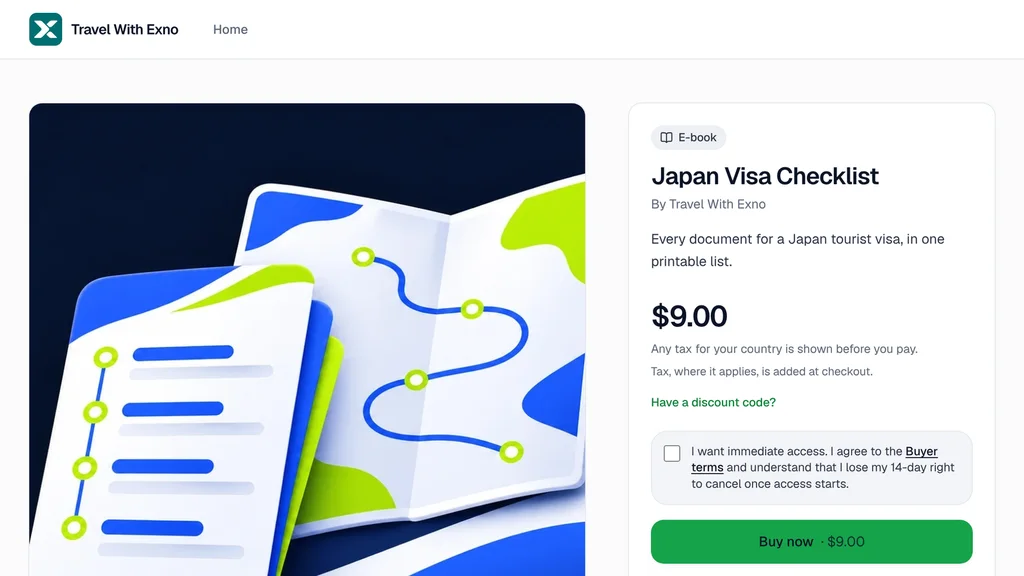
Adding a product takes a few minutes: you create it, write the page buyers see, set a price, add a cover and the files buyers get, and publish. The clips below show every step in a real EXNO store, Travel With Exno, as it adds a Japan visa checklist.
Read the guide
Guide
Where should you sell your digital products?
The best platform to sell digital products depends on what you deliver, how buyers find it, and who should handle the transaction. Shortlist Etsy for original digital designs, Shopify for a shop that also ships goods, Gumroad for direct creator sales, and EXNO for a mixed digital catalog with a storefront and marketplace.
Read the guide
Guide
What to do when a buyer disputes a digital product sale
Chargebacks on digital products happen when a buyer disputes a card payment through their card issuer rather than simply requesting a refund. On EXNO, submit the evidence for each case through the Disputes page; EXNO adds the order records and handles the response, while the disputed sale’s earnings wait for a decision.
Read the guide