 Gumroad



 Polar
 Kelviq
 Stan

Selling guide
How to sell meal plans and recipes that work in a real kitchen
To sell meal plans online, turn tested recipes into a usable shopping list, a cooking sequence, and a clear account of how many meals each batch makes. A recipe collection lets the buyer choose what to cook; a plan also answers what to buy and what to make next. Sell that planning work, not a promise about the buyer’s health.
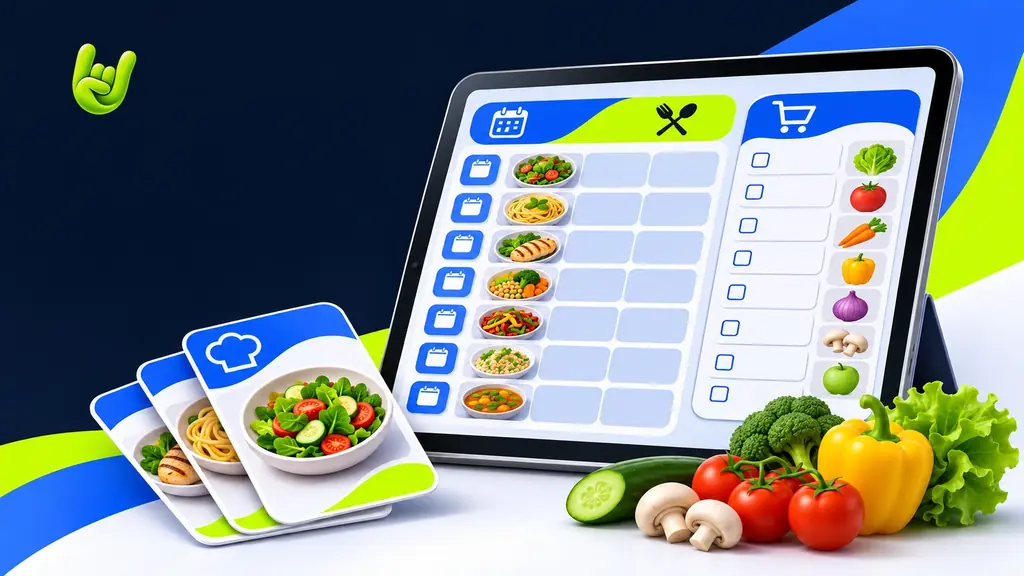
What makes a meal plan worth buying instead of a recipe pack?
A recipe pack gives a cook choices, while a meal plan does some of the deciding: which dishes go together, how their ingredients overlap, what equipment they use, and when to shop or prepare them. Pick the kind of help you want to offer, then show one example that demonstrates it.
| Format | What the buyer gets | A useful preview |
|---|---|---|
| Recipe collection | Independent cards around a practical theme, such as one-pan dinners, with yields, equipment, and individual ingredient lists. | One complete card showing how you measure ingredients, write instructions, and present the finished dish. |
| Scheduled meal plan | A calendar, linked recipe cards, a consolidated shopping list, and notes identifying what is made once and used twice. | Two adjacent dinners and the matching part of the list, so someone can see exactly how the second dinner uses the first purchase. |
| Flexible planner kit | A planning template, a worked example, and recipe cards the cook can select and rearrange. | An empty copy beside a filled one. Say whether moving a meal updates the shopping list or whether the user does that by hand. |
Define servings and coverage without implying a nutritional prescription. “Five dinners for two, with lunch leftovers on two days” answers a practical question. It is not an assertion that the plan meets every reader’s dietary needs. Note whether pantry staples are included in the grocery list and whether breakfast, snacks, or drinks are outside the pack.
How do you test the recipes and reconcile the shopping list?
Test each dish as written, then test the shopping list as a separate product. A good recipe can still make a bad plan if its quantities use the wrong units, its prep assumes an ingredient you never listed, or it promises leftovers that were already counted as dinner.
- Write down what was actually measured. A can’s total weight, drained weight, and the weight you use are not interchangeable. Say whether ingredients are dry, cooked, peeled, chopped, or measured before draining. Separate active prep from total elapsed time.
- Build an ingredient ledger. Suppose two dinners use 150 g and 250 g of dry pasta. The plan requires 400 g; buying a 500 g package leaves 100 g dry, not a prepared serving. If a third dinner changes, update the ledger as well as the card and shopping list.
- Count batch yields twice. A dish yielding four servings can supply dinner for two and leave two servings, not four more. Record when the reserved portion is used and what must be done to store or reheat it safely. Do not invent a universal shelf life for the whole file; use official guidance appropriate to the food and location.1
- Run the kitchen-counter test. Give a cook the exported PDF and the list, not your authoring notes. Ask them to assemble the ingredients, identify the pan size, and find the first prep task. Record where they pause or need a conversion. Retest material substitutions before recommending them.
Package a legible phone edition and a low-ink shopping list if each earns its place. Keep quantities as selectable text rather than embedding them in a photograph. If pages can be printed separately, repeat the recipe name and yield on each page so the cook can reassemble the stack.
How do you handle ingredient warnings, permissions, and health claims?
Tell buyers what ingredients and substitutions you tested and what each swap changes, without labeling a dish safe for everyone with an allergy. Write the instructions and take or license the photographs yourself, and keep the marketing focused on cooking and planning rather than medical outcomes.234
Explain the swap, not just the label
If a recipe uses tahini, naming sesame is more useful than putting a leaf icon beside the dish. A different sauce may introduce a different allergen. List compound ingredients and ask buyers to check the actual package every time because formulations can change. A vegan label is not an assurance against allergen cross-contact in ingredients or in the kitchen.25
Review food handling separately from taste testing. WHO’s consumer guidance calls for cleanliness, separating raw and cooked foods, sufficient cooking, safe holding temperatures, and safe water and ingredients. Where a dish depends on a temperature or storage limit, check the relevant food-safety authority and cite the instruction alongside the recipe.1
Sell cooking help, not treatment
Describe the cooking time, required appliances, tested yield, or number of recipes. Avoid promises to treat a condition or produce weight change. A stock photo, testimonial, or headline can imply such a claim even when the description avoids it. A general menu is not a substitute for an individualized plan from an appropriately qualified nutrition or healthcare professional.46
Keep a rights record for every photo and illustration. Under U.S. Copyright Office guidance, a bare ingredient list is different from protectable original writing, photography, or illustration. That distinction is not permission to copy another cook’s explanatory text or pictures; write your own account of your tests and check the rights where you sell.3
How do you price, deliver, and market your cooking files?
Price according to the decisions you have already made for the reader: a collection supplies the recipes, but a menu with a tested sequence, matched shopping list, and scaling notes does more work. Use previews and a clearly labeled checkout to show that difference before the customer chooses between editions.
- Build two genuinely distinct editions. For example, six stand-alone cards might cost $9, while a two-week menu with cards, shopping lists, and a prep calendar might cost $20. Show why the extra $11 buys planning, not merely a different cover. These are hypothetical prices, not benchmarks.
- List the files on EXNO. Upload the digital products, not meals or ingredient boxes. In the Store Builder gallery, show a sample card, a section of the weekly list, and the phone layout at readable size. State household size, meals covered, and any equipment the plan assumes.
- Match checkout to the edition. Use a product-specific Checkout Builder design. Repeat the edition name on the post-purchase page and point out which file belongs on the phone and which is meant to print. Test that the calendar and shopping list open independently.
- Promote the right follow-up. Offer one complete sample card so readers can judge your style. In a later campaign, send the two-week collection to an interested segment instead of presenting a purchased week as a new product to the same buyer. Use the product bundle guide for collections with overlapping contents.
EXNO handles applicable buyer transaction taxes, refunds and disputes as merchant of record. Standard sales: 7%. Discover sales: 7%. Additional fees may apply to payment processing, payouts and other transactions. See the Seller Agreement for current fees and terms. Eligible earnings follow the published payout schedule and account requirements.
Put a recipe-card corner on the Pixel Wall
A cookbook often has a little signature: the checkered edge on your recipe cards, the color of your kitchen notebook, or the bowl you draw beside every dish. That small detail can stand on its own as an image or color on the EXNO Pixel Wall, with a title and an optional link.
One payment covers the rectangle at $1 per pixel. To support EXNO’s growth, choose a space for your kitchen signature.
Frequently asked questions
Before buying a menu, people want to know how much shopping it requires, whether their household can use it, and what happens when they change a dish. Answer those questions in the same practical language as the recipe cards, and distinguish culinary preferences from questions about a person’s health.
Do I need to sell a full week of meals?
No. A pack of individual dinners or a weekend prep plan can be more useful than an incomplete seven-day menu. State precisely which meals the pack covers and whether any repeat as leftovers.
Should I include a cost per serving?
Only if you can show what prices, package sizes, date, location, and yield you used. Distinguish the amount consumed from what the cook must spend to buy the packages. If prices are too variable, an ingredient list and quantities are more defensible.
Can I call a recipe allergy-safe after replacing one ingredient?
No single ingredient substitution establishes that a recipe is safe for a particular person. Other components and shared equipment can introduce allergens, and product labels can change. Describe the tested swap and direct readers to verify their ingredients.25
What if a customer requests a plan for a medical condition?
Explain that the product is a general cooking resource, not a clinical service. Refer individualized dietary questions to an appropriately qualified professional instead of diagnosing a need or prescribing a menu in product support.6
How do I handle a corrected ingredient quantity?
Update the recipe, consolidated list, prep notes, and any worked example that uses the quantity. Add a revision date and identify the exact recipe and ingredient so someone with an older download can see what changed.
General information, not tax or legal advice. This guide is not medical or personalized nutrition advice.
Sources
These sources support the food-handling, ingredient, copyright, and advertising distinctions used in this guide; they are not a dietary assessment or approval of any menu. Check food-specific cooking and storage guidance before printing instructions, and apply the rules relevant to the locations where the product is marketed.
- World Health Organization: principles for safer food handling· checked 20 November 2026
- Food Standards Agency: ingredient checks, cross-contact, and the limits of vegan labeling· checked 20 November 2026
- U.S. Copyright Office: recipe ingredients, original expression, and photographs· checked 20 November 2026
- Federal Trade Commission: evidence for express and implied health claims· checked 20 November 2026
- Food and Drug Administration: why product labels need checking after ingredient changes· checked 20 November 2026
- World Health Organization: population guidance and variation in individual dietary needs· checked 20 November 2026


Start with a menu someone else can shop from
Hand a test cook just the shopping list and two recipe cards, then ask what they would buy and what they expect to have left. When their answers agree with your tested quantities, you have a useful preview, a clearer product description, and a good reason to put a price on the plan.
Keep reading

Selling guide
How to sell 3D model packs that survive a buyer’s first import
To sell 3D models, define the buyer’s use, test the exported asset in that environment, and package the geometry, textures, documentation and license together. Sell the result as a digital download on EXNO. A studio buying modular game scenery needs different evidence from a designer buying a still-render prop or a maker buying a printable part.
Read the guide
Selling guide
How to sell finished AI-assisted art without overstating the rights
To sell AI art, start with a finished visual product you created or have permission to sell, check the model and asset terms, and give buyers accurate files and usage terms. A customer purchasing a background set should know its pixel dimensions, what you edited, what they can use it for, and whether they are buying images or a tool that makes them.
Read the guide
Selling guide
How to package AI automation templates buyers can run themselves
To sell n8n templates, package an original workflow with its input format, setup instructions, a safe sample, and a result the buyer can check before enabling it. Make and Zapier use different ways to share automation, so sell the edition you actually tested. The buyer supplies their own authorized accounts and keys; the download is not a running service.
Read the guide