 Gumroad



 Polar
 Kelviq
 Stan

Selling guide
From camera roll to licensed photo download: a photographer’s guide
To sell photos online, choose what the buyer may do with each image, export files at the promised size, and display the license and an accurate preview before checkout. A household printing one photograph, a newsroom illustrating a story and a business running an ad need different permissions, even if they ask for the same JPEG. EXNO delivers the digital edition you list, not a framed print or an automatic copyright transfer. 178
What use should your photo license actually cover?
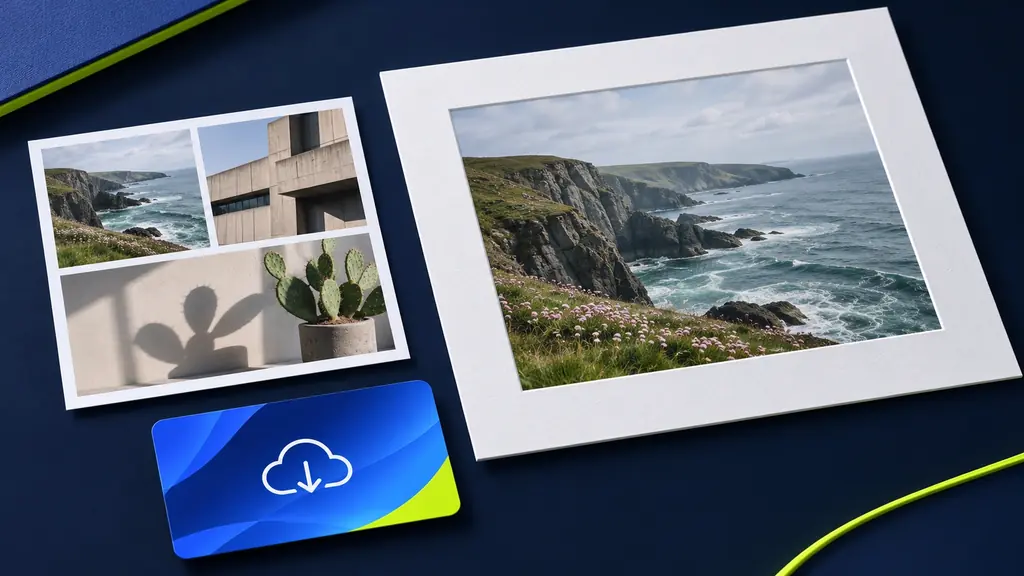
Sell a usable image file with clearly bounded permission, not an undefined promise of ownership. An editor documenting an event, a campaign designer, a home print buyer and a business refreshing its website need different crops, context and rights, even when they are considering the same photograph.
| Buyer | Digital deliverable | License question |
|---|---|---|
| Documentary editor | Captioned image with capture date and factual context. | Which publication, editorial use and credit? |
| Commercial campaign team | Approved advertising crops. | Which media, territory, duration and permissions? |
| Fine-art print buyer | Print-ready download, not a shipped print. | What personal printing is permitted? |
| Website or brand team | Coordinated landscape and portrait image pack. | Which business, channels and client reuse? |
These are illustrative offers, not stock-marketplace approvals. Date the license version and record exclusivity, alterations and redistribution limits. In the United States, the photographer is generally the initial copyright owner, not the depicted person; work-made-for-hire exceptions mean taking the photograph does not always establish ownership. 7
“copyright protects original works of authorship, including original photographs”
How do you check the files and permission record?
Prepare the actual customer exports alongside a rights record for each image, then review both before publishing. Check focus, cropping, color and dimensions at the intended output size, but also inspect embedded information: a polished JPEG can still contain an incorrect copyright credit or a private location.
- Test the export. State pixel dimensions, format and color profile. Inspect web crops on a screen and proof the promised print size; confirm the print provider’s requirements rather than treating a resolution label as a quality guarantee. 9
- Review permissions separately. Check identifiable people, protected artwork and property against the intended use and applicable law. Adobe Stock’s June 2026 model and property release guidance illustrates its submission requirements, not a universal release rule or EXNO policy. 812
- Inspect exported metadata. Verify creator, copyright and caption fields. Remove sensitive GPS information where appropriate; Lightroom Classic provides export metadata controls, while IPTC defines fields for descriptive and rights information. 910
Price the photograph’s permitted use, not just the download
Separate a personal print download from business publishing and a defined campaign license, even when each starts with the same photograph. Buyers need to know where the image may appear, who may use it, and how long permission lasts before they can judge whether the price fits their intended use.
These fictional prices illustrate rights-based packaging, not market values. Offer only permissions supported by your copyright, releases, and other necessary clearances.
Standard sales: 7%. Discover sales: 7%. Additional fees may apply to payment processing, payouts and other transactions. See the Seller Agreement for current fees and terms.
Specify cropping, attribution, renewals, and whether an agency may handle the file. Campaign permission does not automatically transfer copyright or create exclusivity. Any exclusive arrangement needs explicit terms and a check of earlier licenses.
How to launch your photo collection on EXNO
Show buyers a rights-cleared preview of the collection, then deliver the licensed image files with explicit permissions and a recognizable version. Test the downloaded edition rather than judging only the gallery: buyers need the promised photographs, resolution, and terms, not merely an attractive contact sheet.
- Identify the licensed edition. List the included photographs, supplied pixel dimensions, file formats, and permitted uses. Describe exclusions clearly; buying image files does not automatically transfer copyright or unrestricted resale rights.
- Separate preview from purchase. Upload a low-resolution contact sheet and intentional, rights-cleared samples. Use EXNO’s product presentation and private delivery for the versioned native-resolution files and matching terms. 1
- Follow the buyer route. Test the collection’s payment link, confirm the edition description, and retrieve the paid package without seller access. Check that public samples have not replaced the promised files. 1
- Inspect the delivered photographs. Open the downloaded edition and compare filenames, dimensions, and image count with the listing. Confirm the license is included. Private delivery controls initial access; it does not prevent copying after download.
How can you show exactly what will print or fit on screen?
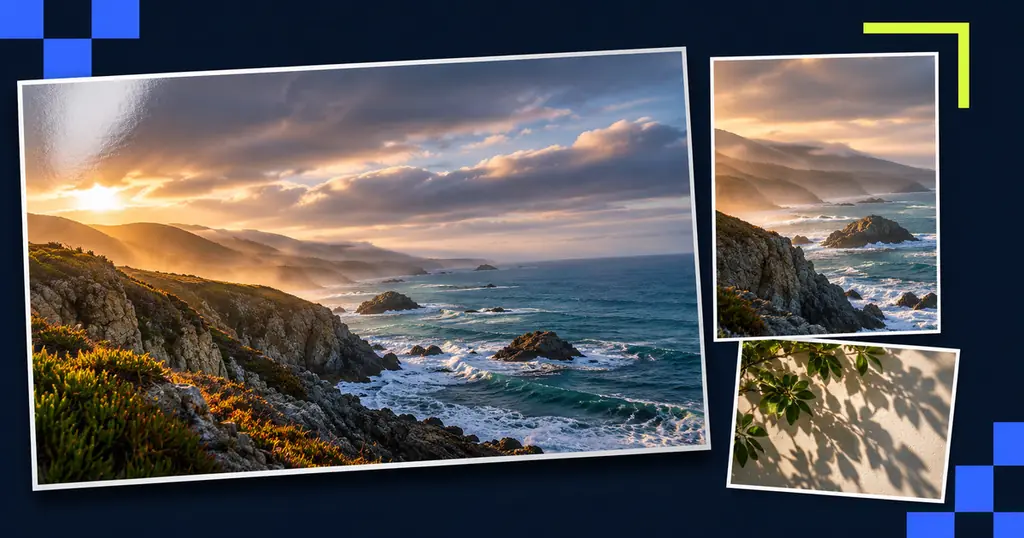
Publish the pixel dimensions and aspect ratio for every delivered crop, then show a small, accurate preview of that crop next to the uncropped frame. If you suggest a physical print size, state the pixels per inch used for your calculation and distinguish a digital print file from a print you have made.
Work the crop before you promise the size
A 6000 × 4000 landscape is a 3:2 image. At 300 pixels per inch, it measures 20 × 13⅓ inches without resampling. A 4:5 portrait cut from that same frame can be at most 3200 × 4000 pixels using the full height; it does not keep the original 6000-pixel width. At 300 ppi, a 10 × 12.5-inch print needs 3000 × 3750 pixels, so that crop has enough pixels on both axes. It still needs to look good. 11
Show the difference in a contact sheet with filenames and a small detail crop. In a Discover listing, describe the actual subject and intended use; do not label a documentary image as advertising-ready just because a business may want to buy it. 2812
Separate a bad download from a new usage request
Check an unreadable archive or wrong crop against the buyer’s order and offer the correct file. For digital content that is faulty or not as described and cannot be fixed or replaced within a reasonable time, EXNO’s refund policy for purchase problems sets out the remedy. A request to put a web-only photo on a billboard, by contrast, calls for a license discussion, not a higher-resolution replacement. 56
“administrative, descriptive, and copyright information about images”
Embed accurate authorship information when the format permits it, but also put the written license and image IDs in the download. A caption or credit is not a substitute for the buyer’s permission to use the image. 910
A small aperture can lead to a properly sized portfolio
Fine detail that makes a photograph work at print size may disappear in a tiny grid. Pick a bold aperture symbol or a simple silhouette for the EXNO Pixel Wall and reserve the actual photographs for the public portfolio page linked from that block.
Each of its one million squares is priced at $1. You can choose a title and destination, and use your card or seller earnings for the single purchase. The placement enters review before display; never use a private client gallery as its link.

Photo download questions: resolution, releases and rights
A customer asking for the original image might mean a bigger JPEG, the camera’s raw file or permission to use the image in a different place. These answers help you identify which question they are asking, so you do not deliver a private source file or promise rights outside the agreement.
Am I selling copyright whenever I sell a photo download?
No. A copy can be licensed for the uses you describe without transferring your copyright. Check whether you own the relevant rights, including any employment, work-for-hire or previous assignment arrangements, before you offer a license or promise exclusivity. 7
Can an editorial buyer use the same image in a paid ad?
Not under a license limited to editorial use. Commercial promotion can raise additional issues with recognizable people, private property, artwork or branding. Verify the intended use and applicable permissions rather than assuming an editorial label waives all rights questions. 812
What does a model release do for a photographer?
It documents permission from the person depicted for the uses the agreement specifies; it is different from your copyright in the image. Adobe Stock’s commercial submission rules provide one concrete example of a platform asking for releases for recognizable people. Check the actual channel, jurisdiction and release scope for your own sale. 78
What pixel dimensions do I need for an 8 × 10-inch print?
At an intended 300 pixels per inch, 8 × 10 inches calls for 2400 × 3000 pixels after cropping. That is a 4:5 ratio, not the full shape of a typical 3:2 frame. Check the lab’s requirements and print a proof before presenting a particular result as tested. 11
Should the buyer get my RAW file?
Only if the offer explicitly includes it and you have cleared it for the intended handoff. A finished JPEG or TIFF, a layered retouch and a camera original are different deliverables. Consider metadata, embedded location and what editing rights accompany the file. 9
Does changing the resolution field improve a low-resolution image?
Changing a ppi label without resampling does not add captured pixels. Upscaling creates new pixels but cannot recover detail that was never captured; inspect the actual result at the intended display or print size. 11
Can a watermark stop buyers from copying my preview?
No. A small watermark or lower-resolution preview can help identify the source while letting buyers inspect composition. Keep the paid exports separate and disclose whether the delivered files are watermarked; use licensing terms instead of promising technical copy protection.
How do I check that a photo will not reveal a private location?
Inspect both what is visible in the frame and the exported file’s location metadata. Lightroom Classic offers a location-removal option for supported exports, but verify the exact file you will distribute. Keep releases, address details and other private production records outside the buyer’s archive. 910
General information, not tax or legal advice.
Sources for photo rights, file preparation and seller terms
The Copyright Office explains American ownership rules, IPTC defines photo metadata and Adobe documents its export tools and its own stock submission requirements. EXNO’s sources cover pricing, purchase access and refund policy for its platform; the measurements and prices on this page are worked examples, not required commercial terms.
- EXNO product and storefront features · Private digital file delivery, product editions, checkout links and storefront tools· checked 19 November 2026
- EXNO · The public marketplace where shoppers browse digital products by category· checked 19 November 2026
- EXNO seller pricing· checked 19 November 2026
- EXNO payments · The buyer transaction and EXNO’s merchant-of-record responsibilities· checked 19 November 2026
- EXNO Help Center · Seller and buyer workflows, including accessing purchased digital products· checked 19 November 2026
- EXNO refund policy · Official policy and request process for purchases; consult the current terms for an individual case· checked 19 November 2026
- U.S. Copyright Office: photographers and copyright · Original photographs, initial ownership and the work-made-for-hire exception· checked 19 November 2026
- Adobe Stock: model release overview · A commercial stock platform’s rules for recognizable people, not a universal rule for all publication· checked 19 November 2026
- Adobe Lightroom Classic: export settings · File types, color spaces, image sizing, watermarking and metadata including location controls· checked 19 November 2026
- IPTC: Photo Metadata · Descriptive, administrative and rights information in photographic files· checked 19 November 2026
- Adobe Photoshop: print resolution · How pixels per inch relate to intended print dimensions and output· checked 19 November 2026
- Adobe Stock: property release overview · Platform-specific checks for recognizable property and other content requiring authorization· checked 19 November 2026


List a photograph with one clear use and one tested export
Choose a frame you have the right to license and write a plain-language description of its first intended use. Export the promised file, confirm its dimensions, and preview the actual crop before creating the EXNO listing, so the customer can compare both the image and the permission before paying.
Keep reading

Selling guide
How to sell 3D model packs that survive a buyer’s first import
To sell 3D models, define the buyer’s use, test the exported asset in that environment, and package the geometry, textures, documentation and license together. Sell the result as a digital download on EXNO. A studio buying modular game scenery needs different evidence from a designer buying a still-render prop or a maker buying a printable part.
Read the guide
Selling guide
How to sell finished AI-assisted art without overstating the rights
To sell AI art, start with a finished visual product you created or have permission to sell, check the model and asset terms, and give buyers accurate files and usage terms. A customer purchasing a background set should know its pixel dimensions, what you edited, what they can use it for, and whether they are buying images or a tool that makes them.
Read the guide
Selling guide
How to package AI automation templates buyers can run themselves
To sell n8n templates, package an original workflow with its input format, setup instructions, a safe sample, and a result the buyer can check before enabling it. Make and Zapier use different ways to share automation, so sell the edition you actually tested. The buyer supplies their own authorized accounts and keys; the download is not a running service.
Read the guide