 Gumroad



 Polar
 Kelviq
 Stan

Selling guide
Sell digital invitations guests can read and hosts can finish
You can sell digital invitations as editable templates for hosts who want control, or as a personalized design service for hosts who want finished files. Make the choice explicit: say who changes the wording, which version guests receive and whether a print file is included.
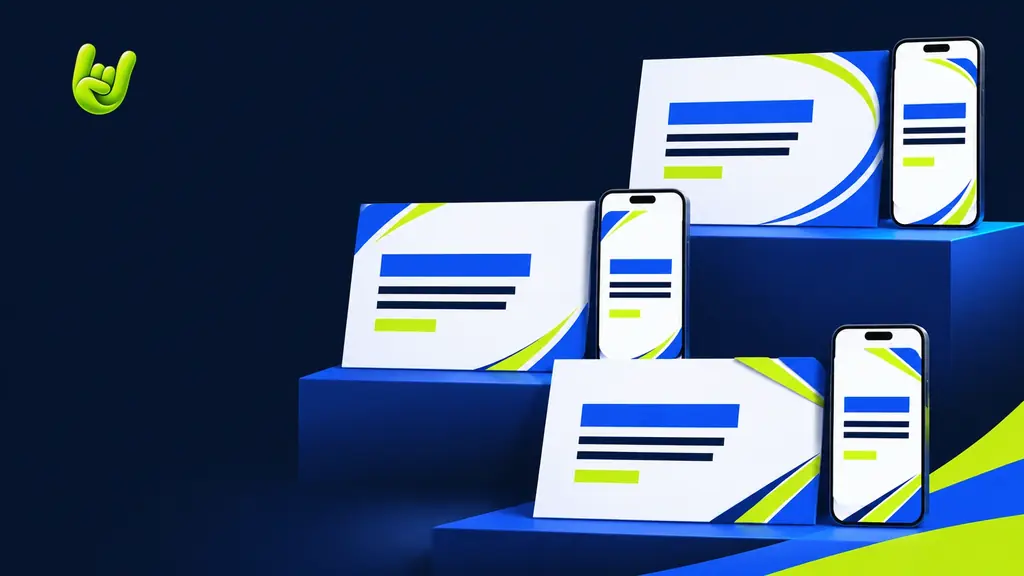
Is the buyer purchasing a template or your design time?
A template hands the host a working design and instructions for making edits independently; a custom invitation promises a finished result after you receive the details. A wedding suite may need matching pieces, while a birthday host may just want one card that can go straight into a group message.
| Offer | What the buyer gets | What you need to define |
|---|---|---|
| Editable party invitation | A working template, editor requirements and an export walkthrough. | Which text, colors and artwork can change and whether the buyer needs a paid asset or account. |
| Coordinated wedding suite | An invitation, details card and RSVP card in a specified size and format. | Which pieces are editable and whether the RSVP is a static card or a link provided by the host. |
| Personalized event design | A proof, the agreed corrections and final print or screen files. | When the clock starts, when the host approves the proof and what counts as a new design. |
Choose artwork you created or have the right to sell in the form delivered. Permission to show an illustration in a flattened invitation is not necessarily permission to distribute it inside an editable template.2 An original garden, constellation or geometric theme can stand on its own without trading on a character, franchise or recognizable brand.
How do you make the printable and phone versions usable?
Build the print invitation around its final trim size and the phone invitation around legibility at a small display size. Treat them as separate layouts: a decorative border that works around a printed card can steal the space a guest needs to read an address on a phone.
- Lay out the essential details first. Give the host visible fields for event name, date, time and time zone when relevant, place, reply method and deadline. Use clearly invented details in previews. A private guest list is not a design input you need to collect.
- Stress-test the editable copy. Replace a short name with a much longer one, a one-line venue with two lines and an abbreviated month with its full name. Open the buyer’s copy in the stated editor without access to your design account. Check that replacing a name does not shift the date off the card.
- Export for paper. A 5 by 7 inch card with one eighth of an inch of bleed on every edge has a 5.25 by 7.25 inch bleed area. Extend the background past the trim, keep critical text inside it and use the printer’s requested PDF preset and marks. Adobe distinguishes bleed artwork from the crop marks that indicate the cut.1
- Export for sending. Supply a clean PNG or JPEG without crop marks. As a sample delivery size, 1080 by 1920 pixels is a tall phone layout, not a promise that every messaging service preserves the same preview. Send the exported file to a test conversation and read the date, venue and reply instructions without zooming.
- Check the response route. A flattened image does not make the printed website address a tappable link. Include the RSVP destination as separate copyable text, if the host supplies it, and test the final address. A QR code alone is inconvenient for a guest viewing that same phone.
Separate the handoff into clearly named files such as INVITE_PHONE.png, INVITE_PRINT.pdf and START_HERE.pdf. If a design uses an editable cloud template, deliver the permitted copy-making link and instructions rather than exposing your working master. Check any typeface or illustration license before including source files.2
How should you price a wedding suite versus customization?
Price a self-editable invitation by the decisions and matching pieces it gives the host, and price a custom service by the work you commit to finish. The useful distinction is not the number of exports but whether you must collect wording, lay it out, proof it and revise it after purchase.
For an illustrative menu, a $12 single card and a $24 suite with matching information and response cards solve different needs. The phone PNG and printable PDF of exactly the same design are two formats, not two original designs. Explain that distinction when showing a bundle.
For a custom job, assume 30 minutes for layout, 15 for a proof round and 15 for checking final exports. At a working target of $30 per hour, that totals $30 of time before overhead or selling costs. If changing the theme would require another layout, define it as a new quote instead of promising unlimited revisions. These examples are planning numbers, not market averages; the digital product pricing guide covers broader price decisions.
How do you deliver the right invitation on EXNO?
Create separate offers when an editable file is ready immediately but a commissioned invitation depends on the host’s wording and approval. Give the buyer the product type, file list, timing and next action before checkout, then use the handoff to tell them which file to open or which details to send first.
- Choose the offer. List the reusable design as a digital product; list personalization as a service when you will produce the artwork yourself. Do not represent a promised proof as a finished instant download.
- Show the important differences. Use EXNO Store Builder’s gallery for a full invitation, a readable close-up and the phone version. Place “editable by you” or “personalized by the designer” beside the preview. See how to make accurate product mockups for presenting the two formats.
- Use the purchase handoff. Customize EXNO’s post-purchase page with the next meaningful action. For a template, point to the start guide. For a service, say how to supply the event wording, when a proof follows and when the event date is too close for the stated turnaround.
- Proof the customer copy. Download and open the actual archive, follow every link and check that the print file is not the phone image placed inside a PDF. For custom work, request proof approval before delivering the final set.
Standard sales: 7%. Discover sales: 7%. Additional fees may apply to payment processing, payouts and other transactions. See the Seller Agreement for current fees and terms.
What should you show before a host orders?
Show how the same invitation handles a long name, a real-size details block and the final reading experience on a phone. Those views answer more than several decorative mockups of the same front cover and can keep the buyer from choosing the wrong format or assuming you provide printing.
- Stage a before-and-after edit. Use fictional event details in both pictures. Show which parts the buyer changed without implying that the sample photographs or props are included.
- Name the deadline. If the host needs approval before a printer’s deadline, agree on the proof window. Do not imply that digital delivery includes printing, envelopes, mailing, guest management or tracking replies.
- Describe the license in context. If your terms allow one host to send the finished invitation to any number of guests for one event, say so. State separately whether an event planner may reuse the editable design across clients.

Keep the invitation motif, leave out the guest details
The little motif at the top of an invitation can stand for the whole collection without revealing anyone’s venue, event date or name. A folded envelope shape or a sprig from your own artwork can become a permanent, approved rectangle on the EXNO Pixel Wall.
Each pixel costs $1, and you can give the space a title and optional link. Add an original stationery motif to the EXNO Pixel Wall to help support the platform’s growth.

Frequently asked questions
A host should be able to tell whether they can change the wording, print the file and send it to guests without another purchase from you. These answers clarify the handoff between the design, the editor, the printer and anyone collecting responses for the event.
Can one file be both editable and ready to send?
You can provide both outcomes, but label them separately. The editable master is for the host; the flattened guest copy avoids accidental changes and does not require the design editor.
What if the buyer wants an unusual print size?
Ask for the final trim dimensions and printer requirements before promising a new layout. A change in proportions can require rearranging the wording, not just exporting the existing design larger.
Should a custom invitation include the working file?
Only if you offer it and hold the necessary rights. A proof followed by a finished PDF and PNG is different from a handoff of editable layers, fonts and artwork.
Can a guest tap an RSVP link in the JPEG?
A JPEG contains pixels rather than a live link. Include the address as separate text in the message or provide a tested linked document as an expressly listed extra.
General information, not tax or legal advice.
Sources
The print-production reference explains why bleed and trimming matter even though the item you sell is digital, and the copyright reference explains the need to check permissions for supplied artwork. The dimensions, service scope and menu prices in this guide are examples, not requirements for every printer or event.
- Adobe: print bleed, trim marks and the print provider’s recommended PDF export· checked 20 November 2026
- WIPO: permission to use creative work and the scope of a license· checked 20 November 2026


Start with one invitation and two clean exports
Choose one event, stress-test its longest wording and compare the printed proof with the image a guest sees on a phone. When those two files communicate the same details clearly, you have a stronger first listing than a dozen untested variations of the same invitation.
Keep reading
Selling guide
How to sell 3D model packs that survive a buyer’s first import
To sell 3D models, define the buyer’s use, test the exported asset in that environment, and package the geometry, textures, documentation and license together. Sell the result as a digital download on EXNO. A studio buying modular game scenery needs different evidence from a designer buying a still-render prop or a maker buying a printable part.
Read the guide
Selling guide
How to sell finished AI-assisted art without overstating the rights
To sell AI art, start with a finished visual product you created or have permission to sell, check the model and asset terms, and give buyers accurate files and usage terms. A customer purchasing a background set should know its pixel dimensions, what you edited, what they can use it for, and whether they are buying images or a tool that makes them.
Read the guide
Selling guide
How to package AI automation templates buyers can run themselves
To sell n8n templates, package an original workflow with its input format, setup instructions, a safe sample, and a result the buyer can check before enabling it. Make and Zapier use different ways to share automation, so sell the edition you actually tested. The buyer supplies their own authorized accounts and keys; the download is not a running service.
Read the guide