 Gumroad



 Polar
 Kelviq
 Stan

Selling guide
A practical guide to selling your own guided meditations
You can sell guided meditations as downloadable recordings by packaging your own or properly licensed narration, a useful transcript and a sample that accurately represents the final mix. Describe what a listener will hear rather than promising an outcome.
What exactly is the listener paying for?
Sell a particular listening experience: the length, the voice, the amount of quiet and whether music sits beneath the narration. A sample that includes an actual pause helps a listener choose the right recording more reliably than an elaborate cover or a list of feelings the recording is supposed to produce.
| Edition | What the buyer hears | Useful disclosure |
|---|---|---|
| Voice only | Spoken prompts with intentional spaces between them. | Actual running time, narration language, pace and the longest planned silence. |
| Voice with a sound bed | The same session with original or cleared music or ambience. | Whether the sound continues during gaps and whether there are chimes or an audible ending. |
| Short series | Distinct sessions on a theme, such as noticing sounds at different times of day. | Separate titles, lengths and sound design; identify alternate mixes of the same script. |
Try writing the listing as if the buyer could not hear the preview. “Nine minutes, one voice, no music, with a soft spoken ending” is useful. Put the same facts in the track list and choose a title that describes the activity. Do not market a recording as treatment or promise a medical result.
Under EXNO’s Acceptable Use Policy, EXNO reviews health, fitness and nutrition programs before sale; if your guided meditation is part of such a program, submit it for review before offering it.
How do you turn a script into a listenable download?
Record your own words or a script you have permission to perform and sell, keep the clean voice take, and test a real exported listening file from beginning to end. Build the transcript from the final edit so the words, pauses and sound cues match what the customer actually hears.
- Mark time on the script. Label deliberate quiet, optional background and the ending. If several minutes pass without a word, mention it in the listing or opening so the gap is not mistaken for a broken file. Do a full timed read before choosing a title like “Ten minutes.”
- Keep the project separate. Retain the editable session and an uncompressed PCM WAV master. Export a listening MP3 for convenient delivery; saving an editor project is not the same as exporting audio. Audacity distinguishes its project file from exports and suggests mono when a single voice needs no directional placement. 1
- Compare finished mixes. Start the voice-only and music versions at the same point. Listen to the first line and last decay on a phone speaker as well as headphones. Check for a hard cut, a sudden gain change, an unexpected sound during a pause or a music bed that obscures a softly spoken word.
- Proof the transcript by ear. Use real words, mark meaningful sounds and note longer intentional pauses. A script headed “pause here” is a production note, not a finished transcript; a listener may need to know whether the recording is silent or a bell is sounding. W3C’s transcript guidance covers meaningful non-speech audio. 2
For a 12-minute MP3 encoded at a constant 128 kilobits per second, audio data alone is about 11.52 MB: 720 seconds × 128,000 bits per second ÷ 8. The delivered file may differ because of tags or variable encoding. Give the actual file size from the final export, not the estimate.
Which music and voice permissions do you need?
Clear the script, voice, recorded ambience and music for the uses you actually sell, including paid downloads and public previews. If a library track is the main listening experience rather than incidental background, check that exact use in the license; a purchase receipt or the words “royalty free” do not answer it.
The U.S. Copyright Office distinguishes an underlying composition from the particular recording of it. Permission for one is not a substitute for controlling the other. 3 If you compose and record all the music yourself, keep your project records; if a collaborator played or produced it, agree on paid downloads, excerpts and credits in writing.
Keep a cue list with asset name, creator, proof of permission, allowed uses, required credit and any end date. Include the recording used in the preview. For ambience, avoid identifiable private conversations and commercially released music accidentally recorded in the background. Do not supply isolated music tracks if your permission covers only the complete narrated mix.
Distinguish the buyer’s right to listen at home from playing the track during a paid class, distributing it through an app or reselling the script. Offer a broader license only if all contributors and source licenses allow it. The digital product license guide explains how to state the allowed uses.
How should you price and deliver a meditation series on EXNO?
Price the session and the listening rights first, then decide whether alternate mixes belong in the same purchase. A buyer choosing between silence and music should see the difference in the sample and track list; they should not have to buy two editions just to discover the narrator uses the same script.
One illustrative menu: $6 for a session with both mixes, or $15 for three distinct sessions, each with both mixes. The set contains six audio files, but only three guided sessions. At individual prices the three sessions would total $18. A class-use license is a separate decision, not a fourth recording.
- Assemble the listening edition. Use short matching names for the voice and music options and an index showing exact running times. Put the transcript beside the audio, not inside your editing project. Offer the high-resolution master only if you intend to deliver it and its license supports that use.
- Create the digital product. Add the listening files and transcript to the EXNO product. In your listing, describe the ending and what listeners can download, and identify the sample as an excerpt rather than a different recording.
- Direct people to the correct take. In the EXNO delivery email editor, put the voice-only filename beside a short explanation of the alternate mix. Preview the email before sending it so the track names match the files in the buyer’s library.
- Link the matching sample. If you share a clip with your audience, follow it with an EXNO payment link for that exact session or set. Label the clip with the mix it uses instead of making buyers guess which version is behind the link.
Standard sales: 7%. Discover sales: 7%. Additional fees may apply to payment processing, payouts and other transactions. See the Seller Agreement for current fees and terms. Eligible earnings follow the published payout schedule and account requirements.
What should you listen for before publishing?
Listen as a first-time buyer would: download the offered files rather than opening the editing session, start with the sample, and play the complete track without looking at the waveform. Check that the narrator, mix, ending and actual running time match both the sample and the written description.
Compare the last paragraph of the transcript to the export. If removing a passage shortened the audio, update the duration on the cover, product page and file index. If one mix has twenty seconds of music after the spoken ending, give that mix its own duration rather than rounding both to the same number.
A useful public excerpt includes the normal speaking pace, some silence and the normal level of the background. A polished trailer with music that is absent from the product makes it harder to choose. For a long work organized into chapters rather than independent sessions, see the audiobook production and delivery guide.
Give a quiet passage a visible shape
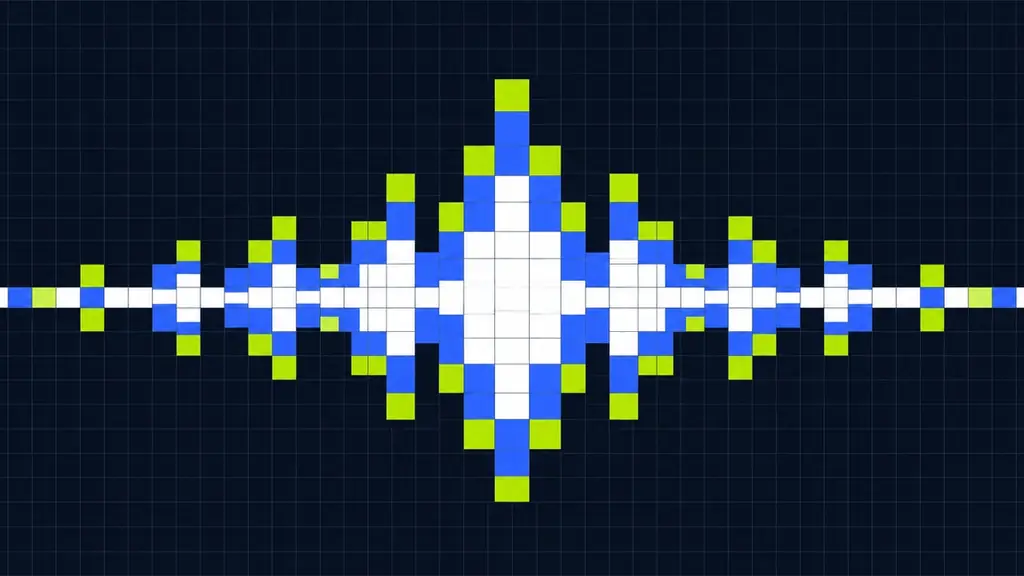
A long pause looks different from a spoken phrase when you draw the recording as a row of squares. You could use a tiny version of that pattern to represent your first voice session on the EXNO Pixel Wall, where each square costs one dollar and every design is reviewed before it appears.
If that small signature suits your recording, add it to the EXNO Pixel Wall to support the platform’s growth.
Frequently asked questions
These questions separate a listening download from an editable recording and personal listening from the right to play the track for other people. They also cover a small but important production choice: making silence and background sound clear to someone who reads the listing before hearing your voice.
Do I have to supply the WAV master?
No. If the listing promises an MP3 for listening, deliver a tested MP3 and state its size. Keep the master for future edits unless it is explicitly part of the offer.
Can I use a song that I bought for myself?
Do not treat a consumer purchase as permission to put that recording beneath a meditation you sell. Use your own music or obtain rights that cover the recording, composition and planned distribution.
Should voice-only and music versions count as two sessions?
Call them two mixes of one session when the script and narration are the same. Name each mix clearly so someone who avoids background music can find the correct file.
Can an instructor buy one copy and play it to a class?
That depends on the license you actually offer. If your listing covers personal listening only, class playback is outside that offer; check the underlying permissions before proposing a separate arrangement.
What if the last minute is intentionally silent?
Say so in the track notes and transcript. Listen to the exported ending to check that the intended silence survived and the file stops where you say it does.
General information, not tax or legal advice. This guide is not medical advice.
Sources
The audio editor’s documentation explains project files and listening exports, W3C describes how to represent meaningful sound in a transcript, and the copyright reference distinguishes music from a particular recording. Your own agreements determine whether the specific script, performance, music bed and promotional excerpt may be sold together.
- Audacity: saving an editing project versus exporting listening audio· checked 20 November 2026
- W3C Web Accessibility Initiative: what a transcript should convey· checked 20 November 2026
- U.S. Copyright Office: compositions and sound recordings are separate works· checked 20 November 2026


Release one session you have listened to all the way through
Choose the mix you would use to introduce your voice, listen to the exact file on a second device and read the transcript alongside it. Once the permissions, listing and download all describe the same listening experience, create a product for that edition rather than advertising a larger series you have not finished.
Keep reading
Selling guide
How to sell 3D model packs that survive a buyer’s first import
To sell 3D models, define the buyer’s use, test the exported asset in that environment, and package the geometry, textures, documentation and license together. Sell the result as a digital download on EXNO. A studio buying modular game scenery needs different evidence from a designer buying a still-render prop or a maker buying a printable part.
Read the guide
Selling guide
How to sell finished AI-assisted art without overstating the rights
To sell AI art, start with a finished visual product you created or have permission to sell, check the model and asset terms, and give buyers accurate files and usage terms. A customer purchasing a background set should know its pixel dimensions, what you edited, what they can use it for, and whether they are buying images or a tool that makes them.
Read the guide
Selling guide
How to package AI automation templates buyers can run themselves
To sell n8n templates, package an original workflow with its input format, setup instructions, a safe sample, and a result the buyer can check before enabling it. Make and Zapier use different ways to share automation, so sell the edition you actually tested. The buyer supplies their own authorized accounts and keys; the download is not a running service.
Read the guide