 Gumroad



 Polar
 Kelviq
 Stan

Selling guide
How to sell a lesson plan another teacher can teach tomorrow
To sell lesson plans online, offer an original teacher-facing resource with a specific learning outcome, a realistic class sequence, usable materials, and clear classroom permissions. A buyer should be able to decide whether the lesson fits their learners before paying, and teach it afterward without borrowing your school account, guessing the timings, or asking what counts as success.
What makes a lesson plan different from a worksheet?
A worksheet gives students something to do; a lesson plan tells an educator why the activity matters, how to introduce it, what to look for while students work, and how to respond afterward. Sell the teaching decisions as well as the handout, and show how those pieces fit into one class period.
Start with one observable result rather than a topic label. “Students compare two unlabeled graphs and explain which supports a stated claim” is a clearer promise than “graph skills.” Choose an activity that practices the result and a short check that reveals whether the learner achieved it. Cornell’s teaching guidance makes the same connection between outcomes, activities, and assessment.1
| When | Put this in the teacher guide | Example for the graph lesson |
|---|---|---|
| Before class | Prerequisite knowledge, supplies, estimated prep, and an accessible alternative. | Print two original graphs, or project the labeled data tables when color or small text would be a barrier. |
| During class | Opening prompt, grouping instructions, timing, and a response to likely confusion. | If pairs choose the tallest bar without checking the axis, ask them to compare the scale before explaining their choice. |
| After the activity | A short check tied to the objective and suggested next teaching moves. | Ask learners to justify one choice in their own words; revisit labels if they explain a trend using the wrong units. |
Name the intended learner stage, not just a grade label that can mean different things in different school systems. State the reading level or prior skill in plain language. If you claim alignment to a curriculum, give the exact framework and edition you actually checked; do not imply approval by its publisher.
Who owns classroom material you want to sell?
Check your employment agreement, your institution’s intellectual property policy, the origin of each resource, and any collaborator’s rights before listing it. Writing a lesson yourself, taking the file home, or removing the school logo does not by itself establish that you can sell the resulting package.
One concrete example is the New South Wales Department of Education’s staff code: it identifies material created in the course of the employee’s work as department intellectual property and gives an example involving teaching resources posted publicly. This is an employer-specific rule, not a rule for every teacher. Your own contract, policy, and applicable law are what matter for your resource.34
- Record where the work came from. Separate your independent original work from materials created as part of school duties, department projects, or a joint planning group. If the rights are unclear, obtain written clarification or commercial permission from the relevant rights holder before taking the listing further.
- Rebuild examples with your own material. Use invented names and data in demonstrations and your own graphics and text. Do not include student work, photographs, personal records, textbook pages, school documents, exam answers, or work written for a student to submit. Classroom access is not a general right to republish a third-party item commercially.4
- Specify the buyer’s classroom use. If you control the rights, define whether one teacher may adapt the file and distribute copies to their own learners, whether colleagues need separate permissions, and what counts as public reposting. Do not promise broader rights than the underlying materials allow. See the digital product license guide for the difference between access and redistribution.
How do you package a plan for a classroom you have never seen?
Give the buyer a short teacher guide, student-facing pages, any promised editable files, and a contingency plan for limited time or equipment. Keep materials and instructions clearly separated, and test the whole package with a teacher who did not write it, using the exact files and permissions the buyer receives.
- Make a one-page lesson map. Include objective, learner prerequisites, duration, group size assumptions, materials, preparation time, and the closing check. A 45-minute example could allow five minutes for a warm-up, eight for modeling, 16 for paired work, nine for discussion, and seven for an exit reflection. Those five blocks total 45 minutes; setup before class is separate.
- Label the files by role. For example: a teacher overview PDF, a student handout PDF, an editable slide deck if included, and a read-me explaining software requirements. Test printed pages in grayscale and inspect editable versions for missing fonts, broken links, teacher-only notes, or content that shifts outside the page.
- Provide a practical alternative. For a lesson built around visual graphs, include a labeled data table and a written description of what the axes represent. Have a no-projector route that preserves the same learning goal, not a different filler activity. CAST’s representation guidance encourages multiple ways to perceive information.2
- Run a substitute-teacher test. Give a colleague the directions without a verbal introduction. Ask them to point to the first student instruction, the materials needed at minute ten, and the evidence to look for before moving on. If they cannot tell, revise the guide rather than adding a decorative cover.
Add a short “if you have 30 minutes” note that names a specific part to shorten or omit and says whether the original objective is still realistic. A shorter file is not necessarily a shorter lesson: transitions, distributing materials, and instructions still take class time.
How do you price, list, and deliver a teacher resource?
Price what changes for the educator: the number of genuinely different lessons, included editable formats, support, and the people licensed to use the material. Use the listing to answer three questions quickly: can I teach this group with my equipment, how much preparation will it take, and what will I receive?
For an example, a single plan might be $8 and a three-lesson sequence $18. The sequence works out to $6 per lesson, a $6 difference from buying the three separately at $8 each. That comparison is valid only if the individual lessons are actually comparable; an extra print format of the same lesson is not another lesson.
- Show the teaching, not only the cover. In an EXNO Store Builder gallery, include the lesson map, part of a blank student page, and a teacher note about a likely difficulty. Use original examples, not photos from an identifiable class. If the preview shows a slide deck, label whether that deck is supplied or used only to demonstrate the lesson.
- Deliver by audience. Use the post-purchase message to point a substitute teacher to the overview before handing out student pages. Put student-facing material in a separate folder and check that every editable file opens without access to your private school workspace. For an institution buying as a business, EXNO checkout can collect the business name and tax ID for its invoice; that billing information does not enlarge the classroom license.
- Market the fit. Explain the objective, assumed prior knowledge, class duration, and alternatives for technology or class size. For questions about marketplace choice rather than making the resource, see the education marketplace comparison. They are different decisions: a venue cannot rescue a plan with no teachable sequence.
EXNO handles applicable buyer transaction taxes, refunds and disputes as merchant of record. Standard sales: 7%. Discover sales: 7%. Additional fees may apply to payment processing, payouts and other transactions. See the Seller Agreement for current fees and terms.
Mark the moment a lesson can leave your own classroom
There is a small milestone between writing a plan for yourself and watching another educator use it without extra instructions. An original classroom symbol on the EXNO Pixel Wall can mark that moment in a permanent rectangle with a title and, if you choose, a link to the resource.
If you want to support EXNO, choose a space on the Pixel Wall for $1 per pixel and add an image or color. EXNO reviews it before display and refunds the full price if it is declined.
Questions teachers ask before selling their lesson plans
The hard questions are usually about ownership, adaptability, and what another teacher can legitimately do with the files, not whether a PDF can be downloaded. Use the answers below to identify missing permission, an untested file, or an unclear classroom promise before those problems reach a paying educator.
Can I sell a lesson I wrote at home for my current teaching job?
Possibly, but writing it at home does not settle ownership. Review your employment agreement and applicable policy, and get permission where required before selling work connected to your job.34
Should I include student examples to show that the activity works?
Use work you created specifically for the demonstration and label it as a sample. Avoid student records or identifiable student work; a convincing preview can show a blank handout, a teacher prompt, and a description of what to observe.
Does a lesson have to include slides?
No. If the activity works through discussion and a printed task, tell the buyer that no projector or slide software is needed. Include a deck only when it has a teaching purpose and you can deliver it in the stated format.
Can one buyer share the files with everyone at their school?
Tell buyers what their license allows before purchase. If a one-teacher edition covers that teacher and their own classes but not colleagues, offer separate group terms only if you have authority to grant them.
How is a bundle different from a longer unit plan?
A bundle can simply collect independent lessons. A unit plan should explain sequencing, prerequisites, and how the evidence from one lesson informs the next; label the product accurately rather than relying on the number of pages.
General information, not tax or legal advice.
Sources
Cornell and CAST provide guidance on measurable outcomes and ways to represent learning material; these frameworks help test whether a lesson is useful rather than certifying a particular product. The employer example and the WIPO reference explain why you must check the origin, ownership, and permitted commercial use of teaching resources.
- Cornell Center for Teaching Innovation: learning outcomes, activities, and assessment· checked 20 November 2026
- CAST Universal Design for Learning Guidelines: options for representing information· checked 20 November 2026
- NSW Department of Education: staff code, intellectual property, and teaching resources created in the course of work· checked 20 November 2026
- World Intellectual Property Organization: ownership, employment, and licensing third-party works· checked 20 November 2026


Prepare a resource another teacher can use independently
Choose one lesson you have the right to sell and ask a colleague to locate its objective, first instruction, student files, and closing check without your help. Once those answers are easy to find, build a listing that shows this teachable sequence and the classroom permissions that go with it.
Keep reading
Selling guide
How to sell 3D model packs that survive a buyer’s first import
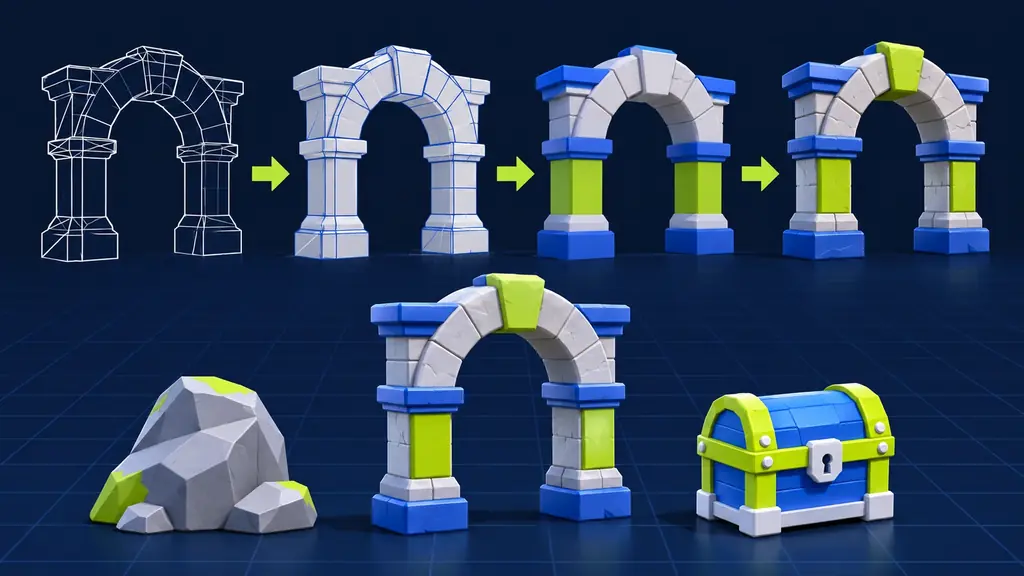
To sell 3D models, define the buyer’s use, test the exported asset in that environment, and package the geometry, textures, documentation and license together. Sell the result as a digital download on EXNO. A studio buying modular game scenery needs different evidence from a designer buying a still-render prop or a maker buying a printable part.
Read the guide
Selling guide
How to sell finished AI-assisted art without overstating the rights
To sell AI art, start with a finished visual product you created or have permission to sell, check the model and asset terms, and give buyers accurate files and usage terms. A customer purchasing a background set should know its pixel dimensions, what you edited, what they can use it for, and whether they are buying images or a tool that makes them.
Read the guide
Selling guide
How to package AI automation templates buyers can run themselves
To sell n8n templates, package an original workflow with its input format, setup instructions, a safe sample, and a result the buyer can check before enabling it. Make and Zapier use different ways to share automation, so sell the edition you actually tested. The buyer supplies their own authorized accounts and keys; the download is not a running service.
Read the guide