 Gumroad



 Polar
 Kelviq
 Stan

Selling guide
Take art commissions with a brief both sides can use
To sell art commissions online, offer a defined drawing service with a written brief, approval points, a price, and a final handoff. Show work you have permission to display, distinguish a new concept from a revision, and agree on usage rights before the artist or client commits time to the project.

What belongs in an art commission brief?
A usable brief names the subject, purpose, style reference, final dimensions, file format, deadline, and person who can approve the work. Separate facts the artist needs before drawing from choices the client can make during the sketch round, so a missing decision does not quietly become an unpaid change of direction.
For an original illustrated cover of a community garden booklet, “draw our garden” is not yet a brief. Is the cover portrait or landscape? Is the greenhouse the subject, or is it only a backdrop? Does the client need room for a title? Will the illustration appear in a PDF booklet, printed copies, or a sponsor’s advertising? Each answer changes the drawing or the permission you need to quote.
- Define the deliverable. Specify the number of illustrations, subjects, backgrounds, views, and exports. For the garden cover, one scene and a matching thumbnail are not a front cover, back cover, and separate illustration for every chapter.
- Agree on references. Ask for original or authorized source material and written descriptions of what matters about it. An image can explain a preferred mood without giving permission to reproduce its composition. Do not sell projects built on copied characters or branding someone has no right to license.123
- Set an approval route. Ask for one person to gather feedback, name the sketch and final proof stages, and write down how long each party has to respond. A committee can still review the work without sending the artist three contradictory rounds of notes.
- Specify use and display. Agree on audience, media, territory, time period, and any exclusivity. Decide whether the artist may show the finished work publicly, after what date, and whether that includes showing early sketches.
Collect only what the project requires. A description and a reference file are normally more useful than private background about the client. If they cannot show that an identifiable image is theirs to share and use for this purpose, request a different reference rather than putting it in a public product gallery.
How do you price revisions and set a delivery date?
Quote the amount of drawing, the number of review stages, and the usage you are licensing, then state when the delivery clock starts. Offer a realistic window for each approval and explain which changes are included, which are corrections to your own work, and which would require a separately agreed quote.
| Client request | Classify it | How to handle it |
|---|---|---|
| “Move the greenhouse left in the pencil sketch.” | Included revision if the brief allows composition changes at sketch stage. | Collect all composition notes together and return one revised sketch. |
| “The approved sign says Orchard, but the delivered file says Orchad.” | Correction of an artist error. | Fix the spelling and replace the incorrect export; do not count it against the client’s concept allowance. |
| “Replace the garden with a nighttime aerial view after final coloring.” | New direction outside the approved sketch. | Describe the extra work, price, and revised delivery date; obtain agreement before doing it. |
| “Our sponsor wants to use it in paid advertisements.” | Change in use, not necessarily a change in the drawing. | Check the original license and price any additional media and duration separately. |
Example quote: $120 for the scene and one sketch revision, plus $30 for a second agreed crop, comes to $150. If the brief estimates six working days for art and permits two working days for client review, the planned elapsed window is eight working days when feedback arrives on time. Neither number is a market rate or a promise for every project.
Say whether a late reply moves the delivery date and when work resumes. “Seven days” can otherwise mean seven days from checkout, receipt of the missing references, sketch approval, or the next opening in your calendar. Do not advertise a delivery window that only works if the buyer answers outside their own working hours.
What files and rights does the client receive?
Deliver the agreed final exports, a short note identifying their intended use, and the license or other written rights agreement for this project. Supplying a finished image is not the same decision as supplying editable layers, granting permission for merchandise, or transferring rights; price and document those choices before the client relies on them.124
A screen version might be a JPEG at the agreed pixel dimensions, plus a transparent PNG for placing the artwork over the client’s own background. A print cover needs the printer’s trim size, bleed, color settings, and delivery specification before you promise that the file is print-ready. If a layered PSD is part of the job, open the exported file and check the promised layers and names in the intended application.5
For a simple digital cover, package clearly named versions such as Garden-cover-web.jpg, Garden-emblem-transparent.png, and Garden-usage.pdf. Include the working source only when promised, and remove private reference images or working notes that the client did not purchase. Open the package from a new folder to reveal links that still point back to your own drive.
Verify who owns every contribution: a subcontracted letterer, a stock texture, or an embedded font can affect what you may pass to the client. Commissioning a picture is not universally the same as owning its copyright. In the United States, work made for hire has specific employee or qualifying commissioned-work conditions; a paid invoice by itself does not establish them. Other jurisdictions differ.14
For general permissions, see how to define digital product licenses. If you also sell existing illustrations repeatedly, keep those offers on separate listings; the ready-made illustration guide covers that kind of purchase.
How do you sell and fulfill a commission on EXNO?
List the commission as a custom digital service, not as an instant download of your portfolio samples, and organize the sale around the brief and approval stages. Give the buyer a recognizable example of the finish, a specific delivery window, and a clear first step once they have placed their order.
- Show an example you can share. Use the Store Builder gallery for your own original samples or work cleared for portfolio use. Show a rough sketch beside its finish so clients understand what decisions happen before coloring; identify demonstration pieces as examples, not the artwork a buyer will receive.
- Describe what the price buys. State the included subjects, files, use rights, revision rounds, response expectations, and delivery timing on the listing. Show what a change in scope would look like without suggesting that an extra fee will be charged automatically.
- Answer uncertain requests. Use EXNO’s store chat to ask whether “cover” means a standalone digital image or a complete print spread. Confirm the resulting scope in writing where both sides can refer to it; a quick answer is not a replacement for the final brief.
- Prepare the purchase message. Preview a branded receipt or welcome email that tells the buyer how to submit the agreed brief and which date starts work. Do not word it like a finished-file delivery when you have only accepted the assignment.
- Close the project. Match final files to the written specification, record approvals and changes, and deliver the package by the agreed method. Ask separately for permission before posting client work or a private sketch to your gallery.
EXNO handles applicable buyer transaction taxes, refunds and disputes as merchant of record. Standard sales: 7%. Discover sales: 7%. Additional fees may apply to payment processing, payouts and other transactions. See the Seller Agreement for current fees and terms. Eligible earnings follow the published payout schedule and account requirements.
Sign the wall without revealing the client’s work
A commission might belong behind an embargo or carry a promise that the artist will not show it in a portfolio, even after delivery. An independent studio mark on the EXNO Pixel Wall lets you acknowledge your practice with an image and title that do not disclose the client or the assignment.
If you want to support the platform, place your own mark on the EXNO Pixel Wall, with an optional link to work you can share.
Frequently asked questions
The difficult moments in a commission often happen between two normal stages: the sketch has been accepted, a different person joins the review, or a new use appears after handoff. These questions help you distinguish a change in the artwork from a change in the buyer’s rights or expectations.
What counts as one revision round?
Define it as one collected set of comments on the same proof, not an unlimited series of individual messages. State which types of change belong to that stage and where a new composition becomes a new quote.
Can I accept a commission to draw a famous character?
Do not offer work based on someone else’s protected character or branding without the rights needed for that commission and the client’s intended use. If the necessary authorization is missing, offer an original concept instead.123
Does the buyer own the source file?
That depends on the delivery specification, not just the fact that the image was commissioned. Agree which editable file, layers, and associated assets the client gets and whether all can lawfully be handed over.
What if feedback arrives after the deadline?
Refer to the response window and delay policy you agreed before starting. Confirm the revised date in writing rather than silently treating a late response as approval or promising to absorb the entire delay.
Should I set a blanket no-refund policy for custom art?
Do not promise that a label overrides applicable rights or EXNO’s handling of refunds. Explain the scope and milestones clearly and retain the agreed brief and approvals so the facts of a particular order are available.
General information, not tax or legal advice.
Sources
These references explain visual artists’ rights, trademark distinctions, commissioned-work rules, and the export behavior of common art formats. The example price and review timetable are project-planning illustrations rather than fee benchmarks or a substitute for a local agreement about ownership, publication, and permitted use.
- WIPO: copyright ownership, licensing, and permission to use creative work· checked 20 November 2026
- U.S. Copyright Office: original illustrations and visual artwork· checked 20 November 2026
- USPTO: how trademarks differ from copyright· checked 20 November 2026
- U.S. Copyright Office: the specific conditions for work made for hire· checked 20 November 2026
- Procreate Handbook: transparent PNG, layered PSD, JPEG, and PDF exports· checked 20 November 2026


Open one commission slot you can actually deliver
Write a listing for one piece of work with a beginning, an approval point, and an end, then read it as if another artist had to fulfill it. If the scope, revision limit, usage, and file package survive that test, the listing is ready for a client.
Keep reading
Selling guide
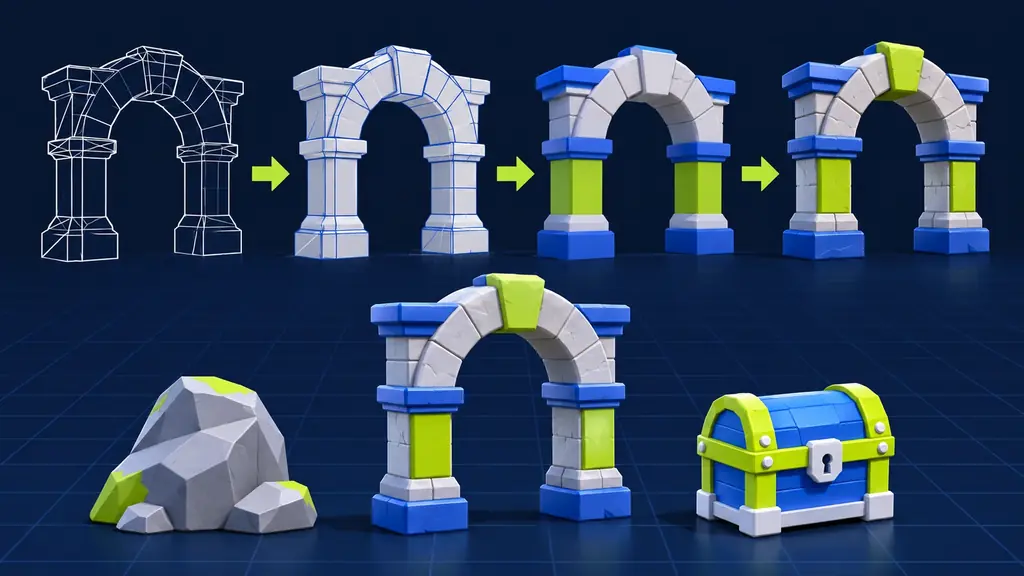
How to sell 3D model packs that survive a buyer’s first import
To sell 3D models, define the buyer’s use, test the exported asset in that environment, and package the geometry, textures, documentation and license together. Sell the result as a digital download on EXNO. A studio buying modular game scenery needs different evidence from a designer buying a still-render prop or a maker buying a printable part.
Read the guide
Selling guide
How to sell finished AI-assisted art without overstating the rights
To sell AI art, start with a finished visual product you created or have permission to sell, check the model and asset terms, and give buyers accurate files and usage terms. A customer purchasing a background set should know its pixel dimensions, what you edited, what they can use it for, and whether they are buying images or a tool that makes them.
Read the guide
Selling guide
How to package AI automation templates buyers can run themselves
To sell n8n templates, package an original workflow with its input format, setup instructions, a safe sample, and a result the buyer can check before enabling it. Make and Zapier use different ways to share automation, so sell the edition you actually tested. The buyer supplies their own authorized accounts and keys; the download is not a running service.
Read the guide