Gumroad



 Polar
 Kelviq
 Stan


EXNO creator resources Germany · 2026 edition
12 digital products to sell in Germany
By EXNO · Sources checked
Digital products to sell in Germany can grow out of a skill you already practice: arranging pages for a hand-bound book, comparing organ sounds, scaling a bread recipe, or explaining a card-game decision. This guide develops twelve specific proposals, with possible customers, original deliverables, euro price examples, and a complete German translation.
Summary
Begin with a task whose result you can explain. A bookbinder wants the pages in the right order after folding; an organ student wants to hear what a registration changes; a trainer wants a learner to justify the next troubleshooting step. Your product earns its place by helping that person make a decision or complete a task.
Germany: from subject knowledge to a useful download
- Distinctive starting points
- Book craft, organ music, bread-making, library authority records, Skat, bobbin lace and small-program creative coding.[1][2][3][7][9][10][11]
- People to design for
- Craft tutors, music teachers, baking instructors, adult wine educators, vocational trainers, library learners, model-railway clubs and hobby programmers.
- Paid work you create
- Original exercises, adjustable tools, narrated comparisons, worked solutions, authored patterns and clearly explained source files.
- Two complete editions
- The English article is the original. Its German translation preserves the same proposals, examples, amounts and evidence, while using natural German phrasing.
- A reason to prepare
- A buyer's lesson, club session, workshop or software exercise; two confirmed 2027 cultural events provide optional planning anchors.
- Illustrative euro range
- Example selling prices: €12.00–€32.00.EXNO commission (7%): €0.84–€2.24.
After EXNO commission: €11.16–€29.76 per sale.
All examples concern one sale in EUR. The amount remaining deducts only EXNO's 7% commission. Other applicable charges, taxes and your production or support costs are excluded. This amount is neither net profit nor a promised payout.
What could you create for a German audience?
The strongest starting point is a question you can answer through an example someone can use. How should these pages fold? Which sound changed? Why did that move fail? The proposals below turn such questions into defined products. Choose a subject you understand well enough to explain the answer and check the files.
01Book-signature imposition and folding tool
Create an imposition helper that puts a maker’s pages into the order needed for printing and folding a booklet. Germany’s bookbinding craft includes binding paper into a book block and is listed in the national inventory of intangible cultural heritage.[1] Focus on the practical puzzle: which page belongs on each side of a sheet, where blank pages are needed, and how the folded sections fit together.
Supply a working calculator, numbered demonstration pages, folding diagrams and a photographed proof made from your own test file. Let buyers choose between the binding arrangements you have actually tested. The printable-product guide can help present the print instructions. The finished proof should open in the intended page order after printing, folding and assembly.
- Who buys: Book artists, small-edition publishers and workshop leaders assembling their own booklets.
- Use when: When a manuscript is ready for a folded proof or a bookbinding session.
- Format: Imposition calculator, numbered test PDF, original folding diagrams and photographed assembly proof.
- Example price: €29.00
- EXNO commission (7%): €2.03
- After EXNO commission: €26.97
02Organ-registration listening comparisons
Help an organ learner hear what changes when the same musical phrase is played with different stop combinations. The German Commission for UNESCO describes organs as instruments designed for the acoustics of their particular buildings.[2] Record your own short composition on an instrument you have permission to use, keeping the phrase and microphone position consistent. Each comparison should explain the registration chosen and invite the listener to describe the difference.
Package the recordings with a stop list, session notes and a listening player that allows immediate comparison. Include a guided exercise in choosing a sound for a stated musical purpose. Use the audio-product guide to explain listening access and recording rights. Keep conclusions tied to the recorded organ and room.
- Who buys: Organ teachers and learners developing their ability to choose and describe registrations.
- Use when: During preparation for a registration lesson or before trying an unfamiliar instrument.
- Format: Original recordings, comparison player, stop documentation and guided listening exercises.
- Example price: €24.00
- EXNO commission (7%): €1.68
- After EXNO commission: €22.32
03Bread-formula scaling calculator
Build a calculator that scales a baker’s own formula to a chosen total dough weight while preserving its ingredient proportions. Germany’s Oekolandbau portal explains water quantities in relation to flour and distinguishes the behavior of different dough ingredients.[3] Let the user enter flour components, water and other ingredients, then inspect the recalculated weights. Make any flour and water already present in a preferment visible in the totals.
Deliver an editable spreadsheet, worked arithmetic examples and a side-by-side view of the starting and scaled formulas. Show how rounding affects the final weight. Follow the spreadsheet-product guide when explaining the inputs. The tool should preserve a chosen recipe mathematically; adjusting fermentation, handling or baking remains a separate practical judgment.
- Who buys: Experienced home bakers, baking tutors and small bakery teams scaling their own tested formulas.
- Use when: When changing the intended dough quantity or comparing the arithmetic of formula variants.
- Format: Editable formula calculator, worked examples, preferment breakdown and rounding checks.
- Example price: €18.00
- EXNO commission (7%): €1.26
- After EXNO commission: €16.74
04Wine-description exercises for adult learners
Develop an adult learning course that helps participants turn vague wine descriptions into precise observations. The German Wine Institute presents aroma description as a progression from broad impressions to more specific terms.[4] Write your own fictional tasting notes and ask learners which statements describe an observation, which express a preference, and which need clarification. A facilitator can use these exercises without requiring participants to drink wine.
Provide short lessons, comparison cards, audio examples of spoken descriptions and an answer commentary that accepts justified differences in wording. An instructor should be able to discuss why a revision communicates more clearly. The course-product guide helps define the lesson sequence. Create an original teaching method and graphics, with clear attribution for the background reading.
- Who buys: Adult wine educators and hospitality trainers teaching descriptive vocabulary.
- Use when: Before an introductory sensory-language session or a workshop on communicating observations.
- Format: Original lesson videos, fictional descriptions, comparison cards, audio and facilitator commentary.
- Example price: €22.00
- EXNO commission (7%): €1.54
- After EXNO commission: €20.46
05Synthetic IT fault-isolation simulator
Create a small offline simulation in which learners investigate a fictional software service that has stopped working. The German Federal Institute for Vocational Education and Training describes diagnosing and resolving faults as part of its system-integration training context.[5] Give the learner simulated status reports and a choice of checks. Each choice should reveal evidence that narrows the possible cause, making the investigation itself the exercise.
Deliver executable scenarios, editable synthetic logs, a reset control and an instructor’s explanation of the reasoning paths. Include cases where two symptoms share one cause and where an apparent clue is irrelevant. The code-product guide helps describe setup. Keep the entire exercise inside the fictional model, without connecting it to a buyer’s live systems.
- Who buys: Vocational IT tutors and training teams teaching evidence-based troubleshooting.
- Use when: When learners are ready to choose diagnostic checks and justify the next step.
- Format: Offline simulator, synthetic logs, editable scenarios, reset controls and instructor explanations.
- Example price: €32.00
- EXNO commission (7%): €2.24
- After EXNO commission: €29.76
06Adjustable linkage-motion simulator
Offer a digital mechanism that lets a learner change pivot positions and see how the output motion changes. The Deutsches Museum builds interactive mechanical demonstrations to make relationships between science and technology visible.[6] Design your own simplified linkage with draggable controls, a trace of the moving point and clearly marked positions where the chosen geometry cannot continue. Give the learner a motion target to investigate.
Include editable source files, saved comparison states and a short explanation of what the model assumes. A teacher could ask which arrangement reaches a target while remaining within a chosen range, then inspect the learner’s evidence. Explain the difference between the displayed geometry and the forces, wear or material properties that your educational simulation does not calculate.
- Who buys: Technology educators, museum workshop designers and learners exploring movement through geometry.
- Use when: Before a mechanism lesson or while developing a digital demonstration of motion constraints.
- Format: Interactive linkage model, editable source, motion traces, comparison states and teaching prompts.
- Example price: €26.00
- EXNO commission (7%): €1.82
- After EXNO commission: €24.18
07Fictional authority-record matching exercises
Give library trainees a set of invented records that cannot be matched reliably by name alone. The German National Library’s GND information page describes authority records for people, organizations, places and works.[7] Build a fictional collection with namesakes, alternate names and conflicting dates. Ask the learner to decide whether two references identify the same person, different people, or a case that needs more evidence.
Provide the records as structured files, a matching interface and an explanation of the evidence behind each answer. Show how a mistaken match would attach a work to the wrong person. Include an uncertainty option rather than forcing every pair together or apart. The buyer receives a repeatable reasoning exercise, with fictional identities and no changes to a real catalog.
- Who buys: Library and archive trainers introducing identity matching and authority-record reasoning.
- Use when: When teaching why a matching name does not establish a matching identity.
- Format: Fictional structured records, matching interface, explained answers and relationship diagrams.
- Example price: €28.00
- EXNO commission (7%): €1.96
- After EXNO commission: €26.04
08Model-railway shunting logic puzzles
Design a fictional miniature rail yard where the player must assemble wagons in a specified order using limited siding space. The Deutsches Museum’s model-railway demonstration shows how vehicles, tracks and operating elements work together.[8] Turn the sequencing challenge into your own puzzle system: define the available tracks, the permitted moves and the target arrangement, then let the player test a plan.
Deliver a printable board with wagon tokens, a browser version and solutions that replay each move. Include contrasting puzzles where an early move either frees useful space or blocks the route. A club leader can discuss why one plan works and another stalls. Explain that the rules belong to your tabletop puzzle; they do not instruct anyone to operate an actual railway.
- Who buys: Model-railway clubs, puzzle enthusiasts and facilitators leading spatial-reasoning activities.
- Use when: At a club gathering or a learning session built around ordering and limited space.
- Format: Original yard boards, printable wagon tokens, playable browser puzzles and replayable solutions.
- Example price: €16.00
- EXNO commission (7%): €1.12
- After EXNO commission: €14.88
09Skat bidding and value-calculation trainer
Build a trainer devoted to the bidding stage of Skat, with original situations that separate bidding order from hand evaluation. The German Commission for UNESCO lists Skat as a living cultural tradition maintained through families, clubs and organized play.[9] Let learners identify whose turn it is, decide whether to hold or pass, and work through the relevant game-value calculation before seeing an explained answer.
Package the trainer with your own card illustrations, annotated bidding sequences and a replay control that reveals one decision at a time. State the rule version and assumptions used for every scenario, and have a knowledgeable player check the results. The teaching value lies in understanding how a bid was reached, rather than memorizing unexplained numbers or collecting game-position puzzles.
- Who buys: Skat clubs, adult beginners and instructors explaining the bidding process.
- Use when: Before joining a teaching game or revisiting a confusing bidding sequence.
- Format: Interactive bidding trainer, original card art, value-calculation walkthroughs and annotated replays.
- Example price: €14.00
- EXNO commission (7%): €0.98
- After EXNO commission: €13.02
10Bobbin-lace thread-path patterns and animation
Create an original bobbin-lace pattern that shows exactly how pairs of threads travel through a small piece of lace. The German Lace Association offers training in lace techniques alongside workshops and design seminars.[10] Pair your printable pattern with an animation that advances through each crossing and twist. Keep the same thread colors throughout so a learner can follow a pair even when its position changes.
Include the pricking pattern, a color key, paused views at difficult transitions and photographs of a sample you have worked yourself. Show how to resume after stopping mid-sequence. Describe the thread and equipment used for your proof, so buyers can assess the project before starting. Your distinctive contribution is the tested pattern and the visible movement through it.
- Who buys: Lace makers and tutors who want to follow thread movements through an original pattern.
- Use when: When introducing a new sequence or preparing a small guided lace project.
- Format: Original printable pattern, stepwise animation, thread-color key and photographs of a worked sample.
- Example price: €19.00
- EXNO commission (7%): €1.33
- After EXNO commission: €17.67
11Demoscene size-coding challenge files
Sell a compact audiovisual coding project that asks the learner to make an effect work within a declared file-size limit. The German Commission for UNESCO identifies size-coding and real-time audiovisual work as central features of demoscene practice.[11] Write an original visual sequence with your own synthesized sound, then offer a readable version and a smaller version whose tradeoffs can be inspected.
Supply runnable files, a byte-counting script, change notes and exercises in reducing size while preserving a chosen visual or musical feature. State exactly what the size measurement includes. A useful challenge lets the learner compare the result before and after each reduction. Keep your teaching project separate from competition eligibility: an event may have its own technical rules, originality requirements and presentation conditions.
- Who buys: Creative coders and workshop leaders exploring audiovisual programming under a size constraint.
- Use when: When a learner can run a small visual program and wants to investigate compact implementation.
- Format: Original runnable demo, readable and compact source, size-check script and explained optimization exercises.
- Example price: €30.00
- EXNO commission (7%): €2.10
- After EXNO commission: €27.90
12German–English pitch-name conversion utility
Develop a small utility that converts pitch labels between German and English naming conventions while preserving the intended notes. The official LilyPond documentation shows German H corresponding to English B, and German B to English B-flat.[12] Require the user to choose the source convention before conversion. Display the original label, the converted label and a keyboard reference together so the result can be inspected.
Deliver the utility with synthetic note lists, expected outputs and examples of ambiguous inputs that require clarification. Include a batch view for a teacher’s own labels and a record of the chosen conversion direction. Keep the scope explicit: this product changes note names, not musical key or instrument transposition, and does not interpret an entire uploaded score automatically.
- Who buys: Music tutors, arrangers and learners preparing materials across German and English note naming.
- Use when: When comparing note labels or adapting original teaching material for another naming convention.
- Format: Pitch-label converter, keyboard reference, batch view, synthetic examples and expected results.
- Example price: €12.00
- EXNO commission (7%): €0.84
- After EXNO commission: €11.16
Where does German subject knowledge change the product?
A national label contributes little by itself. Local knowledge becomes useful when it changes the exercise, the terminology or the choice the learner must make. Use the reference material to understand that setting, then create an example that reveals something a buyer would otherwise have to work out alone.
| Starting question | Work the buyer can inspect | What to explain |
|---|---|---|
| Why does the folded booklet read out of order? | A labeled fold-through example beside your generated sheet layout. | How the sheet faces and folds lead to the intended page sequence. |
| Why do two organ examples sound different? | Your own repeated musical phrase, recorded with clearly identified stop combinations. | Which musical and recording conditions you held constant for comparison. |
| Does a similar name identify the same person? | Fictional authority records with deliberately distinguishing details and explained matches. | Which evidence supports a link and which case still needs clarification. |
| Why does a pitch name change between editions? | Paired examples that make the selected notation convention explicit. | How the tool interprets the input and represents the corresponding output. |
“Curiosity opens new pages”
A useful exercise can give that curiosity somewhere to go: change the input, follow the result and understand why it happened. That is our editorial connection to the motto. The fair has not reviewed these proposals. The paid contribution is your explanation and the original material through which a learner can explore it.
Which details should travel with a bilingual edition?
Translate the explanation after the product's behavior is settled. An international reader needs to understand the same decision, even when their familiar terminology differs. Keep the example and its result together, introduce a specialist term where it becomes useful, and distinguish a language change from a change to the underlying convention.
| Product | What stays the same | What needs an explicit explanation |
|---|---|---|
| Book-signature tool | The page sequence, folding demonstration and generated sheet layout. | A signature is a group of folded sheets; explain the term before relying on it. |
| Dough-formula calculator | The recipe inputs and the calculation applied to them. | Define the flour base and how the chosen recipe accounts for pre-fermented ingredients. |
| Skat bidding practice | The fictional hand, bidding sequence and worked reasoning. | Introduce the game terms and the rule reference used in the exercise. |
| Pitch-name converter | The intended pitches and the documented conversion rules. | The user selects the source and destination naming conventions before converting. |
For a bilingual lesson, keep illustrations and example identifiers aligned so a teacher can refer to either edition. A German sentence may need a different order from its English source to sound natural. Check it first as a complete German explanation, then compare the meaning, technical terms and worked answer with the original.
Describe whether a purchase permits individual practice, classroom use or distribution of exercise copies to a named group. An overseas tutor should be able to understand those permissions without guessing what a short license label means.
A preparation calendar for useful German editions
Work back from a real lesson, club session or teaching project when planning a German edition. The two announced events below provide optional reference dates; the other windows depend on a buyer’s schedule. Allow enough time to test the actual files and correct the instructions before someone uses them.
| Preparation window | Timing reference | Product work to complete |
|---|---|---|
| Late November–December 2026 | An editorial suggestion for a recipe pilot before a buyer’s chosen 2027 session. | Use a recipe you own to check the bread-formula tool at its original size, half size and a larger size. Ask a willing baker to follow the calculation, then correct any unclear units or instructions. |
| January–February 2027 | Leipzig Book Fair runs March 18–21, 2027.[13] The earlier preparation window is an editorial suggestion. | If a buyer has planned a related bookbinding session, test the signature sheets with a beginner. Confirm page order, fold direction and printer settings against that session’s deadline; the fair date does not establish a sales season. |
| March–April 2027 | International Museum Day in Germany takes place on May 23, 2027.[14] Preparation deadlines belong to the individual museum. | If an educator has agreed to use the mechanism pack, settle the lesson format, model dimensions and accessible explanation before their program deadline. Do not describe an independent product as an official event resource. |
| Four to six weeks before an organ lesson or workshop | A suggested production allowance, based on the teacher’s actual booking rather than market data. | Agree which instrument and stop combinations the audio pack will demonstrate. Secure recording access, make your own permitted recordings and let the teacher check that the comparisons work for the planned lesson. |
| Two to three weeks before a model-railway club session | An editorial planning allowance tied to the organizer’s chosen date. | Obtain the layout constraints and solve every move in the shunting puzzle. Check that the answer works with the stated track and train lengths before the club receives the files. |
| Before each authority-record training session or revised edition | The trainer’s timetable and the version of the schema or reference guide used in the exercise. | Review the fictional records, identifiers and answer key against that version. Check the links to the official reference material and label the teaching data as synthetic; the product does not contain an official dataset for resale. |
Recheck the organizers’ pages before relying on an event date. These windows help you schedule product preparation; they are not evidence of buying demand or national school calendars. Confirm all local sessions and delivery dates with the buyer.
How much remains from an example euro price?
A price becomes easier to assess when the buyer can see the complete task it covers. A working calculator with explained examples offers a different experience from an empty spreadsheet. Set a scope you can finish and support, then show the selling price and the commission calculation beside that defined offer.
The digital-product pricing guide can help you work through what belongs in an offer. The purchasing-power pricing guide addresses pricing for different audiences. The euro amounts in this article are illustrative choices, without a claim that they are observed German market rates.
| Proposed product | Example price | EXNO commission (7%) | After this commission |
|---|---|---|---|
| Pitch-name conversion utility | €12.00 | €0.84 | €11.16 |
| Bread-formula calculator | €18.00 | €1.26 | €16.74 |
| IT fault-isolation simulator | €32.00 | €2.24 | €29.76 |
Commission = example price × 0.07. Amount remaining = example price − commission. The calculation covers this commission alone.
The live EXNO pricing page states a 7% commission for direct and Discover sales. The figures shown here make that deduction visible; they do not account for other applicable charges, taxes or the cost of creating and maintaining your product.
Consider a focused practice edition first. For example, the organ lesson could cover one documented set of comparisons. A broader teaching edition would need additional recordings, lesson notes and appropriate group-use permission. Explain those additions so the customer can decide whether they serve a real teaching need.
A short introductory exercise could use pay-what-you-want pricing. If you run a defined pilot workshop, a discount code can identify the offer available to that group. Keep the included files, conditions and end date visible wherever you explain the price.
How do buyers find a specialized product?
Someone looking for a narrow solution should be able to recognize their problem in your demonstration. Name the task, show a meaningful step and explain what the download adds. A short example can make a specialized offer understandable to a new reader while giving an experienced buyer enough detail to judge its relevance.
- Publish a fold-through demonstration. A short video can follow the same booklet from flat sheet to numbered pages. The product page can then show the input choices and the files the buyer receives for repeating the task.
- Let listeners compare an unchanged phrase. A music teacher can hear the organ examples in sequence and read the stop choices alongside them. Explain the recording conditions and include a clearly labeled excerpt from your actual lesson.
- Write about one difficult fictional case. Walk through why two authority records should remain separate, or why a software symptom requires another check. Let the explanation show your reasoning before introducing the wider practice set.
- Show an original pattern in progress. Close-up photographs or a short animation can make a bobbin-lace crossing intelligible. Use your own trial sample so the preview corresponds to the pattern being offered.
- Ask a relevant group to try a small task. With the organizer's permission, a railway club or adult-learning workshop can test the proposed exercise. Their questions help you decide what to explain next; a conversation is not an endorsement.
These are ways to demonstrate the work, rather than claims about where German customers spend their time. Give the sample a descriptive title and a plain-language description of its contents. Keep meaningful text available alongside audio, animation and images so readers can understand the offer in more than one way.
What belongs in the first release?
Start with a release that answers one question from beginning to end. The example should work, the explanation should follow it, and the supplied files should let the buyer repeat the process. Completing that small chain gives you a clearer offer and a concrete basis for deciding what to improve next.
Your EXNO listing can bring together the product description, preview and downloadable files. Use payment links to connect an interested reader with the offer after they have seen the demonstration.
- Choose the result you will demonstrate. For the railway puzzle, write down the intended wagon order and the layout constraints. For the notation tool, specify which naming conventions and accidental forms the first version accepts.
- Make a worked example before expanding the set. Trace the shunting solution or inspect the converted notes yourself. Save an expected result that a buyer can compare with their own attempt.
- Put the draft in front of the right reader. A music teacher, craft tutor or library trainer can identify a subject-specific gap. Ask them to explain the example back to you and describe where they needed information that the files did not supply.
- Package the finished learning path. Include the starting material, instructions, worked answer and editable elements promised in the listing. State the tools required and the uses your permission covers.
- Keep a record of the version shown. Match the preview, file list and answer key to that release. When a later change alters a result, update the explanation and the translated edition together.
Where can a promising idea become misleading?
An appealing preview can conceal a missing assumption. Before extending a product, look for the point where a learner might draw a conclusion your example cannot support. The following checks concern the particular ideas in this guide: they help keep the promised result close to what your original files actually demonstrate.
- A page layout that has never been folded. Print and fold the book-signature example using its stated settings. Inspect the page order and orientation throughout the assembled sample.
- An audio comparison with several unexplained changes. If you change the musical phrase, recording position and stops at once, the learner cannot tell what produced the difference. Document the conditions that matter to the lesson.
- A recipe calculation with an undefined flour base. Show where each input belongs, including ingredients already present in a pre-ferment. Check the stated worked example before adding more recipe types.
- An exercise that resembles an official assessment. Write your own software scenarios and answer explanations. Identify the skill being practiced without presenting the product as an examination paper, approved qualification or institution's material.
- Fictional records that look like verified people. Mark the authority-record examples as invented and keep that notice with the files. The exercise teaches a matching decision; it does not establish anyone's identity.
- A convincing model presented as an engineering result. Explain the linkage simulator's teaching assumptions. A visual motion study does not establish the strength or safety of a real mechanism.
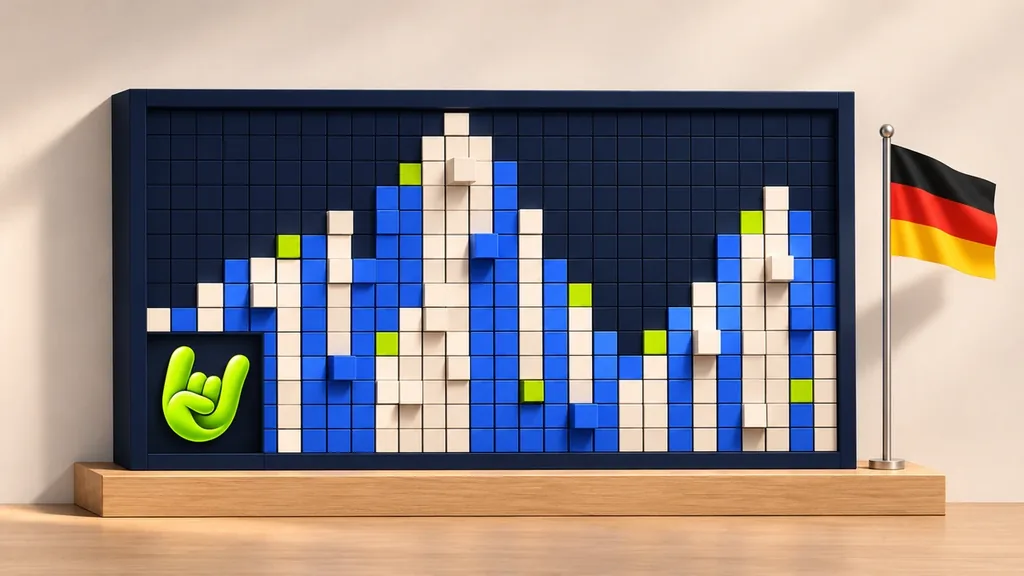
An organ rhythm reduced to a pixel study
Try reducing an organ-pipe rhythm to a small arrangement of squares. This optional design exercise asks how much detail you can remove while keeping a recognizable pattern. If you want to share that study, consider the EXNO Pixel Wall. Its 1,000 × 1,000 grid costs $1 per pixel; an area accepts an image or color, a title and an optional link. EXNO reviews submissions and fully refunds declined ones. Contributions support platform development. The illustration explores a possible composition, without depicting an actual placement or promising traffic.
Questions before making your German product edition
These answers clarify the scope of the proposed files and the examples above. They are intended to help you choose a coherent first release and explain it accurately to a prospective buyer.
Should I start with all twelve product ideas?
Choose one task you can demonstrate and review properly. A complete, explained booklet layout or a small set of original audio comparisons gives a buyer a clearer experience than a collection of unfinished files. Use the other ideas as alternatives, not as a requirement to build a large catalog.
Can my own first product be written entirely in German?
Yes, if that serves your intended reader. State the language in the offer and make the complete explanation understandable in German. This article provides English and German editions of the same content; a later translation of your product should likewise preserve its examples, results and scope.
What is the paid value in a fictional library-record exercise?
Your authored cases, structured practice sequence and reasoned answer key help the learner decide whether records belong together. The proposal uses invented data. It is not a paid copy of the German National Library's database, and its fictional matches do not verify real identities.
Do the organ lesson and pitch-name tool solve the same problem?
No. The organ lesson helps a learner compare the sound of documented stop combinations. The pitch-name tool explains and converts notation conventions. They may interest some of the same musicians, but each listing should identify its own task and demonstrate the result it promises.
Does the amount after EXNO's commission equal my profit?
No. It is the illustrative sale price with only the stated 7% EXNO commission deducted. Other applicable charges, taxes and your own costs remain outside that calculation. It should not be labeled net profit, a guaranteed payout or an earnings estimate.
Do the institutional sources approve these proposed products?
No. They support the cultural, technical or teaching context and the dated events cited in the article. The product concepts, possible audiences, preparation advice and prices are EXNO editorial proposals. You still need to create and check the files you intend to sell.
Sources behind the German contexts and dates
These references establish the subject matter, the short attributed motto and the two named event dates. They do not establish demand, expected sales or approval of an EXNO product. Product designs and example prices are editorial suggestions. Sources checked .
- German Commission for UNESCO — Buchbinderhandwerk. Provides the German bookbinding context. The proposed page layouts, fold diagrams and proofs would be original work. Related background: LWL-Museum für Kunst und Kultur — Selbstgemachtes: Buchbinden.
- German Commission for UNESCO — Orgelbau und Orgelmusik in Deutschland. Describes organs designed for particular buildings and acoustics. The proposed recordings would be independently made with permission. Related background: Deutsches Museum — Musikinstrumente – Klänge im Zeichen der Zeit.
- Oekolandbau.de — Teigentwicklung. Explains flour, water and dough ingredients. The proposed tool calculates quantities for the buyer’s own recipe. Related background: German Commission for UNESCO — Deutsche Brotkultur.
- Deutsches Weininstitut — Weinaromen. Supports progression from broad aroma impressions to more precise descriptions. No aroma wheel or lesson is reproduced.
- Bundesinstitut für Berufsbildung (BIBB) — Fachinformatiker/in. Provides the German vocational context for diagnosing IT faults. All proposed scenarios and logs are fictional.
- Deutsches Museum — Mechanics workshop. Describes interactive mechanical demonstrations. The proposed linkage is an independently authored educational model.
- Deutsche Nationalbibliothek — Informationsseite zur GND. Explains GND authority-record categories. The proposed exercise uses invented identities and structured teaching data.
- Deutsches Museum — Modelleisenbahn. Provides context for a model demonstration of vehicles and operating elements. No current event booking is implied.
- German Commission for UNESCO — Skat spielen. Describes Skat as a cultural practice. Proposed hands, illustrations and teaching explanations would be original.
- Deutscher Klöppelverband e. V. — Bildungsprogramm. Documents technique courses and design workshops. No association pattern or course material is copied.
- German Commission for UNESCO — Demoszene – Kultur der digitalen Echtzeit-Animationen. Describes real-time audiovisual work and size-coding. The proposed demo and sound would be newly authored.
- LilyPond official documentation — Writing pitches: Note names in other languages. Official software documentation supporting the German–English note-name distinction. Its reference is not a product endorsement.
- Leipzig Book Fair — 2027 announcement. Confirms 18–21 March 2027 and the four-word German motto. The English quotation is explicitly an EXNO translation.
- ICOM Deutschland — International Museum Day 2027. Confirms Germany’s date as 23 May 2027. Individual museums set their programs.
The linked EXNO product guides, pricing page, country guides and Pixel Wall page were also reviewed. The price deductions are arithmetic using the stated 7% EXNO commission, without estimates of market demand or earnings.
Image sources and creation
All three illustrations were created for this article on 25 November 2026 with ChatGPT's built-in image generation and the EXNO logo references supplied by the brand. Every image contains exactly one EXNO logo variant and a German flag. Each was converted to WebP immediately after generation and is embedded in both language editions.
- Hero: An imagined craft-and-sound studio with folded book sheets, lace and organ pipes; one EXNO wordmark.
- Sharing image: A conceptual railway puzzle, folded pages and lace bobbins; one EXNO hand logo.
- Pixel Wall: An original square-tile composition inspired by organ-pipe rhythm; one EXNO hand logo.
No photograph or illustration from the research sources is reproduced. These conceptual scenes do not establish that a pattern assembles correctly, a mechanism works safely or a teaching product has been tested.
Product ideas and example prices are illustrations, not earnings estimates.


Turn one clear explanation into a finished product
Choose the task you know well, build its worked example and prepare the files that let someone else follow it.