Gumroad



 Polar
 Kelviq
 Stan


Cyprus · Digital product ideas · 2026
12 digital products you can build from Cyprus in 2026
By EXNO · Reviewed
Digital products to sell in Cyprus can start with a precise craft lesson, a local-history activity, a geology exercise, a bilingual font check, or an ebook layout service. These ideas connect knowledge you can explain or demonstrate with a defined task for a learner, teacher, designer, or publisher, including buyers outside Cyprus.
Cyprus at a glance
Start with one of eight locally grounded teaching ideas or four Greek and Turkish tools and services. Each is a proposed offer for a specific buyer, with a concrete deliverable and a preview to test before you build a larger product.
A practical starting point for choosing your first offer
- Local starting points
- Thread planning, loom preparation, clay decoration, and illustrated settlement or geology lessons.
- Deliverable options
- A narrow PDF/video lesson, an editable teaching model, or a service with a clearly bounded handoff.
- Language choices
- Greek or Turkish for the intended reader, with English explanations where an overseas buyer needs them.
- Potential buyers
- Local educators and creative businesses, overseas instructors, and diaspora families seeking a specific activity.
- When to prepare
- Before a workshop, teaching unit, publisher release, or confirmed community event.
- One price illustration
- EUR 24.00 example price; EUR 1.68 EXNO commission at 7%; EUR 22.32 remaining after that commission.
All proposed buyers, promotion ideas, and prices are editorial examples. The remainder excludes other fees, taxes, and production costs; it is neither profit nor a promised payout.
Which digital products could you sell from Cyprus?
Choose a task you can show clearly: counting threads before cutting, reading a drawn rock intersection, or correcting a specific publishing fault gives a buyer something concrete to assess. The first eight ideas depend on local knowledge; the final four apply a broader skill to Greek and Turkish materials.
1. Lefkara cutwork planning grids
Cutwork is one of the techniques used in Lefkara lace. [1]
Build a lesson around the decision that comes before cutting: which threads must remain to support an original opening? Let learners mark a numbered grid, compare it with a retained-thread layer, and explain their choice before trying a small practice square.
- Who could buy
- Embroidery learners and instructors preparing a short counted-thread session, in Cyprus or abroad.
- What you deliver
- Original SVG and PDF grids, two close-up MP4 demonstrations, and an annotated answer layer. State the fabric count used in your sample.
- A useful preview
- Show the same square with the removal overlay switched on and off. Keep the supporting threads visible in both views.
- When to offer it
- Offer it when an instructor is planning a sampler workshop; a finished practice piece is a stronger demonstration than a decorative cover.
- Define the boundary
- Write your own exercise and explain its limits. A grid-planning lesson does not teach every technique in this tradition.
Example starting price: EUR 24.00 · 7% EXNO commission: EUR 1.68 · Remainder after that commission: EUR 22.32.
For packaging and usage terms, see selling embroidery designs.
2. Fyti warp-count reconciliation lessons
Fyti preparation includes syrma: counting and stretching warp threads before loom setup. [2]
Turn your own small sample into a counting exercise before threading. A learner tallies the measured warp ends in declared bundles, checks that their sum matches the intended total, and locates an omitted count before setup continues.
- Who could buy
- Weavers who can handle their equipment but want a clearly explained first preparation exercise.
- What you deliver
- A counting video, printable bundle tally, an editable total-check sheet, and a short guide naming the loom and sample assumptions.
- A useful preview
- Film one bundle being recounted and its corrected tally added to the total. Show exactly where the missing count is recovered.
- When to offer it
- Use an evergreen listing and invite questions about equipment before a learner chooses the lesson.
- Define the boundary
- Keep the lesson to reconciling counts before threading. It does not prescribe a universal setup or arrange colored warp sequences.
Example starting price: EUR 28.00 · 7% EXNO commission: EUR 1.96 · Remainder after that commission: EUR 26.04.
3. Kornos comb-mark spacing studies
In Kornos, Stikti decoration makes linear marks by pressing a comb onto clay as the wheel turns. [3]
Record how a pause or a change in rotation alters the spacing of your own impressions. A learner compares two short demonstrations, marks where the spacing changes, and then records observations from a practice attempt.
- Who could buy
- Pottery learners with basic wheel skills and teachers planning a focused decoration session.
- What you deliver
- Overhead MP4 clips, annotated close-up images, and a PDF observation sheet with space for the learner’s own photographs.
- A useful preview
- Place two differently spaced samples beside a slow-motion clip so the buyer can see the precise observation the lesson teaches.
- When to offer it
- Prepare the digital pack after documenting your own making session; release it whenever that narrow lesson is ready.
- Define the boundary
- Keep the scope to spacing impressions. List the tools used and provide your own images, without reproducing another maker’s design.
Example starting price: EUR 18.00 · 7% EXNO commission: EUR 1.26 · Remainder after that commission: EUR 16.74.
4. Troodos cross-cutting observation cards
The Troodos ophiolite exposes dykes that intrude lava units. [4]
Create fictional outcrop drawings that make one intersection readable at a time. Ask the learner which feature cuts another and what visible edge supports that answer; reveal the continuation only after the learner has chosen.
- Who could buy
- Geology teachers, introductory learners, and educators building an illustrated lesson for an overseas class.
- What you deliver
- Editable SVG panels, printable PDF cards, reveal layers, and instructor notes explaining the relative-age reasoning in each invented example.
- A useful preview
- Crop one intersection, ask for the evidence, then show the complete drawing with the relevant edge highlighted.
- When to offer it
- Fit the pack to a teacher’s planned geology unit, with a sample available before they decide whether it suits their class.
- Define the boundary
- Label every panel as an original simplified teaching diagram. Do not present it as a measured record of a particular outcrop.
Example starting price: EUR 22.00 · 7% EXNO commission: EUR 1.54 · Remainder after that commission: EUR 20.46.
The lesson-plan selling guide helps you describe the teaching outcome and included files.
5. Choirokoitia household-grouping kit
At Choirokoitia, several circular structures around a small courtyard could form one household compound. [5]
Help a class notice why counting circles is not the same as counting households. Give learners an invented cluster, ask them to draw a compound boundary, and reveal the shared space that supports the grouping.
- Who could buy
- History teachers and museum educators introducing settlement interpretation to younger or introductory learners.
- What you deliver
- An original editable plan, printable grouping cards, a short slide deck, and answer layers explaining the clues you deliberately included.
- A useful preview
- Show one learner-facing cluster beside its revealed boundary. Keep the question visible so an educator can assess the difficulty.
- When to offer it
- Use the product for a planned settlement lesson; ask an educator to try the prompt before extending the pack.
- Define the boundary
- State that the plan is fictional. It illustrates a grouping question and does not reconstruct an excavated household.
Example starting price: EUR 20.00 · 7% EXNO commission: EUR 1.40 · Remainder after that commission: EUR 18.60.
6. Agia Varvara belt-transmission demonstrator
The Agia Varvara workshop powered several mills from one engine through shafts, wheels and belts. [6]
Make an original teaching model with two illustrated shafts and a belt. Keep the drive direction and viewing side fixed while the learner switches between an open belt and a crossed belt, then predicts the driven shaft’s rotation direction.
- Who could buy
- Museum educators and mechanics teachers who need a visible explanation of transmitted motion.
- What you deliver
- A standalone HTML/SVG model, a short demonstration video, and an optional GLB scene. Document the controls and the simplifying assumptions.
- A useful preview
- Keep the drive arrow visible while switching the belt arrangement. Reveal the driven arrow after the learner predicts its direction.
- When to offer it
- Release the simplest complete two-shaft exercise first; add detail only when it clarifies the rotation question.
- Define the boundary
- Use invented dimensions and a clearly labeled schematic. This is a learning aid, with no instructions for operating the museum’s machinery.
Example starting price: EUR 36.00 · 7% EXNO commission: EUR 2.52 · Remainder after that commission: EUR 33.48.
For a model edition, consult selling 3D models and game assets.
7. Nicosia wall-orientation activities
Nicosia’s circular walls have eleven heart-shaped bastions. [7]
Use that recognizable outline as the starting point for a simplified orientation exercise. Learners rotate your schematic until two declared reference markers align, then explain where a third marker falls.
- Who could buy
- Local-history teachers and workshop leaders teaching how to orient a plan.
- What you deliver
- An original SVG schematic, a printable rotating overlay, an answer sheet, and an optional small HTML version with a rotation control.
- A useful preview
- Display the same schematic before and after alignment, keeping both reference markers labeled throughout.
- When to offer it
- Prepare it for a class activity or local-history workshop; the listing should specify the assumed reading level.
- Define the boundary
- Make the markers fictional and identify the drawing as schematic. It should not be used as a navigation or access map.
Example starting price: EUR 16.00 · 7% EXNO commission: EUR 1.12 · Remainder after that commission: EUR 14.88.
8. Mandili next-turn teaching cards
Mandili is among the Easter games preserved in Pafos villages, where older players pass rules to younger participants. [8]
First document one community’s version with its contributors’ permission. Then illustrate the moments that change who acts next, keeping the community and version label attached to every teaching sequence.
- Who could buy
- Educators and community organizers teaching the version they have agreed to use.
- What you deliver
- Original PDF event cards, editable slides, and a concise educator recording explaining the documented sequence and unresolved variations.
- A useful preview
- Reveal the next-turn consequence of one event. Use the contributor-approved version label instead of claiming a universal rule.
- When to offer it
- Finish the pack before the organizer’s Easter activity and confirm its actual date directly with them.
- Define the boundary
- The source establishes the game’s context, not a complete rulebook. Obtain the missing rules from the community before creating the product.
Example starting price: EUR 18.00 · 7% EXNO commission: EUR 1.26 · Remainder after that commission: EUR 16.74.
9. Greek and Turkish glyph coverage checks
Turkish distinguishes i and ı, with the corresponding capitals İ and I. [13]
Offer a bounded check of a client’s proposed font stack for Greek and Turkish copy. Render an agreed character specimen, identify missing glyphs or unexpected fallback, and show the visual evidence beside the tested font names.
- Who could buy
- Designers preparing bilingual publications or websites for clients in Cyprus.
- What you deliver
- A small HTML specimen, annotated screenshots, and a report listing the character set, font versions, and environments actually checked.
- A useful preview
- Use original sample text and an intentionally missing glyph to show how your report distinguishes a coverage gap from an appearance preference.
- When to offer it
- Schedule the check before the client approves the type choices and page layouts.
- Define the boundary
- Exclude font redistribution and universal compatibility promises. The quoted scope covers the agreed repertoire and environments.
Example starting price: EUR 60.00 · 7% EXNO commission: EUR 4.20 · Remainder after that commission: EUR 55.80.
10. Greek and Turkish scan-to-text correction
Turn a client-owned typed scan into editable text, correcting recognition output against the visible original. Preserve the approved wording and mark genuinely uncertain letters for the client to resolve; guessing a word would undermine the service.
- Who could buy
- Small organizations preparing their own Greek or Turkish archive material for reuse.
- What you deliver
- Corrected DOCX and TXT files, source-page references, and a short uncertainty list. Define a starter job by page count, scan quality, and language.
- A useful preview
- Create a fictional scan excerpt and show its recognition errors beside the corrected text, with uncertainty clearly marked.
- When to offer it
- Offer a sample assessment before quoting a larger archive job so the client understands what can be read reliably.
- Define the boundary
- Keep private client scans out of public demonstrations. Describe the service as text correction, without implying certified transcription.
Example starting price: EUR 45.00 · 7% EXNO commission: EUR 3.15 · Remainder after that commission: EUR 41.85.
Define revisions and the delivery boundary using selling services through EXNO.
11. Greek and Turkish EPUB reflow repairs
EPUB layout provisions address dynamically paginated and scrolled overflow. [14]
Take an agreed excerpt from a client’s existing Greek or Turkish ebook and repair a defined visual problem when the reader changes text size. Keep the approved prose intact while adjusting clipped images, overwide tables, or fixed-width styling.
- Who could buy
- Small publishers with a translated, reflowable EPUB that needs a focused layout correction.
- What you deliver
- A revised EPUB, the changed CSS, and before-and-after captures from named reading environments and text-size settings.
- A useful preview
- Show one original paragraph-and-image scene at two sizes, then show the corrected scene under the same settings.
- When to offer it
- Work after translation approval and before release, leaving time for the publisher to inspect the returned file.
- Define the boundary
- Agree the excerpt, environments, and visual faults in advance. A limited repair does not certify the whole book’s accessibility or every reader application.
Example starting price: EUR 72.00 · 7% EXNO commission: EUR 5.04 · Remainder after that commission: EUR 66.96.
12. Translation placeholder parity checker
Build a small tool that compares named placeholders in source copy and approved Greek or Turkish translations. For an agreed syntax, it should flag missing or extra tokens while leaving the wording untouched.
- Who could buy
- Small teams preparing bilingual interface text for a release or client handoff.
- What you deliver
- A local script or offline HTML tool, invented JSON examples, readable error output, and setup notes describing the supported token syntax.
- A useful preview
- Show a pair in which {name} is retained but {date} is missing. Report the missing token without proposing a replacement translation.
- When to offer it
- Introduce it at the final copy handoff, when a team can still repair a damaged placeholder before release.
- Define the boundary
- Specify how repeated tokens and literal braces are handled. A clean result establishes token parity, not accurate language or correct business logic.
Example starting price: EUR 32.00 · 7% EXNO commission: EUR 2.24 · Remainder after that commission: EUR 29.76.
Explain installation and supported inputs with the code and plugin selling guide.
Where does your local knowledge add value?
Your advantage is the explanation you can verify, demonstrate, and adapt for a particular learner, rather than the number of Cypriot references in a title. Choose an idea where you can answer a buyer’s likely follow-up question and produce a convincing sample before committing to a larger collection.
Greek and Turkish are the Republic of Cyprus’s official languages. [9] That context supports a bilingual service idea; it does not tell you which language an individual client wants. Ask for the intended readers, approved terminology, and the exact material to be delivered.
- Choose one action. For the cutwork pack, the learner decides which threads remain. Keep unrelated sewing techniques outside that first lesson.
- Make the answer inspectable. Include a reveal layer, annotated demonstration, or before-and-after example so the buyer can judge the result.
- Find a suitable reader. Ask an instructor or prospective client to try the sample and identify the instruction they could not follow.
- Revise the difficulty. Name the prerequisites and remove steps that depend on knowledge the intended beginner does not have.
How can Cyprus knowledge travel beyond Cyprus?
Build for an overseas buyer by explaining the task without assuming that they know the place, craft term, or classroom context already. An English guide, a clearly labeled demonstration, and permission for a stated use can make a small local lesson easier for an instructor or family to evaluate.
| Buyer | Useful adaptation | Preview to test |
|---|---|---|
| Overseas embroidery instructor | Explain the grid symbols and sample fabric before introducing the local craft context. | One complete retained-thread exercise with its answer. |
| Diaspora family educator | Offer a short activity with age guidance and pronunciation help you can check. | A grouping question that an adult and child can discuss. |
| International museum educator | Supply editable captions and a classroom-use license for your original model. | Open and crossed belt arrangements with a rotation-direction question. |
| Publisher serving bilingual readers | Define the exact languages, excerpt, devices, and acceptance checks. | The same page scene before and after a bounded repair. |
Use the buyer’s questions to decide whether to translate the whole product or only its instructions. Keep the creator’s original work and the historical context clearly labeled, and state whether the buyer may edit, print, teach from, or redistribute each supplied file.
A Cyprus selling calendar: late 2026 and 2027
Prepare a sample before the buyer needs to plan an activity, and ask an organizer for the event date before promising delivery. The calendar below offers scheduling prompts for the proposed products; it does not measure demand or assume that readers across Cyprus observe the same occasions or working hours.
On the Republic of Cyprus’s 2026 bank calendar, Green Monday was February 23, Orthodox Easter Monday April 13, Pentecost Monday June 1, and Independence Day October 1. Christmas is December 25. [11]
The following Republic of Cyprus dates are already published for 2027. [12] The product connections and preparation windows are suggestions.
| Date | Occasion | Buyer’s possible task | What to prepare |
|---|---|---|---|
| Green Monday | An educator planning a short spring activity | Offer one printable history exercise in February for review. | |
| Orthodox Easter Sunday | An organizer teaching an agreed game version | Have the documented Mandili cards ready for inspection in March. | |
| Kataklysmos / Pentecost Monday | A workshop leader selecting an optional creative session | Show a focused craft preview in May; confirm the actual workshop separately. | |
| Cyprus Independence Day | An educator considering a local-history activity | Prepare an original orientation or household-grouping sample in September. | |
| Christmas Day | A buyer comparing an activity gift or personal lesson | Explain the included digital files and usage rights in November. |
For the remaining 2026 Christmas window, a completed small pack is more realistic than an unfinished course. Evergreen technical services can follow a client’s publication schedule instead; agree the review and revision dates before accepting the job.
How should you price the files or service?
Price the specific handoff a buyer can inspect: a short lesson, an editable teaching asset, or a bounded correction job should have a clearly stated scope. Start with an illustrative figure, check whether the work is sustainable for you, and use buyer feedback to refine the package before expanding it.
Examples use EUR with two decimal places, consistent with the currency entry for Cyprus. [10] These are proposed starting figures, with no exchange-rate conversion or claim about typical market prices.
EXNO takes 7% on both direct and Discover sales; the pricing page gives the current terms. Each example shows only that commission and the amount left after it. Other fees, taxes, and production costs are excluded, so the remainder is neither profit nor a guaranteed payment to you.
| Offer | Local starting approach | Approach for buyers abroad |
|---|---|---|
| Teaching download | A compact personal-use or single-class edition with clear prerequisites. | An edition with English instructions and explicitly stated classroom permissions. |
| Technical service | A defined excerpt or specimen, with a revision boundary. | The same measurable scope, with any extra language work quoted explicitly. |
The digital-product pricing guide can help you define that scope. The purchasing-power pricing guide offers a framework for considering buyer circumstances without treating nationality as a measure of what one person can afford.
For an optional introductory exercise, pay-what-you-want pricing lets a buyer choose an amount under the offer’s terms. If a workshop organizer needs a temporary promotion, use discount codes with an explicit end date and keep the underlying product scope clear.
Where could you show a useful first preview?
Choose a place where you can demonstrate the buyer’s task and invite a specific question about it. A short video, an educator’s mailing list, or a relevant community discussion can support a small promotion experiment, but the useful signal is whether the intended reader understands the offer and asks about using it.
- Craft demonstration: post a short Instagram or YouTube clip with the retained threads or comb spacing clearly visible. Ask which step needs a closer view.
- Teaching sample: share one original question with an educator group that permits promotional posts, and show the answer separately.
- Technical proof: publish a fictional specimen or ebook scene that demonstrates a single fault and its correction, without exposing client material.
- Community activity: ask the organizer who helped document a game version whether the preview and credits are suitable for their audience.
These are channels to test, not a ranking of Cyprus’s most-used apps. Describe the language, file format, prerequisites, and result beside the preview so a person can decide whether the product fits before asking about the price.
From one finished example to a first EXNO listing
Begin with the smallest complete offer that demonstrates its promised outcome, then write the listing around that evidence. A buyer should be able to see what arrives, which prior knowledge is needed, what they may do with the files, and where the creator’s help or revision work ends.
EXNO supports digital products and services from individuals and businesses. You can create a storefront at your-name.exno.app and share payment links through a permitted social post, message, or profile; a separate website is not required.
- Finish the sample. Run the exercise yourself or inspect the proposed service output against its stated acceptance checks.
- Create the storefront. Give the offer a name that identifies the buyer’s task, such as planning a cutwork opening.
- Prepare the listing. Include the deliverable, language, prerequisites, example views, usage terms, and any revision limit.
- Check the handoff. Open every promised file, verify labels and instructions, and make the example match the actual included edition.
- Share one relevant preview. Place the payment link beside the demonstrated task, then record the buyer questions that reveal missing information.
Which mistakes would weaken these Cyprus offers?
A narrow offer loses credibility when its title suggests more than the files actually teach or the service actually checks. Keep the local reference accurate, explain your own contribution, and let the preview demonstrate the same action that appears in the listing, instructions, and final handoff to the buyer.
- Selling a decorative cover instead of a lesson. A craft-themed image does not show whether the retained-thread or warp-count instructions can be followed.
- Presenting one game version as universal. Keep contributor permission, the community label, and unresolved variations visible in the teaching notes.
- Making a schematic look like a site survey. Mark invented plans and machinery diagrams as teaching illustrations, and avoid travel or operating instructions.
- Bundling unrelated language checks. Glyph coverage, scan correction, reflow, and placeholder parity solve different problems; specify the purchased one.
- Confusing a calendar date with an event booking. Ask the organizer about their program before designing a promised delivery around it.
- Calling the commission-only remainder profit. Account for your own work and excluded costs when deciding whether the offer is sustainable.
A place on EXNO’s Pixel Wall
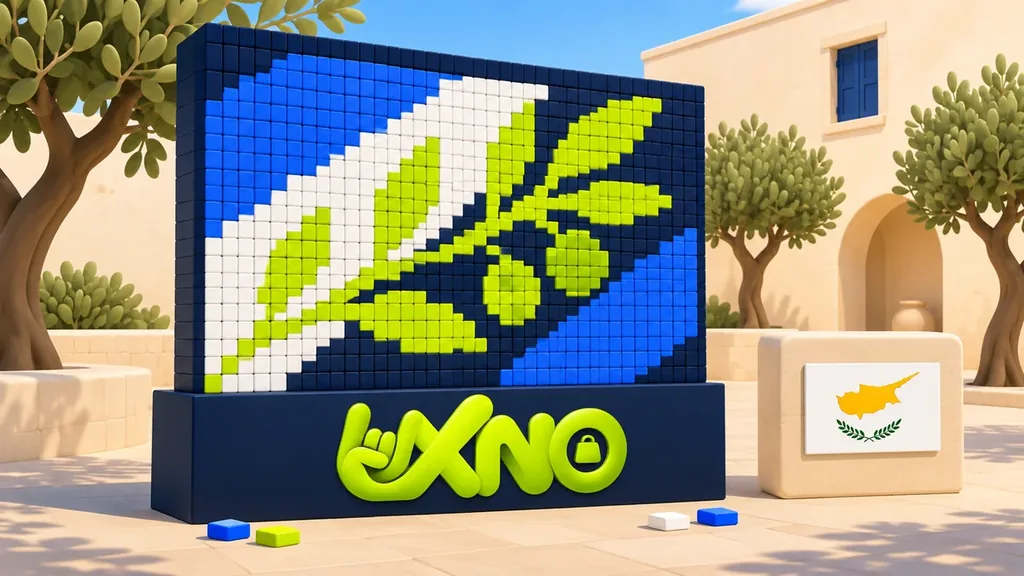
EXNO’s 1000 × 1000 Pixel Wall has 1,000,000 pixels, each costing $1 once. Pick a rectangle from one pixel, add an image or color and title, and optionally a link. Submissions are reviewed; rejected placements receive a full refund. Accepted placements stay permanently, subject to EXNO’s rules and law. EXNO pins the wall on its social accounts. Sellers can use earnings; other supporters can pay by card. The wall helps fund EXNO’s growth and better service. It offers visibility without promising clicks or sales. The Pixel Wall details explain participation.
Questions about selling these products from Cyprus
Use these answers to narrow the product you can make and explain responsibly. They address the proposed offers here, rather than claiming a measured ranking of what sells most.
Can a small local craft lesson be a complete digital product?
Yes, if it solves a defined learning task and includes everything needed for that task. A tested opening grid or preparation demonstration can stand on its own when the prerequisites, sample assumptions, and answer are clear. Add more lessons only when they introduce a useful next step.
Do I need Greek, Turkish, and English in every product?
Choose the language the intended buyer can use confidently. An overseas instructor may need English teaching notes, while a local client may request one approved language version. Translate the parts the buyer will actually rely on and check that labels, examples, and usage terms agree.
Can I sell a downloadable copy of an existing heritage pattern?
The proposals here call for your own exercises, drawings, and demonstrations. A source about a tradition does not establish permission to reproduce someone else’s photographed work or published pattern. If a product depends on third-party material, resolve its permissions before including it.
What should an OCR correction service promise?
Promise a defined comparison between the supplied scan and the returned text, with unclear readings flagged. Specify the languages, page limit, input quality, and revision scope before work starts. The client should see what remains uncertain instead of receiving silently invented wording.
Does a passed placeholder check prove that a translation is correct?
No. It can show that the required tokens survived under the syntax you implemented. Meaning, grammar, tone, and whether the interface behaves correctly still need their own checks.
How can I test an offer before making a large collection?
Finish one representative unit and put it in front of a suitable prospective buyer. Ask them to complete its task and explain any unclear instruction. Use the feedback to improve the unit and decide whether an expanded product would answer a real request.
Sources and review scope
The sources establish the local and technical context; the products, buyers, prices, and promotion plans are editorial proposals. Calendar scope is stated above. Sources checked .
- Cyprus UNESCO Commission — Lefkara lace techniques.
- Cyprus UNESCO Commission — Fyti warp preparation.
- Cyprus UNESCO Commission — Kornos pottery decoration.
- Cyprus Geological Survey — Troodos ophiolite.
- UNESCO — Choirokoitia household structures.
- Visit Cyprus — Agia Varvara workshop.
- Visit Cyprus — Nicosia walls.
- Cyprus UNESCO Commission — traditional Easter games.
- Statistical Service — Cyprus in Figures, country profile.
- SIX — currency list, Cyprus entry.
- Central Bank of Cyprus — 2026 bank holidays.
- Visit Cyprus — published holiday calendar.
- Unicode — Turkish letter distinctions.
- W3C — EPUB 3.3 layout provisions.
Product ideas and example prices are illustrations, not earnings estimates.


Turn one clear example into a finished offer
Select the task you can demonstrate, prepare the actual files or service scope, and write down the buyer’s intended result. When the preview and handoff are ready, create your EXNO store.