 Gumroad



 Polar
 Kelviq
 Stan


EXNO creator resources India · 2026 edition
12 digital product ideas for creators in India
By EXNO · Research checked
Digital products to sell in India can include Devanagari website test files, millet cooking lessons, classroom science resources, and practical shop workbooks. Choose a subject you can demonstrate accurately and a buyer whose task you understand; the twelve proposals below explain what to make, how to package it, and an illustrative price in Indian rupees.
Summary
A useful first product solves a task you can explain and demonstrate. In this selection, that might mean checking a Hindi interface, documenting a prototype, teaching someone to interpret a monsoon map, or organizing a shop’s stock count. The sources establish local context; the proposed products and prices are editorial examples, not a ranking of sales.
India: choosing a digital product in 2026
- Local starting points
- Devanagari text behavior, school tinkering, millet cooking, regional crafts, and practical retail work.[1][2][3][8]
- Product formats
- Code and test files, illustrated lessons, original videos, ebooks, editable workbooks, and 3D course files.
- Who might use them
- Developers, educators, cooks, small-shop teams, local hosts, design students, and family coordinators.
- Language decisions
- This article is available in English and Hindi. Choose each product’s language for its actual learners or customers; another community may need another language and a fluent reviewer.
- When to prepare
- Use late 2026 to test a sample. Plan 2027 editions around a specific class, release, workshop, shop routine, or confirmed event.
- Illustrative price range
- Example selling prices: ₹250.00–₹1,200.00.EXNO commission (7%): ₹17.50–₹84.00.
After EXNO commission: ₹232.50–₹1,116.00 per sale.
Prices are INR examples for a single sale. The remaining amount subtracts only EXNO’s 7% commission. Other applicable fees, taxes, and the cost of creating the product are excluded, so this figure is not net profit or an earnings forecast.
What could you create and sell from India?
Begin with a task you know well enough to show in detail. A useful offer may be a set of reproducible software tests, a lesson with explained answers, or a workbook used during real work. These twelve ideas connect a documented Indian context to a particular buyer and deliverable.
01Devanagari website testing kit
Create a small collection of test pages that helps a developer inspect how Hindi text behaves in a real interface. The World Wide Web Consortium’s Devanagari guidance describes joined consonant forms, vowel signs, text selection, and line breaking.[1] Turn those concerns into original examples: a narrow button, a long heading, editable text, and a paragraph that wraps onto another line.
Supply the HTML and CSS, expected results, and a record of the browsers and fonts you actually checked. Explain how to reproduce a problem and distinguish an application issue from a font issue. Sell your test design and documentation, with a clear compatibility statement. The code-product guide can help you describe the files and support included.
- Who buys: Web developers and agencies preparing Hindi interfaces or changing a Devanagari font.
- Use when: Before a localized release, redesign, or font replacement.
- Format: Original HTML/CSS fixtures, annotated screenshots, expected-result notes, and a test log.
- Example price: ₹900.00
- EXNO commission (7%): ₹63.00
- After EXNO commission: ₹837.00
02Prototype journal for school tinkering projects
Help a student explain how an idea changed through experiments. Atal Innovation Mission’s resources for Atal Tinkering Labs include design thinking, computational thinking, and physical computing.[2] Build your own journal around that practical work: identifying a problem, sketching alternatives, recording a test, and deciding what to change next.
A fictional paper-bridge project can demonstrate the difference between an observation and a conclusion. Leave room for unsuccessful attempts, photographs, and a mentor’s questions. Make the printable pages and presentation slides refer to the same project stages. Your paid contribution is an original teaching sequence and worked explanation, rather than repackaged public curriculum. Use the lesson-plan guide to define classroom-use permissions.
- Who buys: School innovation-club mentors, lab facilitators, and learners developing their own prototypes.
- Use when: At project setup and whenever a prototype is tested or revised.
- Format: Printable journal, editable presentation pages, mentor prompts, and a fictional worked project.
- Example price: ₹350.00
- EXNO commission (7%): ₹24.50
- After EXNO commission: ₹325.50
03Millet recipes with your own cooking demonstrations
Build a recipe collection around millet dishes you have prepared and documented yourself. The Indian Council of Agricultural Research–Indian Institute of Millets Research publishes cooking resources in Hindi, English, and other languages, establishing a useful local subject for food education.[3] Your collection should contribute original recipes, photographs, and explanations of the texture a cook is trying to achieve.
Name the grain and its form, give ingredient weights, and show the important stages in short videos. Record substitutions only when you have tried them. A sample recipe should reveal whether your instructions are easy to follow with the stated equipment. The recipe-product guide helps organize the ebook and supporting files; keep the offer about cooking, without medical or weight-loss claims.
- Who buys: Home cooks and instructors who want demonstrated ways to cook unfamiliar millet dishes.
- Use when: Before a cooking workshop or when planning a new set of dishes to practice.
- Format: Original recipe ebook, ingredient sheets, step photographs, and short cooking videos.
- Example price: ₹450.00
- EXNO commission (7%): ₹31.50
- After EXNO commission: ₹418.50
04Monsoon maps and data-reading lessons
Teach learners to read a monsoon map without treating every place in India as if it shared one calendar. The India Meteorological Department’s explanation of revised monsoon normals shows different normal onset dates for different stations.[4] Create original exercises that compare locations, read a legend, identify the period behind a statistic, and separate a climate normal from a forecast.
Include your own diagrams, a data glossary, chart templates, and answers explaining the reasoning. Link to the underlying official material rather than selling its pages as your own. Any invented practice dataset must be clearly labeled. A lesson can ask what a chart supports and what remains unknown; it should not predict the arrival of rain in 2027.
- Who buys: Geography teachers, tutors, and learning groups studying Indian weather and maps.
- Use when: During a weather or data-literacy unit, using the teacher’s own schedule.
- Format: Original map-reading slides, printable exercises, chart templates, glossary, and answer notes.
- Example price: ₹300.00
- EXNO commission (7%): ₹21.00
- After EXNO commission: ₹279.00
05Indian Sign Language conversation-practice videos
If you teach Indian Sign Language (ISL), develop short, original conversations with a qualified Deaf teacher or co-creator. The Indian Sign Language Research and Training Centre describes everyday vocabulary, Hindi and English equivalents, and regional variants in its dictionary.[5] Use that context to define the scope of your own practice resource, rather than reselling the dictionary’s videos.
Film a complete exchange, then provide practice prompts and a vocabulary index. Keep hands, face, and upper body visible; add accurate captions and identify the regional usage you teach. Have the signed conversations checked by the people qualified to teach them, with contributors credited by agreement. Explain the learner’s starting level and the limits of the course; it does not confer interpreter qualifications.
- Who buys: Beginning ISL learners and instructors adding contextual conversation practice.
- Use when: After introductory vocabulary has been taught and learners need to follow an exchange.
- Format: Original signed videos, Hindi/English captions, vocabulary index, and practice prompts.
- Example price: ₹650.00
- EXNO commission (7%): ₹45.50
- After EXNO commission: ₹604.50
06Jantar Mantar geometry and shadow lessons
Connect geometry with Jaipur’s Jantar Mantar observatory. UNESCO describes its fixed masonry instruments for observing astronomical positions with the naked eye.[6] An educator can turn a selected instrument’s shape into original diagrams, angle-reading activities, and a paper model that explains one clearly defined principle.
Work through a complete example and explain the model’s assumptions. Label simulated shadows as simulations and check the mathematics before including answer notes. Give instructors a preparation sheet and a way to adjust the lesson’s difficulty. The package should make the relationship between a structure, a shadow, and an observation understandable; it is an interpretive teaching resource, not an accurate replacement for the observatory.
- Who buys: Science and history educators, museum-learning facilitators, and geometry tutors.
- Use when: Before a heritage-science lesson or a teacher-planned observatory visit.
- Format: Original diagrams, paper-model files, demonstration images, exercises, and instructor notes.
- Example price: ₹400.00
- EXNO commission (7%): ₹28.00
- After EXNO commission: ₹372.00
07Kolam drawing lessons with animated line paths
Show how a line moves around a dot arrangement, where it changes direction, and how the drawing is completed. The Indira Gandhi National Centre for the Arts describes kolam as a daily South Indian practice, distinguishing it from festival-associated rangoli.[7] Develop your own practice patterns with input from a practitioner who knows the form you are teaching.
Pair short animations with printable dot grids and numbered practice stages. A learner should be able to pause, retrace the path, and restart at a marked point. Include concise cultural notes and explain whether the examples are traditional forms you have documented appropriately or your own teaching designs. Demonstrating the drawing process gives this product a different purpose from a decorative pattern download.
- Who buys: Art teachers, cultural-workshop facilitators, and people learning kolam drawing.
- Use when: Throughout a practice course or before a workshop; the subject is not limited to Diwali.
- Format: Original line-path animations, printable dot grids, practice pages, and teaching notes.
- Example price: ₹250.00
- EXNO commission (7%): ₹17.50
- After EXNO commission: ₹232.50
08Hindi-English shelf-count and reorder workbook
Design a stock-count workbook for a small shop where the person counting items and the person ordering them need to understand the same entry. The Retailers Association’s Skill Council of India identifies inventory management as part of the retailer’s work.[8] A Hindi-English version can make the item name, counting unit, and replenishment decision clear to the intended team.
Separate whole packs from individual units, let the shop set its own reorder level, and provide a place to explain discrepancies. Show the formulas with fictional stock, including a return and a corrected count. Make input cells obvious and document how to reset a period without losing earlier records. The spreadsheet-template guide covers how to describe compatibility and the included example.
- Who buys: Owner-operated shops whose staff prefer Hindi-English working labels.
- Use when: During scheduled shelf counts and before preparing a replenishment order.
- Format: Editable workbook, fictional demonstration data, formula notes, and a short walkthrough.
- Example price: ₹500.00
- EXNO commission (7%): ₹35.00
- After EXNO commission: ₹465.00
09Recording toolkit for Kerala village-experience hosts
Help a local host record what a visitor will actually see and do during a craft or farming activity. Kerala Tourism’s Village Life Experience describes encounters with traditional work, artisans, farmers, and small entrepreneurs.[9] Build a recording toolkit around one host-led activity: introducing the maker, showing the sequence, and explaining the visitor’s part.
Provide shot prompts, questions about the process, caption templates, and a sequence sheet linking each clip to its explanation. Use a permission-cleared example of work the contributor genuinely knows. This is a production aid for explaining an existing activity; it should not invent a tour, an availability promise, or a community’s story. Any Malayalam edition needs its own fluent language review.
- Who buys: Kerala experience hosts and small content teams documenting local activities.
- Use when: Before filming an activity for visitor information or an educational presentation.
- Format: Shot-planning sheets, process questions, caption templates, and a worked recording sequence.
- Example price: ₹600.00
- EXNO commission (7%): ₹42.00
- After EXNO commission: ₹558.00
10Channapatna-inspired 3D form-modeling course
Teach a beginning 3D artist how a drawn profile becomes a rounded digital object. The Ministry of Tourism’s account of Channapatna lacquerware describes shaping wood on a lathe and coloring it with lac.[10] Use that local process as the starting point for your own invented forms and a digital revolve-modeling lesson.
Record the profile, the rotation into volume, the assembly of separate parts, and a simple rendered presentation. Provide editable scenes so learners can change proportions and inspect the result. State the software and version used. The online-course guide helps define the lesson files and prerequisites; describe this as digital design education, without suggesting that the files establish physical-toy safety or authenticity.
- Who buys: Beginning 3D artists and product-design students practicing rotational forms.
- Use when: When moving from flat profiles to simple three-dimensional models.
- Format: Original tutorial videos, editable scene files, profile drawings, and rendered examples.
- Example price: ₹1,200.00
- EXNO commission (7%): ₹84.00
- After EXNO commission: ₹1,116.00
11Chettinad weave-sample study workbook
Give a textile learner a systematic way to record what changed between weaving samples. The Ministry of Textiles’ description of Chettinad cotton sarees identifies contrasting borders and checks or stripes.[11] Use this context to design original study sheets for the learner’s own cloth: warp and weft notes, color placement, repeat size, and the relationship between a border and the main fabric.
Include space for photographs and a clearly fictional example showing a change in one variable. Ask the learner to describe the result before starting the next sample. This workbook documents construction and experimentation, rather than presenting finished garments to sales buyers. Explain the weaving knowledge assumed and make clear that a completed page does not authenticate the origin of a textile.
- Who buys: Textile students, weaving-workshop teachers, and designers recording their own samples.
- Use when: During weaving trials and when comparing the results of successive samples.
- Format: Editable swatch records, color-placement grids, photo pages, and a worked study example.
- Example price: ₹300.00
- EXNO commission (7%): ₹21.00
- After EXNO commission: ₹279.00
12Destination-wedding function coordination workbook
Build a working schedule for a wedding with several functions and more than one team. The Ministry of Tourism’s wedding campaign presents settings ranging from heritage venues to beaches and other landscapes.[12] The useful product is a way to coordinate the family’s actual choices: who is responsible, what must be ready first, and who needs to hear about a change.
Let the buyer name, reorder, or remove functions instead of imposing a standard Indian ceremony sequence. Connect vendor arrival notes, guest transport, and the running order through consistent labels. A fictional example should demonstrate a venue change and its consequences. Include a clear version date so the coordinator knows which schedule was shared; leave religious or auspicious-date decisions to the family.
- Who buys: Couples, family coordinators, and small teams planning a destination wedding in India.
- Use when: After the functions and venues are chosen, before teams receive the working schedule.
- Format: Editable function schedule, responsibility matrix, vendor timetable, and change log.
- Example price: ₹750.00
- EXNO commission (7%): ₹52.50
- After EXNO commission: ₹697.50
Which local details make a product worth using?
Local knowledge should change how the product works. A cook needs to know which form of a grain you used; a shop assistant needs to distinguish a packet from a single item; a learner needs the explanation in a language they understand. Build those decisions into the actual files.
| Decision | What to show | Question to test with a user |
|---|---|---|
| Hindi interface behavior | A sentence with joined letters in a narrow field, plus the expected display and reproduction steps. | Can a developer reproduce and explain the issue from your files? |
| Millet preparation | The named grain, its processing form, and photographs of the important cooking stages. | Can a cook identify the texture to look for before moving on? |
| Stock-count units | Separate entries for packs and loose units, with a correction example. | Do two staff members interpret the same count consistently? |
| Weaving trials | The changed thread or color arrangement beside the resulting sample. | Can the learner explain what changed and what to try next? |
“every child can learn in a language they understand”
For an educational product, choose the language of explanation with the intended learner in mind. Translate instructions, examples, captions, and answer notes as one coherent resource. Have the local-language version read on its own, then compare it with the source so that natural wording preserves the same meaning and detail.
How can the same knowledge help buyers abroad?
An overseas customer needs a clear way to use the knowledge you are offering. Show the required skills, files, ingredients, or software and explain unfamiliar terms in context. The buyer might be a designer working with Indian subjects, a teacher planning a lesson, or a cook learning a technique.
| Possible buyer | Useful adaptation | What stays consistent |
|---|---|---|
| A developer supporting Hindi content | English test instructions alongside the original Devanagari examples and expected results. | The actual text cases, technical scope, and recorded software compatibility. |
| A cook learning millet dishes | Clear grain names, weights, equipment notes, and descriptions of tested substitutions. | The recipe method, photographs, and results the creator actually observed. |
| An educator teaching geometry through heritage | A glossary, a complete worked example, and explanations of the model’s assumptions. | The mathematical principle and the distinction between an illustration and a measurement. |
| A design learner studying rotational forms | Captioned modeling videos, version notes, and editable practice scenes. | The original shapes, lesson sequence, and permissions for the files. |
Give a personal learner and a classroom instructor clear usage terms suited to their roles. If you offer several language editions, list what each contains and make the sample available in that language. A translated product should deliver the same promised work; the explanation can follow the natural phrasing of its readers.
What should your 2026–2027 preparation calendar include?
Work backward from the customer’s actual class, release, or event. Use the remaining weeks of 2026 for sample review, then attach dates only where they matter to the product. The 2027 observances below provide planning references; they do not establish buying demand or a nationwide school and business schedule.
| Window | Reference or decision | Practical preparation |
|---|---|---|
| Late November–December 2026 | An editorial preparation window before the next calendar year. | Review a working sample: a script test, a grain-preparation video, or a stock correction. Finish the language and usage notes before expanding the package. |
| January 26, 2027 | Republic Day in the IIRS/ISRO calendar.[14] | If an educator schedules a heritage-science activity, complete the Jantar Mantar diagrams and instructor notes before their chosen class date. |
| April–May 2027 | A suggested preparation period for a later monsoon data-reading unit; not an official school deadline. | Check the source period, map legends, and answer explanations. Arrange the lesson using the teacher’s calendar and the locations they want to compare. |
| June–September 2027 | The southwest-monsoon seasonal frame used in the cited IMD material, applied here only as a teaching window.[4] | Keep historical normals separate from any current observations. Refresh source links; do not present the old bulletin as a forecast for 2027. |
| August 15, 2027 | Independence Day in the IIRS/ISRO calendar.[14] | For a confirmed learning programme, prepare original science or craft demonstrations and the relevant language edition ahead of the organizer’s deadline. |
| October 29, 2027 | Diwali in the named IIRS/ISRO calendar.[14] | If a shop plans activity around this date, deliver its stock-workbook walkthrough before the count or order deadline it selects. Kolam lessons can remain useful throughout the year. |
| Once the family confirms the event | A buyer-specific date for the wedding coordination workbook. | Enter the actual functions and venues, confirm who receives each schedule, and explain how later changes will be recorded. |
Check the linked calendar again before placing a date inside a product. Confirm the buyer’s local timetable and keep editable fields where their class, shop, or family sets the final date.
How should you set an example starting price?
Price the work the customer receives and the permission to use it. A focused animation lesson, a documented code kit, and a classroom-ready course require different preparation and support. Offer a clear starting scope, then explain the additional content or usage rights behind any more extensive edition you create.
The digital-product pricing guide helps you account for the package’s scope and the support you intend to provide. Consider whether a personal-use edition and an instructor edition solve different needs. The purchasing-power pricing guide offers a way to think about audience differences; the amounts here are neither researched market prices nor exchange-rate conversions.
| Illustrative product | Example price | EXNO commission (7%) | After that commission |
|---|---|---|---|
| Kolam line-path lessons | ₹250.00 | ₹17.50 | ₹232.50 |
| Millet recipes and demonstrations | ₹450.00 | ₹31.50 | ₹418.50 |
| Devanagari website testing kit | ₹900.00 | ₹63.00 | ₹837.00 |
For each example, commission equals the price multiplied by 0.07. Subtract that commission from the price to obtain the displayed remainder. It describes one sale before other applicable charges and your own costs.
The published EXNO commission rate is 7% for both direct sales and sales originating in Discover. Showing the selling price, commission, and remainder together makes the arithmetic visible without presenting the remainder as final profit.
You can use pay-what-you-want pricing for an introductory practice resource when that suits your offer. A discount code can serve a defined class or workshop group. Explain the scope and end of the offer, and keep the ordinary price and product contents visible.
What should you show when introducing the product?
Demonstrate the part a prospective customer needs to judge. A developer can inspect a reproducible text problem, a cook can watch a texture change, and a teacher can follow an explained answer. Choose a channel that presents that evidence well, then collect questions about the product’s actual use.
- Use YouTube for a complete demonstration. Show a modeling profile becoming a volume, or explain one monsoon-chart exercise from question to answer. State which files and lessons the full product includes.
- Use Instagram for a visible process. A short kolam path animation or a recipe stage can communicate the subject quickly. Keep the sample consistent with the paid material so viewers can assess your teaching style.
- Share relevant samples in requested WhatsApp conversations. A shop owner who asks about the workbook can examine the input sheet and a correction example. A teacher can receive the specific lesson sample they requested.
- Ask a practitioner to try a real task. Let a host plan an activity recording or a weaving tutor document a sample. Their questions can expose a missing field or an unclear instruction before the package grows.
Keep track of what people ask to see, which instructions need explanation, and whether a user can complete the sample. These are useful signals for improving the product. This article does not treat a platform’s popularity, a cultural listing, or a government programme as evidence that your particular file will sell.
How do you turn one idea into a finished listing?
Make the first offer small enough to inspect thoroughly and complete enough to use. The listing should connect a buyer’s task with the files, prerequisites, sample, and usage terms. Prepare the download and its explanation together, then use early questions to improve that specific product before adding unrelated material.
EXNO lets you open a digital-product store and share payment links without building a separate website. Describe what the buyer will receive, show an honest sample, and make the language and file requirements clear before purchase.
- Choose a specific user and task. For example, a Hindi website developer checking joined letters, or a shop team reconciling shelf counts. Write down what the first edition will help that person complete.
- Create and review the actual files. Run code examples, inspect spreadsheet formulas, or rehearse the lesson with the supplied materials. Record the tools and versions you used and make the starting instructions easy to find.
- Prepare the equivalent language edition. Finish the original first. Translate the whole resource, read it independently in the new language, and compare meanings, examples, amounts, and captions before packaging it.
- Write the product page. Include the intended user, file list, prerequisites, sample, license scope, example price, and support included. Use screenshots or excerpts from your own finished work.
- Share, listen, and revise. Introduce the product where its demonstration makes sense. If buyers cannot follow a particular step, update both that instruction and the preview so they continue to describe the same edition.
Which assumptions can weaken an India-focused product?
Be precise about the community, process, and evidence behind the offer. India-specific content becomes unreliable when a regional practice is treated as universal, a historical benchmark becomes a prediction, or an attractive sample hides missing instructions. State the boundaries that matter to the person using your files.
- Using one language as a substitute for audience research. Choose the language people need for the task and obtain fluent review. The English and Hindi versions of this article do not define the language of every Indian customer.
- Treating a public resource as a product you created. Develop your own lessons, photographs, scripts, and demonstrations. ISLRTC explicitly excludes resale of its dictionary data; use qualified collaborators to produce original conversations.[5]
- Turning monsoon normals into promised dates. A teaching example based on historical climate records cannot establish the day rain will arrive in a future year. Preserve the source period and explain the distinction.
- Flattening regional cultural practices. Identify the kolam practice or textile construction you are discussing. Explain where practitioner knowledge enters the lesson, and avoid claiming that a cultural source endorses your product.
- Imposing a fixed wedding programme. Let the family define the functions and the people responsible. The workbook should accommodate their schedule and revisions, including functions they choose to omit.
- Confusing a digital model with a manufactured object. A Channapatna-inspired modeling lesson teaches shapes in software. Its files should not be described as certified toy-production plans.
A small visual place for your creative identity
Your work may span languages and subjects while still carrying one recognizable identity. If you want a visual marker for it, EXNO Pixel Wall offers rectangular areas on a 1,000 × 1,000 pixel grid at $1 per pixel. Submit an image or color, a title, and an optional link. EXNO reviews the placement and refunds declined submissions. The contribution supports the platform’s development; the placement carries no promise of visits, search-ranking benefit, or sales.

Questions about choosing an India-focused digital product
These answers address the scope and preparation of the proposed products. Use them to decide what you can create responsibly, what a customer needs to see, and which details belong in the listing before you choose a format or price.
Do I need to make a font to sell a Devanagari testing kit?
No. The proposed product consists of your own test pages, examples, expected results, and documentation. Explain which fonts and browsers you checked, and only redistribute third-party files when their terms permit it. The kit is a development aid, not a certificate that a website meets every standard.
Why would someone buy a recipe collection when free resources exist?
Your contribution can be a clearly demonstrated cooking method, original photographs, and practical notes from your own trials. Show the grain form, equipment, and texture checkpoints in a sample so a buyer can judge the difference. The existence of free millet publications does not establish demand for your collection.
Does the monsoon lesson tell buyers when rain will begin?
No. It teaches how to interpret maps and historical climate normals, including differences between locations. A normal onset date summarizes a reference period; it is not a forecast for a specific year. Keep that distinction visible in the exercises and answers.[4]
Who should review the Indian Sign Language videos?
Work with qualified Deaf ISL teachers or co-creators who can assess the signed conversations and the regional usage. Review the captions and practice prompts separately so they accurately explain the lesson. Make the intended learner level and the contributors’ roles clear.
Can the wedding workbook prescribe every ceremony?
It should let a family enter and arrange its own functions. The value is coordinating responsibilities, dependencies, arrivals, and changes across the chosen programme. A completed fictional example explains the system without presenting one family’s sequence as universal.
Can I offer both a personal-use and a classroom edition?
Yes, you can define editions with different included materials and permitted uses. Explain whether an instructor may share worksheets with a class and whether editable source files are included. Keep the terms attached to the actual edition, and give buyers a representative sample before they choose.
Sources behind the local context
These primary sources document the scripts, teaching contexts, practices, occupations, and calendar references used in the article. The product designs, buyer suggestions, preparation choices, and prices are EXNO’s editorial proposals. The institutions cited have not endorsed these proposals, and their publications do not measure demand for them. Sources checked on .
- W3C — Devanagari Layout Requirements. Technical guidance on conjuncts, vowel signs, editing units, and line layout; not a certification scheme.
- Atal Innovation Mission — ATL Curriculum & Resources. Establishes the design-thinking and practical computing context for an original prototype journal.
- ICAR–Indian Institute of Millets Research — Millet Recipes. Documents multilingual cooking resources. Its recipes and photographs are not reproduced in this article or proposed as resale material.
- Ministry of Earth Sciences / IMD — revised normal monsoon dates, April 15, 2020. Only the historical-normal section supports the lesson idea; the old forecast on the same page is not a forecast for 2027.
- Indian Sign Language Research and Training Centre — FAQ. Explains dictionary content, regional variants, Deaf participation, and the restriction on reselling dictionary data. Unrelated admissions information is not used.
- UNESCO World Heritage Committee — Jantar Mantar, Jaipur. Describes the observatory and its fixed astronomical instruments.
- Indira Gandhi National Centre for the Arts — Walls and Floors. Provides the cultural distinction between daily kolam practice and festival-associated rangoli.
- Retailers Association’s Skill Council of India — Retail Business. Identifies inventory management within the retailer’s occupational role.
- Kerala Tourism — Village Life Experience. Describes participation by artisans, farmers, and small entrepreneurs in local experiences.
- Incredible India, Ministry of Tourism — Channapatna Toys & Dolls. Explains lathe shaping and lac coloring as the craft context for an original digital-modeling lesson.
- India Handloom Brand, Ministry of Textiles — Chettinadu Cotton Sarees. Describes checks, stripes, contrasting borders, and weaving details. The article does not offer textile authentication.
- Ministry of Tourism — Promotion of Tourist Destinations, December 4, 2025. Documents the destination-wedding campaign and varied venue settings; it does not establish a uniform ceremony schedule.
- UNESCO — Bhasha Matters report launch. Supports the discussion of multilingual learning and supplies the short attributed quotation.
- Indian Institute of Remote Sensing / ISRO — 2026 and 2027 holiday calendars. Provides the named 2027 observance dates used in the planning table. It is an institutional calendar, not every state’s school or shop timetable.
EXNO’s current pricing, feature guides, India country guides, and Pixel Wall information were also checked. The example prices were selected for explanation; the commission and remaining amounts are calculated from the stated 7% rate.
Image sources and creation
The three illustrations were created for this article with ChatGPT’s built-in image-generation feature on November 25, 2026, using the EXNO logos supplied by the brand. Each contains one EXNO logo variant and the Indian flag. They were converted to WebP immediately after generation and are embedded in both language editions.
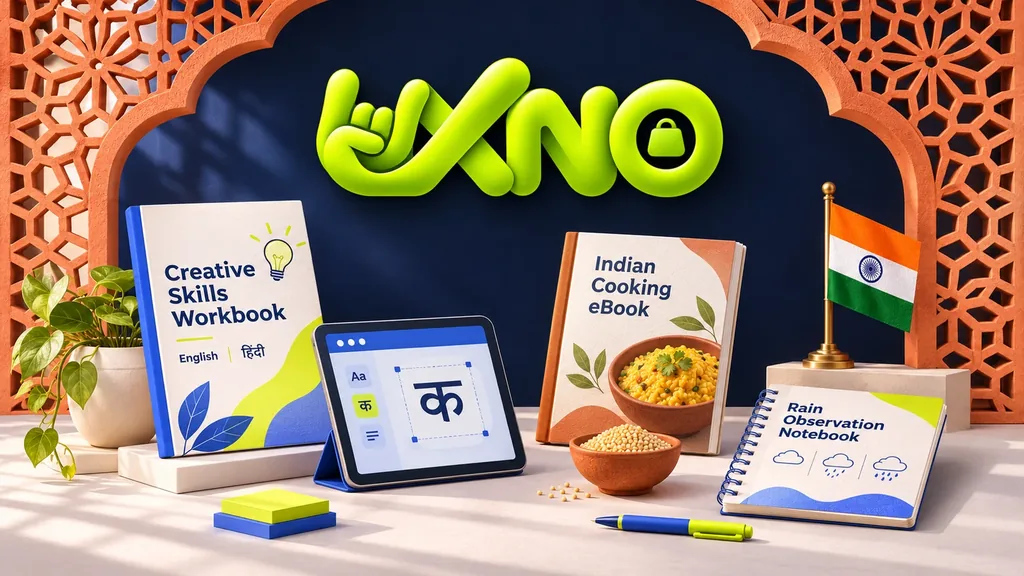
- Hero: A jali-inspired creative workspace with learning, language-testing, and cooking concepts; EXNO wordmark.
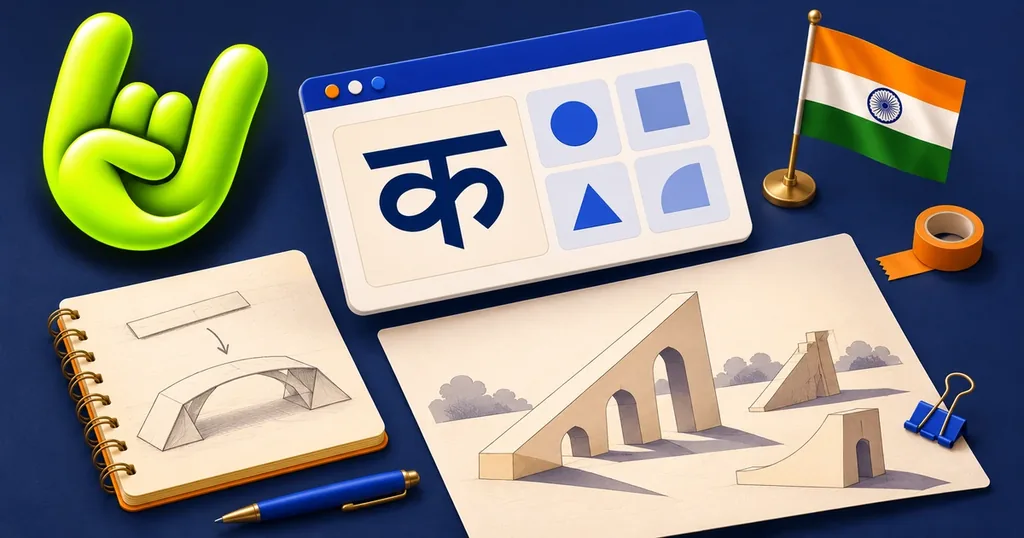
- Sharing image: A prototype notebook, a Devanagari interface concept, and geometry sketches; EXNO hand logo.
- Pixel Wall: A stepped square-tile mosaic inspired by stepwell geometry; EXNO hand logo.
No research-source photographs, official instructional diagrams, or third-party product files were copied. These images illustrate ideas; they do not show finished products for sale, verified customer work, or purchased Pixel Wall placements.
Product ideas and example prices are illustrations, not earnings estimates.


Choose the task you can teach or improve
Start with one well-defined product, prepare an example people can evaluate, and explain exactly what the complete edition contains.
More countries: Asia-Pacific
All countries Australia12 product ideas
 Bangladesh12 product ideas
 China12 product ideas
 Hong Kong12 product ideas
 Indonesia12 product ideas
 Japan12 product ideas
 Malaysia12 product ideas
 Nepal12 product ideas
 Pakistan12 product ideas
 Philippines12 product ideas
 Singapore12 product ideas
 South Korea12 product ideas
 Sri Lanka12 product ideas
 Taiwan12 product ideas
 Thailand12 product ideas
 Vietnam12 product ideas