 Gumroad



 Polar
 Kelviq
 Stan


Creator ideas Taiwan · 2026
Digital products to sell in Taiwan: 12 ideas built around a useful skill
By EXNO Editorial · Reviewed · English and Taiwan Traditional Chinese
Digital products to sell in Taiwan can include pronunciation-layout repairs, technical exercises, recorded craft lessons, editable animations and carefully scoped creative services. Start with something you can demonstrate: a corrected annotation, an explained pattern, a visible change in material or a finished file a buyer can use.

Summary
Choose an operation you can complete and show clearly. The first eight ideas draw on specific language, craft, food or technical contexts; four further ideas serve a defined Traditional Chinese audience. Prices illustrate one proposed scope. For example, a TWD 590.00 lesson has a TWD 41.30 commission at 7%, leaving TWD 548.70 before other applicable charges, taxes and costs.
At a glance
- Starting point
- One skill, one buyer and one inspectable result.
- Local subjects
- Zhuyin, Tai-gi, glove puppetry, tea processing, pineapple filling, jiannian, indigo cloth and wafer-map learning.
- Possible buyers
- Educators, artists and creators in Taiwan or abroad, including relevant learners in the diaspora.
- Languages and delivery
- Traditional Chinese instructions; Tai-gi audio where relevant. Original files or a bounded service.
- Price notation
- TWD examples; the amount after commission is not a profit or payout estimate.
- Planning horizon
- A year-round offer, with optional preparation around six 2027 dates.
12 digital product ideas with a clear buyer and deliverable
Start with a product whose result you can show and whose limits you can explain. The first eight proposals use specific Taiwan language, craft, food or technical contexts; the final four adapt broader creative work for a Traditional Chinese audience, and each includes a buyer, deliverable, illustrative price and a practical preview.
01Zhuyin association and tone-placement repair
A small educational publisher could commission repairs to annotations that drift from their Chinese characters. Taiwan’s Ministry of Education specifies the neutral-tone dot above vertical phonetic annotations and before horizontal ones.[1] Work from readings the client has approved, then correct the character associations and tone positions in a defined specimen.
- Buyer and use
- A children’s publisher or learning-app designer preparing Traditional Chinese material.
- Files and scope
- A 24-line HTML/CSS specimen, before-and-after PDF proof and character-linked issue CSV, with one correction round. Specify the annotation orientation, tested browsers and supplied fonts. This is layout repair, not automatic pronunciation selection.
- Timing and preview
- Offer it before a lesson release. Share a permitted ten-second demonstration of one neutral-tone correction in an educator or typography community, with the character association visible.
Illustrative price: TWD 1,200.00 · 7% commission: TWD 84.00 · After commission: TWD 1,116.00.
For an editable technical deliverable, use the code and plugin selling guide to think through instructions and dependencies.
02Synthetic wafer-map pattern exercises
Build a lesson in recognizing spatial patterns across a whole wafer map. Research at National Central University examines wafer-map defect classification, giving this topic a concrete local technical connection.[2] Your own exercise can vary rotation, density, rings and edge concentration while asking learners to explain ambiguous cases.
- Buyer and use
- An electronics tutor or early-career learner practicing visual reasoning with synthetic examples.
- Files and scope
- A runnable IPYNB notebook, 48 original CSV cases, a small HTML viewer and an answer-rationale PDF. Document how you generate the data. Do not package factory records or somebody else’s dataset; label the work as a learning exercise, without production-diagnosis claims.
- Timing and preview
- Prepare it for an independently arranged tutorial at any time of year. Show two maps with the same count of marked cells but different spatial patterns, and invite a technical study group to explain the difference.
Illustrative price: TWD 990.00 · 7% commission: TWD 69.30 · After commission: TWD 920.70.
03A tested pineapple-and-wintermelon filling lesson
Teach a learner to compare two fillings you have actually made. A National Museum of Taiwan History record describes a pineapple-cake variant combining pineapple and wintermelon.[3] Develop your own tested formulas and demonstrate fiber, reduction endpoints and cut texture; the museum record does not validate your recipe.
- Buyer and use
- A home baker or overseas workshop host who wants a repeatable, clearly explained comparison.
- Files and scope
- A 25-minute original video, two tested formulas with weights, your own process photographs and a comparison PDF. State the batch size and equipment used. Sell the lesson, with no physical food delivery or untested shelf-life claims.
- Timing and preview
- Start testing in August if you choose a Mid-Autumn demonstration. Show a spatula trail and a cut section from your own batches in a baking group that allows creator demonstrations.
Illustrative price: TWD 590.00 · 7% commission: TWD 41.30 · After commission: TWD 548.70.
The recipe selling guide can help you specify what a tested digital recipe includes.
04Glove-puppet gesture and held-pose reference clips
Record an original performer showing how a puppet settles into a stand, sit, turn or pause. The National Cultural Memory Bank describes coordinated control of the head and arms and the importance of convincing poses.[4] An animator could study the anticipation, hold and release in your own permitted recordings.
- Buyer and use
- A character animator studying the timing of a compact gesture rather than copying a television character.
- Files and scope
- Eight short MP4 clips at normal speed with selected slow-motion passages, a frame-count timing PDF and clear study-use rights. Agree recording permission with the performer and use an original or cleared puppet design.
- Timing and preview
- Release the set when your own animation study is ready, year-round. Share a silent stand-to-pause clip with three frame markers in an animation forum that accepts reference studies.
Illustrative price: TWD 680.00 · 7% commission: TWD 47.60 · After commission: TWD 632.40.
05A tea-leaf oxidation process animation
Give a tea educator a visual explanation of what changes inside a leaf. Taiwan’s Tea and Beverage Research Station describes moisture loss during withering, tissue disruption during agitation and enzyme inactivation through heat fixation.[5] Design an original sequence that separates those processes and identifies its simplifications.
- Buyer and use
- A tea educator or explanatory-film producer who needs a short teaching insert.
- Files and scope
- A 60–90-second MP4, editable layered project, stills and a storyboard. Label illustrative cross-sections and provide Traditional Chinese terminology. Include the actual project application and version; avoid numerical oxidation certification or health claims.
- Timing and preview
- Offer it throughout the year, or prepare your own early-June discussion. A twelve-second cross-section with one clear callout gives a tea-learning community something specific to evaluate.
Illustrative price: TWD 1,490.00 · 7% commission: TWD 104.30 · After commission: TWD 1,385.70.
06Tai-gi phrase-boundary listening notes
Help an adult learner hear how a sentence’s grouping affects connected speech. The Ministry of Education’s Tai-gi dictionary distinguishes base-tone spelling from contextual readings and explains exceptions involving phrase completion and other conditions.[6] Work with a qualified speaker on original sentence pairs, retaining the context that makes each reading meaningful.
- Buyer and use
- An adult who already understands basic Tailo spelling and wants guided listening practice.
- Files and scope
- Twenty recorded sentence pairs in WAV/MP3, a PDF worksheet, base-tone spellings, phrase-boundary notes and a statement of the speaker’s variety. Have the speaker approve the recordings and explanations. Present that model without treating every non-final syllable as an automatic change.
- Timing and preview
- Use a year-round study-group schedule. Preview one sentence with two explained groupings and ask listeners what changed; use your own audio rather than copying dictionary recordings.
Illustrative price: TWD 490.00 · 7% commission: TWD 34.30 · After commission: TWD 455.70.
For a sequenced listening lesson, consult the course creation guide.
07A jiannian shard-edge digital paint-along
Teach a digital painter to distinguish glossy glaze, exposed ceramic body and a broken edge under changing light. Jiannian uses cut glass or ceramic pieces to build decorative forms on temple architecture.[7] Photograph an original small study arrangement and paint from those observations, keeping the lesson focused on visual interpretation.
- Buyer and use
- A digital environment painter learning to make fragment edges readable in a scene.
- Files and scope
- A 20-minute MP4, twelve photographs under controlled lighting, a layered painted PSD and edge-annotation PDF. Supply your own images and arrangement; this is a painting lesson, not a restoration procedure or a copied temple sculpture.
- Timing and preview
- Publish after completing your documented study, any time of year. Show a three-panel crop identifying glaze, body and edge in an artist community, together with a short account of the light position.
Illustrative price: TWD 780.00 · 7% commission: TWD 54.60 · After commission: TWD 725.40.
08An indigo-cloth fold-response study from Sanxia
Turn your own documented indigo-cloth study into a reference for a digital garment artist. A New Taipei City cultural record describes Sanxia’s indigo practice, including the distinction between extracted dye material and a prepared vat.[8] Your product would examine one actual woven swatch, comparing flat and folded views under the same light.
- Buyer and use
- A cloth-shader or digital garment artist who wants to compare a rendered fold with original observations.
- Files and scope
- Six scaled TIFF/JPG captures, a small BLEND fold scene, warp-and-weft notes and a calibration walkthrough. Document the swatch’s provenance. Separate measured captures from artistic approximations; dye alone does not establish the fabric’s complete material behavior.
- Timing and preview
- Prepare it after your own capture session. Share a matched flat/fold comparison in a material-art community, with the weave, lighting and scale held explicit.
Illustrative price: TWD 890.00 · 7% commission: TWD 62.30 · After commission: TWD 827.70.
The 3D asset selling guide helps frame the scene’s dependencies and usage rights.
Four further offers for a Traditional Chinese audience
A product can also serve Taiwan through a clear local-language handoff without claiming a unique cultural origin. These four offers solve ordinary creative problems. Their value depends on accurate inputs, a bounded operation and an output the buyer can inspect, with Traditional Chinese instructions where those instructions make the work easier.
09A straight-row print spacing calculator
Help an independent exhibitor calculate equal gaps between framed prints on one straight wall. The buyer enters the usable wall width, actual frame widths and end margins; your sheet returns positions in millimeters and warns when the proposed row cannot fit. Use a worked Traditional Chinese example so the measurements are unambiguous.
- Buyer and use
- An artist arranging three to ten framed works before a layout review.
- Files and scope
- Tested XLSX and ODS files, a scaled two-dimensional preview and a short PDF guide. Explain the input cells, left and right offsets and rounding. The calculation addresses spacing; it does not determine wall loads or mounting safety.
- Timing and preview
- Offer it before the buyer approves a display layout. Demonstrate a single frame-width change that turns a valid row into an impossible fit, in your portfolio or a permitted exhibition-planning discussion.
Illustrative price: TWD 390.00 · 7% commission: TWD 27.30 · After commission: TWD 362.70.
10A bounded macro focus-stack merging service
Combine the usable sharp regions in a photographer’s controlled near-to-far sequence. Adobe documents aligning images and blending photographs with different areas in focus.[9] Your service adds input assessment and careful inspection of overlaps, with manual halo corrections where the supplied frames allow them.
- Buyer and use
- A photographer with one macro scene and up to twenty input frames, ready for a final image.
- Files and scope
- One merged 16-bit TIFF, a web JPG, a close-up proof and Traditional Chinese notes on source limitations, with one correction round. Check coverage before accepting the job; missing sharp detail cannot be recovered merely by combining blurry inputs.
- Timing and preview
- Work after the shoot and before final export. Show a permitted crop of an overlap before and after correction, alongside the input conditions, in a macro-photography group or your portfolio.
Illustrative price: TWD 900.00 · 7% commission: TWD 63.00 · After commission: TWD 837.00.
For the input and revision agreement, see the services selling guide.
11Two-spot-color separations and overlap proofs
Prepare an illustrator’s owned vector artwork for two specified inks. Illustrator’s separation preview can show individual ink plates and overprinting, while physical output still needs printer verification.[10] Agree the two ink specifications and intended overlap treatment before converting the artwork, then label the plates in Traditional Chinese.
- Buyer and use
- An independent illustrator who already has a printer’s requirements and approved source artwork.
- Files and scope
- A two-plate AI/PDF handoff, individual separation proofs, an overlap proof and an assumptions sheet. Agree the printer-specific export preset and whether objects overprint or knock out. A screen proof does not guarantee the printed color.
- Timing and preview
- Complete the work before the printer’s file deadline. Share an original overlap example with each plate shown separately, asking a print-design community whether the intended ink interaction is clear.
Illustrative price: TWD 1,500.00 · 7% commission: TWD 105.00 · After commission: TWD 1,395.00.
12A podcast chapter-marker handoff
Listen to a final episode and turn its actual topic transitions into checked timestamps and concise Traditional Chinese chapter titles. Title-and-timestamp chapter methods are documented by Apple Podcasts; the buyer’s chosen host and language support still need checking.[11] Sell the editorial handoff for that agreed destination, without promising publication or automatic platform support.
- Buyer and use
- A podcast editor supplying approved final audio and a transcript for one episode up to 45 minutes.
- Files and scope
- A UTF-8 TXT chapter list, CSV timestamp map and PDF review notes for uncertain transitions. Check every jump against the final audio. The buyer handles uploading; subsequent audio edits require the affected timestamps to be checked again.
- Timing and preview
- Schedule the work after editing and before release. Use your own short recording to demonstrate three checked chapter jumps to a podcast-editing community, showing how each title describes the destination.
Illustrative price: TWD 1,200.00 · 7% commission: TWD 84.00 · After commission: TWD 1,116.00.
Where does your local knowledge improve the offer?
Local knowledge helps when you can explain a choice that an unfamiliar creator might miss. Here, that could mean identifying a client’s intended annotation, recording a speaker’s phrasing or documenting a material you can study directly; make that knowledge visible in the handoff, and be precise about the experience behind it.
Use three questions to narrow the offer. What does the buyer bring? What changes through your work? What file or explanation proves completion? A tea animation, for instance, needs a defined teaching point and a usable project; a focus-stack service begins with suitable photographs and ends with a checked composite.
These ideas are proposals for work you could create, not reports of products already selling. A cultural record establishes context; it does not establish customer demand. Before building a large edition, show one original example to a person who could use it and ask what is missing.
Which offers could serve buyers abroad or in the diaspora?
An overseas buyer needs a clear result and enough explanation to use it in a different setting. Families in the diaspora, independent teachers and creative studios are possible audiences for these ideas; check their language proficiency, permissions and software requirements before deciding what your edition should include.
| Possible buyer | Existing idea to adapt | Clarify before the sale |
|---|---|---|
| An adult learner in the diaspora | The original Tai-gi sentence-pair lesson. | Ask which writing system and listening level they use. Offer a glossary if you can support it; family background does not establish proficiency. |
| An overseas Taiwan-food workshop host | The tested pineapple-and-wintermelon filling comparison. | Keep the tested weights and equipment visible, explain unfamiliar ingredient terms, and distinguish tested substitutions from untested suggestions. |
| An international animation or garment studio | The puppet gesture references or indigo-cloth fold study. | Describe study and commercial-use permissions, explain the file labels, and name the tested project dependencies. |
These are possible adaptations, not evidence that those groups are waiting to buy. Keep the complete original offer accessible to a local buyer, and describe any added translation, teaching permission or feedback as a separate commitment. Ask the prospective user which part they need help understanding before making an expanded edition.
A 2027 preparation calendar
Use a calendar to reserve production time, then choose only the occasions that suit your work; a date can give you a useful demonstration deadline without proving that buyers want a seasonal product. The preparation suggestions below are editorial choices; your testing, permissions and client schedule should determine the actual release.
The six dates follow Taiwan’s official 2027 calendar and identify the occasion itself, not a complete leave period.[12] For comparison, Lunar New Year fell on , Dragon Boat on , and Mid-Autumn on ; do not carry those dates into next year.[13]
| Occasion date | Suggested preparation | A concrete release task |
|---|---|---|
New Year’s Day | Early December 2026 | Prepare a self-recorded podcast sample with checked chapter jumps. |
Lunar New Year’s Day | Early to mid-January | Finish a Tai-gi listening exercise for your own study-group session. |
Children’s Day | Early to mid-March | Show an original Zhuyin repair example to an interested educator. |
Dragon Boat Festival | Mid-May | Complete the tea-process animation if you plan an early-June discussion. |
Mid-Autumn Festival | Mid to late August | Test and photograph both fillings before offering a baking demonstration. |
National Day | Mid-September | Finish your own craft-study preview if this is a suitable sharing date. |
A technical tutorial, print separation or client photo job can remain useful without a holiday theme. Keep the year-round version clear, and describe a seasonal session only when you have actually arranged it.
How should you choose a price and scope?
A price makes sense beside a definite amount of work, so compare the time required to produce the first usable version, the support it needs and the permissions included. For a commission, estimate the input review and correction effort as well as the visible editing; those steps can change the commitment substantially.
The examples use TWD, the currency code for the New Taiwan Dollar.[14] They are authored illustrations, not surveyed market rates, exchange-rate calculations or promises about available checkout or payout currencies. Choose your actual price after testing the scope and checking your costs.
| Work | Define the base scope | Discuss separately |
|---|---|---|
| Recorded lesson | One tested topic, named files and a stated audience. | Personal feedback or permission to distribute copies to a class. |
| Editable asset | Application version, dependencies and the included project. | A new format conversion or a custom adaptation. |
| Client service | Input count, suitability check, output and one defined revision. | Replacement inputs, expanded work or a later edit that changes the brief. |
Use the digital-product pricing guide to make the work and price agree. The purchasing-power pricing guide is relevant if you consider different market prices for the same scope; a country-level comparison does not tell you what any individual can afford.
EXNO lists a 7% commission for both standard and Discover sales. The amounts after commission above subtract only that percentage. Other applicable fees, taxes and production costs are excluded, so those amounts are neither net profit nor promised payouts.
For a fixed download, pay-what-you-want pricing can use a minimum you choose. A discount code needs clear conditions. If two completed products belong in one learning sequence, consider a product bundle and list exactly what it contains; the package still needs a coherent purpose.
Where can a prospective buyer inspect your work?
Match the demonstration to the decision you want a buyer to make: a sound comparison needs listening time; a material study needs a controlled view; a spreadsheet needs an input change. Choose a community or portfolio format that allows that demonstration, and check its participation rules before posting an offer.
- For educators and learners: show the prompt, one learner action and the explanation that follows. Ask whether the difficulty level fits the intended lesson.
- For animators and painters: show the observation beside your interpretation. A frame marker or light-position note makes the preview easier to assess than an unexplained finished image.
- For photographers and print designers: use a permission-cleared close-up and name the input conditions. Let the preview reveal what was corrected and what remains limited by the source.
- For independent publishers and podcasters: demonstrate one approved annotation or one chapter jump. State what the client must supply before work starts.
These are outreach suggestions, not a measured ranking of local channels. A relevant reply may help you refine terminology, input requirements or file compatibility. Record those questions before expanding the product, and seek permission before using a client’s work as your next public example.
How do you prepare the first EXNO offer?
Make the purchase description as concrete as the demonstration: the buyer should know which version they will receive, how to open it and what support belongs to the purchase. Finish a small usable edition first, then review its files and description together so that neither promises work the other cannot support.
EXNO lets individuals and companies sell digital products and services. Use your store to present the finished download or defined service, supported by a preview that helps someone decide whether it fits their task.
- Complete one example. Check the character association, ambiguous wafer case, cloth comparison or audio jump that gives the offer its purpose.
- Make delivery self-explanatory. Include a readme, tested application versions, file list and usage terms. For a service, write the input checklist and approval process.
- Set the actual commitment. Choose your price, turnaround, scope and revision allowance. Replace the illustrative quantities here with what you can reliably deliver.
- Review the product page. Read the title, preview, description and delivery instructions together. Check the exact product link and displayed purchase information before sharing it.
- Learn from the first questions. Clarify repeated uncertainty in the description. Agree any change to an existing commission with its buyer instead of silently widening the brief.
What should you fix before offering the work?
Check the assumptions that a polished preview might hide: an editable project can depend on a missing application, a listening exercise can omit its speaking context, and a commission can accept unsuitable inputs. Walk through the buyer’s task from beginning to end, then resolve those gaps before asking someone to pay.
- Borrowing the example instead of making the product. Read cultural and technical sources for context, then create your own recordings, photographs, code and explanations. Check any third-party material you plan to include.
- Leaving compatibility vague. Name the applications, versions, fonts and formats you have tested. A project extension alone does not tell the buyer whether everything required is included.
- Accepting inputs you cannot use. Inspect a focus sequence or print brief before committing. Tell the buyer which missing detail prevents a sound result.
- Turning a narrow result into a broad claim. A synthetic pattern exercise is not factory diagnosis; an illustrative animation is not a production certification. Describe the actual learning or editing task.
- Letting later changes disappear into the original scope. A revised audio edit, new image sequence or different ink specification can require new work. State how you will agree that change.

Support EXNO through the Pixel Wall
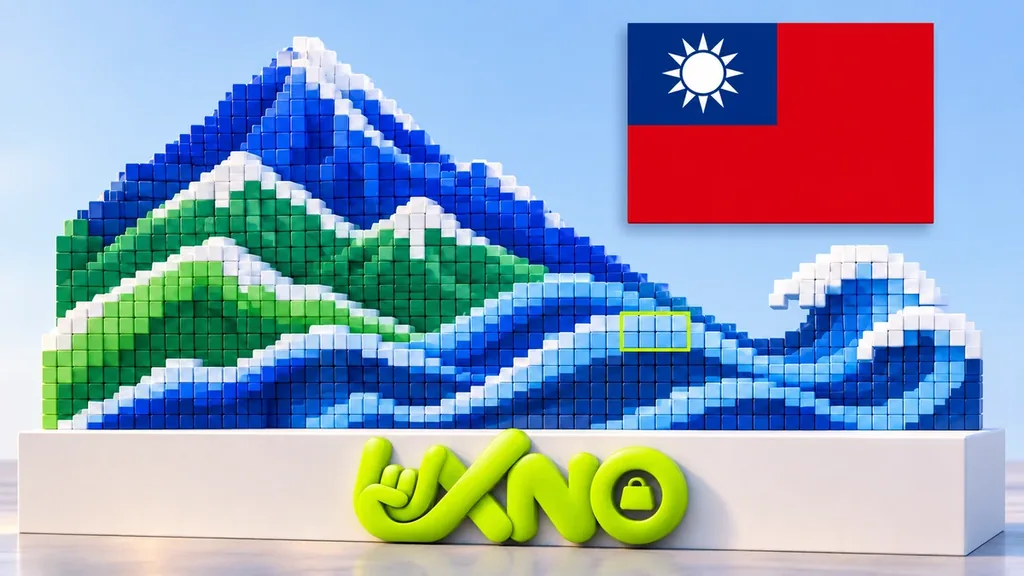
The EXNO Pixel Wall is a 1,000 × 1,000 grid priced at $1 per pixel. Pick an available rectangle from one pixel, then add an image or color, title and optional link. Pay once: sellers can use EXNO earnings; others can use a card. Submissions are reviewed before display, with a full refund if rejected. Approved images remain permanently unless they violate the rules or law; the finished wall stays pinned on EXNO’s social accounts. Purchases support platform growth and service, without a promise of traffic or sales.
Frequently asked questions
These answers help narrow a first offer and set expectations about the examples. Match the final decision to your own skills, the buyer’s task and the work you have actually completed.
Which idea is a reasonable first project?
Choose the one for which you can already make a clear example. A print-spacing sheet may suit someone who can test its calculations; a listening lesson needs a qualified speaker and careful explanation. The smallest suitable project depends on your existing skill.
Does every product need a Taiwan cultural theme?
No. The four broader offers demonstrate another route: a defined creative task with Traditional Chinese instructions and a clear handoff. Explain the audience choice honestly without presenting an ordinary service as culturally unique.
Can an overseas buyer use these products?
Possibly, if the explanation, file compatibility and usage rights fit their task. Add a glossary or translated instructions when you can support them, and specify what the buyer already needs to know. Location alone does not establish suitability.
Are the example prices market averages?
No. They are proposed amounts for the stated example scopes. Test the workload, count support and production costs, and choose your own price. The figure after commission is only the illustrated subtraction, not an earnings forecast.
What makes a source-based lesson your own?
Your own explanation, tested exercise or permitted recording should do the teaching. Keep the factual reference distinct from the deliverable. A link to a museum or manual does not by itself grant permission to package its images, audio or text for sale.
Should the offer be seasonal or available year-round?
Keep a year-round version when the underlying task stays useful. Use a calendar date only if it helps you schedule an actual demonstration or session, and leave enough time for testing. A festival date does not prove demand for an unrelated product.
Sources and review notes
These primary references support the named factual context. The product designs, quantities, preparation suggestions and example prices are editorial proposals. Sources were checked on ; a citation does not imply endorsement or permission to resell the source material.
- Ministry of Education — Manual of Mandarin Phonetic Symbols. Annotation and tone-mark placement.
- National Central University — Wang and Tsai, Defect Detection on Wafer Map Using Efficient Convolutional Neural Network (2021). Abstract and publication record; no research dataset is proposed for resale.
- National Museum of Taiwan History — Pineapple cake record, by 黃英嘉. Filling context, not a tested recipe.
- National Cultural Memory Bank — Glove-puppet performance forms, by 林冠君. Manipulation and pose context.
- Tea and Beverage Research Station — Taiwan specialty tea classification and processing. Selected processing explanations.
- Ministry of Education — Tai-gi dictionary, Tailo annotation notes. Base tones, connected speech and exceptions.
- Bureau of Cultural Heritage — Jiannian craft record. Craft definition.
- New Taipei City Cultural Affairs Department — Sanxia indigo dyeing record, by 甘樂文創. Local practice and preparation context.
- Adobe Photoshop — Create a composite with extended depth of field. Alignment and focus blending.
- Adobe Illustrator — Preview color separations. Plates, overprinting and preview limitations.
- Apple Podcasts for Creators — Chapters on Apple Podcasts. Chapter methods; the intended host and language require a separate compatibility check.
- Directorate-General of Personnel Administration — 2027 calendar. Occasion dates only.
- Directorate-General of Personnel Administration — 2026 calendar. The three historical lunar-calendar comparisons.
- SIX — ISO 4217 currency list. The TWD currency entry.
Image credits
Original AI-generated illustrations prepared for this guide with the supplied EXNO logo and an official Taiwan flag reference. They are illustrative scenes, not photographs of products or a live Pixel Wall.
Product ideas and example prices are illustrations, not earnings estimates.


Make one useful example ready to buy
Choose a buyer, finish the smallest complete version and show the decision your work improves. When the files, scope and preview agree, prepare your first offer.
More countries: Asia-Pacific
All countries Australia12 product ideas
 Bangladesh12 product ideas
 China12 product ideas
 Hong Kong12 product ideas
 India12 product ideas
 Indonesia12 product ideas
 Japan12 product ideas
 Malaysia12 product ideas
 Nepal12 product ideas
 Pakistan12 product ideas
 Philippines12 product ideas
 Singapore12 product ideas
 South Korea12 product ideas
 Sri Lanka12 product ideas
 Thailand12 product ideas
 Vietnam12 product ideas