 Gumroad



 Polar
 Kelviq
 Stan


EXNO creator resources Philippines · 2026 edition
Twelve digital product ideas for Philippine creators
By EXNO · Sources checked
Digital products to sell in the Philippines could include editable parol animations, komiks lettering exercises, rice-image annotation projects, and original cut-paper design files. The twelve ideas below connect a Philippine subject with a practical task, a possible buyer and a set of files you would create yourself. Example prices are in Philippine pesos.

Summary
Start with a subject you can explain through your own work. An animator needs editable timing, a lettering student needs a readable panel, and an image-labeling learner needs to see exactly which pixels belong to an object. The useful product is the material that helps that person complete the task and understand the result.
Philippines: subjects, buyers and proposed deliverables
- Local starting points
- Parol lighting, coastal ecosystems, rice research, komiks, Philippine boats, resist-dyed weaving and bamboo music.[1][2][3][4][6][7][8]
- Possible customers
- Animators, illustrators, teachers, subtitle editors, audio learners, craft designers and people practicing image annotation.
- Files with a clear purpose
- Editable motion projects, original drawings, labeled image sets, subtitle exercises, 3D studies, mixing sessions and tested cut files.
- Three complete editions
- This English original has full Tagalog and Bisaya translations. Here, Bisaya means Cebuano. All three editions retain the same ideas, examples, prices and sources.
- Preparation occasions
- A buyer's lesson, recording session, design review or workshop. Annual arts and ocean observances provide optional planning references.
- Illustrative PHP range
- Example selling prices: ₱400.00–₱1,100.00.EXNO commission (7%): ₱28.00–₱77.00.
After EXNO commission: ₱372.00–₱1,023.00 per sale.
Each example covers one sale in PHP. The remaining amount deducts only EXNO's 7% commission. Other applicable charges, taxes and your production or support costs are excluded; the amount is not net profit or a promised payout.
Which Philippine subjects can become useful digital products?
Choose a task that leaves a visible result: a loop that joins cleanly, a subtitle that fits the spoken passage, or a cut pattern that survives a paper trial. The ideas below specify what to make and who might use it. Their sources establish the subject context, while the proposed offers are editorial suggestions.
01Original parol light-sequence loops
Give motion designers a set of original parol animations with controllable lighting sequences. San Fernando’s giant-lantern tradition includes carefully coordinated changes in light, documented by the Philippine Information Agency.[1] Draw your own lantern geometry, then animate separate rings, points, and color groups. Let buyers change the pace without breaking the smooth transition between the last frame and the first.
Deliver editable animation files, transparent video exports, still previews, and a short explanation of the controls. Include a restrained version that leaves space for a title. The video-template guide helps explain what the buyer can edit. Keep the work clearly identified as your digital interpretation rather than a reproduction of a particular lantern maker’s design.
- Who buys: Motion designers and video editors creating lantern-themed title sequences or digital displays.
- Use when: When a project needs an original moving lantern graphic with an adjustable rhythm.
- Format: Editable animation project, transparent video loops, still previews, and control notes.
- Example price: ₱450.00
- EXNO commission (7%): ₱31.50
- After EXNO commission: ₱418.50
02Mangrove-to-shore habitat explainer
Create an independent lesson around the Philippine habitat journey described in the National Museum’s Gallery 9: mangrove forest, beach, and intertidal zone.[2] Draw your own shore sequence with original organism cards and movable water-level overlays. Ask learners to explain where an observation belongs and which areas become exposed, following the gallery’s land-to-sea framing.
Supply layered diagrams, blank annotation sheets, a teacher’s reasoning guide, and pre-visit questions tied to that gallery theme. Add contrasting fictional shorelines to show why Philippine coasts differ. Mark the models as illustrative rather than field measurements, and identify the lesson as your independent work. Its purpose is habitat comparison; real planting or restoration requires site-specific assessment.
- Who buys: Science teachers and learning facilitators preparing a Philippine coastal-habitat lesson or Gallery 9 visit.
- Use when: Before studying the gallery’s mangrove-to-shore sequence or discussing observations after a visit.
- Format: Original shore diagrams, organism cards, water-level overlays, pre-visit questions, and a teaching guide.
- Example price: ₱650.00
- EXNO commission (7%): ₱45.50
- After EXNO commission: ₱604.50
03Rice-grain image-annotation practice set
Turn your own close-up rice photographs into an exercise for computer-vision learners. The Department of Agriculture describes rice analysis using physical attributes such as grain size and length-to-width ratio.[3] Your narrower task is to teach consistent image annotation: outline each visible grain and decide how touching grains, shadows, and partly hidden edges should be handled.
Provide original images, segmentation masks that mark the pixels assigned to each grain, and an illustrated labeling policy. Include difficult examples with explained decisions and a small script that checks whether image and mask dimensions match. Keep separate images for practice and evaluation. Label the set as annotation training material; these photographs alone cannot establish an official rice grade or food-quality certification.
- Who buys: Computer-vision learners and technical tutors practicing object boundaries and consistent labeling.
- Use when: When a learner needs a manageable image set for a first segmentation exercise.
- Format: Original photographs, pixel masks, annotation policy, explained edge cases, and a validation script.
- Example price: ₱900.00
- EXNO commission (7%): ₱63.00
- After EXNO commission: ₱837.00
04Komiks speech-balloon lettering studies
Make a lettering exercise in which the drawing stays fixed while speech-balloon placement changes. NCCA included comics among the visual-art practices in its 2024 National Arts Month program.[4] Write and draw an original Philippine neighborhood scene, then show how balloon size, tails, and line breaks guide readers through Tagalog or Cebuano dialogue. Preserve facial expressions and important actions when placing text.
Include unlettered panels, editable balloons, your finished versions, and comments explaining several workable arrangements. Buyers should be able to compare reading order and identify an ambiguous speaker without changing the story. Use the comics-product guide to present the panel files. The exercises need your own characters and dialogue, with font permissions that cover the supplied files.
- Who buys: Independent komiks creators and illustration tutors developing clearer dialogue placement.
- Use when: After a scene is drawn and before its lettering is finalized.
- Format: Original unlettered panels, editable balloon layers, completed alternatives, and reading-order commentary.
- Example price: ₱550.00
- EXNO commission (7%): ₱38.50
- After EXNO commission: ₱511.50
05Tagalog–Cebuano subtitle-spotting exercises
Subtitle spotting means choosing when each subtitle appears and disappears. Build an exercise around a short scene you write and record, supplying meaning-matched Tagalog, Cebuano, and English subtitle tracks. A UP Diliman discussion of audiovisual translation highlights the balance between timing, readability, and meaning.[5] Give learners a transcript before asking them to time and divide the spoken content.
Supply the original video, editable subtitle files, a timing worksheet, and a reference version with reasons for the line breaks. Include a fast exchange and an interrupted sentence so the task involves real editorial decisions. Explain acceptable alternatives instead of declaring one wording uniquely correct. Secure performers’ permission for distribution, and keep the exercise’s dialogue and footage original.
- Who buys: Subtitle editors and translation instructors practicing timing and meaning across Philippine languages.
- Use when: When preparing a subtitling lesson or testing the readability of a short recorded scene.
- Format: Original video, transcript, three editable subtitle tracks, timing worksheet, and explained reference version.
- Example price: ₱750.00
- EXNO commission (7%): ₱52.50
- After EXNO commission: ₱697.50
06Butuan boat construction cutaway
Use a movable cutaway to make a boat’s hidden joins understandable. The National Museum describes the Butuan boats as plank-built and edge-pegged.[6] Create your own schematic model in which a learner can separate adjacent planks, inspect a peg, and return the parts to their assembled positions. Distinguish the documented joining principle from the dimensions you choose for illustration.
Deliver an editable model, an exploded-view animation, labeled cross-sections, and prompts asking learners to explain how the components meet. The 3D-product guide can help describe the model’s controls and file contents. Make the teaching purpose explicit: this is an interpretive construction diagram, not a measured reconstruction of an excavated boat or a plan for a seaworthy vessel.
- Who buys: History educators and museum learning teams explaining Philippine boat construction.
- Use when: When a lesson needs to reveal how planks and pegs fit together beneath the exterior.
- Format: Editable schematic 3D model, exploded-view animation, labeled sections, and discussion prompts.
- Example price: ₱1,100.00
- EXNO commission (7%): ₱77.00
- After EXNO commission: ₱1,023.00
07Ikat resist-placement planning tool
Connect a yarn-dyeing plan with its appearance after weaving. The National Museum documents Bagobo inabal as ikat-dyed woven abaca cloth.[7] In your original exercises, learners mark sections of illustrated yarn that will resist dye, then arrange those strands into a simple woven preview. Moving a protected section should visibly change the resulting pattern.
Provide an interactive file, blank planning grids, before-and-after diagrams, and explanations of deliberate alignment changes. Start with geometric marks you design yourself, so learners can trace a shape to its yarn position. Describe the preview as a simplified teaching model. It should neither reproduce community-specific motifs nor imply that a digital pattern carries the identity or authority of a traditional weaving practice.
- Who buys: Textile-design students and workshop leaders teaching the relationship between resist placement and woven pattern.
- Use when: Before a lesson on how a yarn-level plan affects the cloth that follows.
- Format: Interactive resist planner, original geometric exercises, blank grids, and explained woven previews.
- Example price: ₱850.00
- EXNO commission (7%): ₱59.50
- After EXNO commission: ₱790.50
08Original bamboo-percussion mixing session
Build a mixing lesson around an original piece for gabbang, the Yakan bamboo xylophone that the National Museum describes with its lisag beater.[8] Work with a knowledgeable performer who authorizes the recording. Supply separately recorded parts so buyers can practice balancing rhythmic roles through relative loudness and placement between the left and right speakers.
Include synchronized tracks, unprocessed and finished mixes, and instrument notes checked by the player. Explain each part’s contribution and compare results at similar playback loudness. The music-and-sound guide helps describe rights and files. Credit the performer and identify the piece as a new composition; it does not reproduce a named master’s repertoire or establish community endorsement.
- Who buys: Audio-production learners and music tutors balancing separately recorded gabbang parts.
- Use when: When a mixing lesson needs an original gabbang example with clear instrument and performance notes.
- Format: Authorized original gabbang recordings, unprocessed and finished mixes, instrument notes, and mixing explanations.
- Example price: ₱950.00
- EXNO commission (7%): ₱66.50
- After EXNO commission: ₱883.50
09Shell-form scientific illustration studies
Help illustrators turn shell observations into clearly interpretable drawings. The National Museum’s educational catalog describes varied shell forms, including the thin shell of the windowpane oyster known as capiz.[9] Photograph specimens you already have lawful access to, showing useful views, a scale reference, and the features that should remain visible in a simplified line drawing.
Deliver your photographs, layered drawings, annotation exercises, and a demonstration of choosing an informative viewpoint. Compare outlines that preserve a hinge or opening with versions that accidentally hide it. Explain which details were observed and which were omitted for clarity. The product teaches visual documentation; it should not encourage collecting wildlife or claim to identify protected species from appearance alone.
- Who buys: Science illustrators, design students, and tutors teaching observational drawing with labeled specimens.
- Use when: When practicing how viewpoint, scale, and selective detail affect an explanatory drawing.
- Format: Original reference photographs, layered line drawings, scale examples, and annotated illustration exercises.
- Example price: ₱600.00
- EXNO commission (7%): ₱42.00
- After EXNO commission: ₱558.00
10Flat-fold packaging dielines for small crafts
A dieline is the flat drawing that shows where packaging is cut and folded. Create a tested set for small non-food craft objects such as handmade brooches. The Design Center of the Philippines includes product and packaging design in its work.[10] Focus on object fit: depth, surrounding clearance, and the space a tab needs to close without catching.
Supply dimensioned cut-and-fold files, photographs of assembled prototypes, and an adjustment sheet for the tested material thickness. Show the same package flat, partly folded, and closed around a dummy object. State the tested size range and explain why changing the cardboard thickness can change the fit. Buyers need a reproducible packaging construction, with decorative artwork kept on a separate layer.
- Who buys: Small craft businesses and packaging-design students developing fitted presentation boxes.
- Use when: When an object’s dimensions are known and a maker is ready to test a folded package.
- Format: Dimensioned dielines, assembly photographs, dummy-object measurements, and material-adjustment notes.
- Example price: ₱700.00
- EXNO commission (7%): ₱49.00
- After EXNO commission: ₱651.00
11Stylized volcanic-landform heightmaps
A heightmap uses light and dark pixel values to represent elevations in a digital surface. Create original fictional volcanic terrain for environment artists who want to practice shaping relief. The National Museum’s geology gallery connects Philippine volcanic materials with a three-dimensional relief map.[11] Explore that visual context, clearly labeling the terrain as fictional.
Deliver editable terrain projects, heightmap exports, and comparison renders showing changes in slope, crater depth, and mesh detail. Include an edge check that reveals whether neighboring tiles join cleanly. Explain the relationship between an image’s brightness range and the imported surface height. This makes the pack useful for controlled graphics experiments without presenting its invented elevations as geographic or hazard information.
- Who buys: Environment artists and 3D tutors practicing terrain shaping, surface detail, and tile continuity.
- Use when: When a graphics project needs editable fictional relief rather than a fixed landscape image.
- Format: Original heightmaps, editable terrain projects, parameter comparisons, and tile-edge inspection examples.
- Example price: ₱1,000.00
- EXNO commission (7%): ₱70.00
- After EXNO commission: ₱930.00
12Original pabalat cut-paper design studies
Teach cut-paper border design through original practice studies. UP Press documents pabalat, the decorative wrapper tradition associated with pastillas de leche in San Miguel, Bulacan.[12] Draw your own motifs and show how the empty areas left by cuts shape the design. Learners should see why a narrow connecting strip can make a paper pattern fragile.
Include printable hand-cut patterns, editable vector paths, photographs of tested paper samples, and exercises progressing from broad openings to finer details. Explain where each cut begins and how the remaining paper stays connected. The SVG cut-file guide helps present the digital paths. Credit the tradition while keeping the supplied motifs original; the book’s documented heirloom designs are not a pattern library to reproduce.
- Who buys: Paper artists and craft instructors teaching negative space and connected cut-paper construction.
- Use when: When planning a paper-cutting session that compares visual detail with physical paper stability.
- Format: Original printable patterns, editable vector paths, tested sample photographs, and cutting-sequence explanations.
- Example price: ₱400.00
- EXNO commission (7%): ₱28.00
- After EXNO commission: ₱372.00
What should a lantern, shoreline or comic help the buyer understand?
The subject becomes useful when the buyer can investigate a particular choice. A parol animation can reveal timing; a coastal diagram can explain relationships; a comic panel can show how lettering directs attention. Decide which choice your product makes easier to inspect, then build the original material around that purpose.
| Subject | Question to investigate | Your authored contribution |
|---|---|---|
| Parol lighting | How does a sequence return smoothly to its opening state? | An editable timeline with your own light pattern and a clear loop boundary. |
| Rice-grain images | Which pixels belong to each grain, including where grains touch? | Your own photographs, carefully drawn masks and explanations of ambiguous edges. |
| Komiks lettering | Can a reader follow the dialogue without losing the drawing? | Original panels with alternative balloon positions, tails and text spacing. |
| Ikat planning | How might a planned resist area appear after the threads are arranged? | An original geometric trial with a documented relationship between the planning view and the resulting layout. |
Explain where observation ends and your design begins.
For the boat study, identify the documented construction detail and label any part you have simplified or imagined. For a shell drawing, distinguish the view you observed from an illustrative diagram you constructed. That distinction helps the buyer understand what the file demonstrates.
How can three language editions share one working example?
Keep the example stable while making each explanation natural for its reader. A buyer abroad may understand the creative technique but need a Philippine term introduced. A Tagalog or Cebuano reader should be able to follow the task without reconstructing an English sentence. Match the instructions to the same files and results.
| File set | Keep consistent | Make understandable |
|---|---|---|
| Subtitle exercise | The original clip, intended meaning and timing reference. | Why a line break or display interval works for the chosen translation. |
| Comic lettering | The same panel, speaker order and dialogue meaning. | How the translated wording fits while remaining easy to read. |
| Paper-cut study | The original outline and the sample used to test it. | Which areas are cut away and which connections hold the paper together. |
| Bamboo-percussion session | The recording takes and the musical passage being mixed. | The role of each track and the reason for a mixing choice. |
Label language editions clearly and keep a shared example identifier across the files. A teacher comparing editions should find the same case and answer. Describe individual-study and group-use permissions in ordinary language so a workshop leader knows what participants may receive.
Plan the files around the buyer’s first use
Set the delivery date around a task someone has agreed to try. A craft class may need a printable proof; an ocean educator may need a checked visual explanation. The windows below suggest when to prepare those materials, while separating annual observances from the buyer’s own booking and review time.
| Preparation window | Why this timing may help | Finish before delivery |
|---|---|---|
| Late November–December 2026 | An editorial starting point for a parol-animation sample requested for a buyer’s own project. | Finish one original loop, check how the sequence returns to its starting frame, and preview it at the buyer’s intended display size. Agree on the actual delivery date; the animation files do not specify a physical electrical installation. |
| January 2027 | February is National Arts Month in the Philippines.[13] This annual observance is an optional reference, not confirmation of a particular 2027 workshop. | If a buyer is preparing a February komiks session, test the speech-balloon exercise with its intended readers. Check whether the revised lettering preserves the dialogue and makes the reading order clear before the instructor’s deadline. |
| May 2027 | World Oceans Day is observed annually on June 8.[14] Confirm any buyer’s 2027 activity separately. | For an agreed ocean-learning activity, have the mangrove explanation or shell-illustration lesson checked at the intended learner level. State which observations or features the material covers, then settle the buyer’s review and delivery dates. |
| Before a subtitle-editing workshop | The trainer’s chosen session and the version of the practice clip. | Use an original or properly permitted clip and settle the intended dialogue before preparing timing exercises. Compare the Tagalog and Cebuano versions with the same clip, and keep the worked answers tied to that version. |
| Before a rice-image annotation lesson | The instructor’s exercise brief and the image set learners will receive. | Prepare consistent instructions for marking grain boundaries and review ambiguous examples. Include expected annotations with explanations of reasonable differences; do not present a learning dataset as an official grain-quality certificate. |
| Before releasing a resist-pattern planning tool | Your own pattern trial and the buyer’s agreed design exercise. | Follow the planned marks through an original sample and document what the preview does and does not predict. Check that the instructions explain the relationship between the planned pattern and the worked result before expanding the tool. |
The lead times and preparation tasks are editorial suggestions. The two dated references describe annual observances; local programs, instructor bookings and delivery deadlines need their own confirmation. None of these windows establishes a buying season or a forecast of sales.
What does an example peso price leave after EXNO's commission?
Build the price around a complete use of the files. A short animation project might include an editable sequence and an export example; a larger model might need several views and explanatory notes. The amounts below illustrate possible offer sizes and the commission calculation for one sale, without claiming to represent market averages.
Use the digital-product pricing guide to decide what your edition includes. The purchasing-power pricing guide offers further context for different audiences. These examples stay in PHP, with no exchange-rate assumptions.
| Product example | Example price | EXNO commission (7%) | After this commission |
|---|---|---|---|
| Pabalat cut-paper design studies | ₱400.00 | ₱28.00 | ₱372.00 |
| Subtitle spotting project | ₱750.00 | ₱52.50 | ₱697.50 |
| Butuan boat cutaway study | ₱1,100.00 | ₱77.00 | ₱1,023.00 |
Commission = price × 0.07. Remaining amount = price − commission. Other applicable charges, taxes and your own costs are outside this calculation.
EXNO's live pricing page states a 7% commission for both direct and Discover sales. A worked lesson, its editable materials and the permissions included should be clear before a buyer compares prices.
You could offer a small introductory exercise using pay-what-you-want pricing. A discount code can identify a defined offer for a workshop group. Explain the included files and any conditions alongside that offer.
Which previews help a reader judge the download?
Show a piece of the actual work that answers a buyer's likely question. Can the loop repeat? Are the labels explained? Can a learner hear the separate tracks? A preview becomes useful when it connects a visible or audible result with the editable material and guidance that the full product contains.
- For the parol project, show the join. Play the end and beginning together, then reveal the timeline section that controls the transition. State what the buyer can edit.
- For the comic exercise, compare two layouts. Keep your original panel and dialogue constant while moving the balloons. Explain how the reading order changes.
- For the image dataset, reveal an annotation. Display one of your own rice photographs with and without its mask. Explain how you handled a touching grain or uncertain boundary.
- For the audio session, isolate a decision. Let listeners hear the relevant original tracks before and after one balance adjustment. Identify the material included in the project.
Share a relevant sample where the organizer permits product demonstrations, or publish it with a descriptive explanation on your own page. Write out essential information that appears in a video or audio clip. These are proposed ways to explain the work, without claims about channel popularity or expected sales.
How do you prepare a first edition someone can finish?
Follow the buyer's path through one complete example before expanding the collection. Start from the supplied material, perform the task and compare the outcome with the explanation. Every file should have a role in that sequence. A focused edition gives you something concrete to review with a suitable learner or practitioner.
Bring the finished files and a representative preview together in an EXNO listing. You can use payment links to connect an interested reader with that offer after the demonstration.
- Define the endpoint. For example, the reader produces a correctly timed subtitle passage or assembles a paper sample with the stated closure.
- Check the complete example. Reopen the animation, inspect each annotation or test the cut file on the stated paper. Preserve an expected result alongside the starting files.
- Seek relevant feedback. Ask a subtitle editor, illustrator or subject teacher to follow the explanation. Record what they actually reviewed and correct the gaps they identify.
- Describe the delivered edition. List its file types, required tools, permitted uses and included help. Connect the preview to the same version that buyers receive.
- Keep translated explanations aligned. When a correction changes an example or answer, update the Tagalog and Cebuano editions with it. Read each revised explanation as a complete piece of writing.
Which details need checking in these particular files?
The decisive check depends on the task you promised. A drawing needs a clear relationship to its reference; a subtitle needs to work with the spoken passage; a paper outline needs to survive cutting. Inspect those relationships directly, and explain the assumptions a buyer needs in order to repeat your example.
- Inspect the loop boundary. A parol sequence can look smooth until its last frame meets its first. Check that transition in the exported version as well as the editable project.
- Explain ambiguous annotation edges. A rice mask needs a stated convention for touching or partly hidden grains. Keep the answer consistent with that convention.
- Separate evidence from reconstruction. Label imagined or simplified details in the Butuan boat model. An attractive cutaway does not establish a missing historical feature.
- Protect the meaning when retiming subtitles. Read the passage while watching the original clip. A convenient line break must still convey the intended message.
- Keep the paper's connections intact. Test the narrow joins in your original pabalat study and the fit of your packaging closure. Show the material and scale used for the sample.
- State the purpose of terrain files. Identify stylized heightmaps as creative assets. They are not measured topography, hazard assessments or navigation instructions.
A quiet contribution in one color
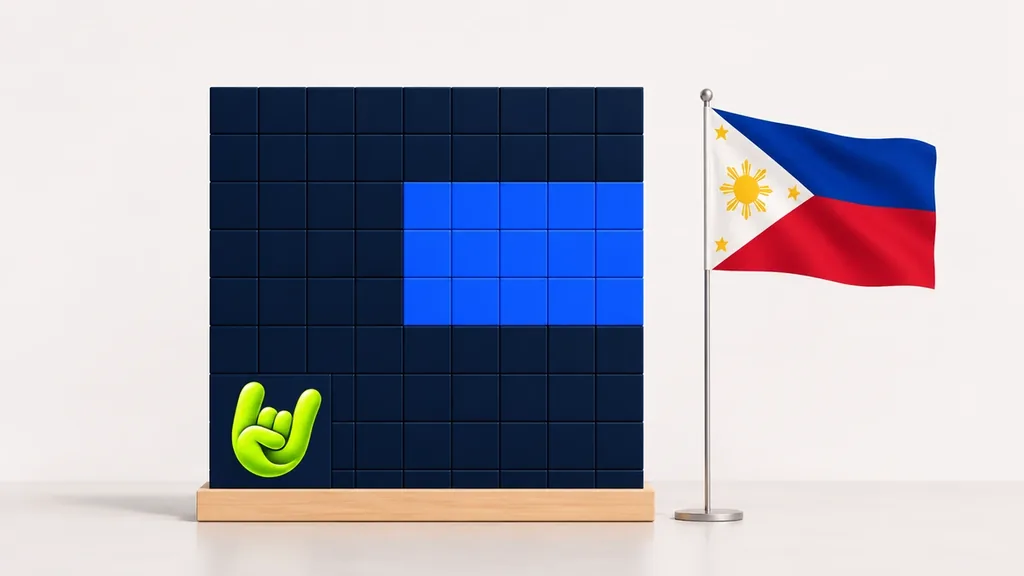
A plain color can be a small contribution to the platform without turning it into a portfolio display. Choose a shade you like, add a title and leave the promotional link optional. If that approach suits you, consider the EXNO Pixel Wall. Its 1,000 × 1,000 grid costs $1 per pixel, with an image or color available for a chosen area. EXNO reviews submissions and fully refunds declined ones. Contributions support platform development. The illustration below is a concept; a placement makes no promise of traffic, sales or search benefits.
Questions about these Philippine digital-product ideas
These questions clarify what the proposed files would teach or enable. Use the answers to keep the product description close to the work you can demonstrate, especially where an illustration or model could otherwise suggest more than it contains.
What would the buyer receive in a parol animation product?
An original editable light sequence, a clearly defined loop and the export examples stated in the listing. The digital product helps the buyer adjust or use an animation. It does not supply a physical lantern or instructions for electrical construction.
Can the rice-image exercises certify grain quality?
No. Their purpose is to teach image annotation using your own photographs and explained labels. Marking which pixels belong to a grain does not certify its grade, safety, variety or commercial value.
How is a komiks lettering exercise different from a complete comic?
It concentrates on placing and shaping dialogue within original practice panels. A learner compares reading order, balloon tails and spacing. State whether the files are for practice only or include permission to reuse particular original elements.
Will the Butuan boat study resolve missing historical details?
No. It can make documented construction ideas easier to see while identifying simplifications and illustrative choices. Keep uncertain details labeled. The proposed learning model is not a verified archaeological reconstruction or a plan for building a vessel.
Must translated subtitles use the same number of words?
Preserve the intended meaning and fit the actual spoken passage. The wording and line breaks may differ between English, Tagalog and Cebuano. Check each version while watching the clip, then compare the meaning with the source dialogue.
Can a stylized volcanic heightmap guide a real trip?
No. The proposed file is an original creative asset for shaping a scene or studying relief. It is not a survey, route map or statement about current conditions. Describe its artistic scale and editing controls in the product listing.
Sources for the Philippine subjects and planning references
The references below support the cultural, scientific and creative contexts and the annual observances mentioned in this guide. The proposed products, possible buyers, preparation suggestions and PHP prices are EXNO editorial work. The sources do not establish demand or endorse these offers. Sources checked .
- Philippine Information Agency — In PH’s Christmas Capital, Giant Lanterns illuminate century-old tradition. Light sequencing in San Fernando’s giant-lantern tradition.
- National Museum of the Philippines — Gallery 9 – Mangroves, Beaches, and Intertidal Zone. The mangrove, beach and intertidal displays in Gallery 9.
- Department of Agriculture, Philippines — BPI buys analyzer to strengthen rice quality enforcement. Grain size and length-to-width ratio in rice analysis.
- National Commission for Culture and the Arts, via Philippine Information Agency — NCCA celebrates ingenuity and advocates inclusivity for NAM 2024. Comics in NCCA’s 2024 visual-arts program.
- University of the Philippines Diliman, Department of Linguistics — Michael Manahan on audiovisual translation. Subtitle timing, readability and retained meaning.
- National Museum of the Philippines — Curator’s Talk: The Butuan Boats. Plank-built, edge-pegged Butuan boats.
- National Museum of the Philippines — Manlilikha ng Bayan Salinta Monon. Inabal as ikat-dyed woven abaca cloth.
- National Museum of the Philippines — Birth Anniversary of Manlilikha ng Bayan Uwang Ahadas. The gabbang and its lisag beater.
- National Museum of the Philippines — Mobile Museum Boxes, Second Edition. Shell forms, including capiz; printed pages 31–34.
- Design Center of the Philippines — About Design Center of the Philippines. Product and packaging design in the agency’s work.
- National Museum of the Philippines — Geology of the Philippines. Volcanic materials and relief-map displays.
- University of the Philippines Press — The Pabalat (Wrapper) Designs of San Miguel de Mayumo’s Pastillas de Leche. The pabalat wrapper tradition in San Miguel, Bulacan.
- Quezon City Government — National Arts Month. February’s annual observance, not a 2027 program announcement.
- UNESCO — World Oceans Day. The annual June 8 observance, not a confirmed 2027 activity.
EXNO's linked guides, current pricing, country information and Pixel Wall page were also checked. Commission deductions are calculations using the stated 7% rate.
Image sources and creation
All three illustrations were created on November 25, 2026 with ChatGPT's built-in image generation and the EXNO logo references supplied by the brand. Each contains one EXNO logo variant and the Philippine flag. Each was converted to WebP immediately after generation and embedded in all three language editions.
- Hero: An imagined coastal studio with a parol and boat study; one EXNO wordmark.
- Sharing image: Original comic, shell and cut-paper motifs; one EXNO hand logo.
- Pixel Wall: A conceptual blue contribution block on a navy mosaic; one EXNO hand logo.
No image from the cited institutions is reproduced. These illustrations are not evidence of product testing, scientific measurement, historical reconstruction or an actual Pixel Wall purchase.
Product ideas and example prices are illustrations, not earnings estimates.


Build the example you can explain well
Choose one task, make the original files work together and show a prospective buyer what they can do with them.
More countries: Asia-Pacific
All countries Australia12 product ideas
 Bangladesh12 product ideas
 China12 product ideas
 Hong Kong12 product ideas
 India12 product ideas
 Indonesia12 product ideas
 Japan12 product ideas
 Malaysia12 product ideas
 Nepal12 product ideas
 Pakistan12 product ideas
 Singapore12 product ideas
 South Korea12 product ideas
 Sri Lanka12 product ideas
 Taiwan12 product ideas
 Thailand12 product ideas
 Vietnam12 product ideas