Gumroad



 Polar
 Kelviq
 Stan


EXNO creator fieldnotes Jordan · 2026
Digital products you can teach, build or deliver from Jordan
By EXNO Editorial · Reviewed
Digital products to sell in Jordan can begin with a practical lesson in mosaic work, a carefully tested cooking class, or a clearly scoped bilingual service. The twelve proposals below show a possible buyer, an exact delivery and a useful preview, with illustrative JOD prices and 7% commission calculations.
At a glance
A small product is easier to judge when it ends with a visible result: a corrected mosaic curve, a readable stair section, a working import or an explained formula.
Choose a result before choosing a file format
- Local teaching
- Eight proposals rooted in specific craft, food, architecture or landscape contexts.
- Practical services
- Four localized offers for bilingual content, CSV preparation, mesh repair and formula debugging.
- Language choice
- Demonstrate the same task clearly in Arabic, English or a complete edition of each.
- A useful first preview
- One decision explained with a before-and-after example, not only a finished cover.
- Price example
- JOD 9.000 − JOD 0.630 in 7% commission = JOD 8.370 after that commission.
- Planning horizon
- 2026 dates are historical; the 2027 table separates fixed dates from lunar-calendar estimates.
All prices are editorial illustrations, not market averages or income forecasts. Commission-only remainders exclude any other applicable charges and taxes.
Twelve digital offers with a clear result
Choose a product whose learning result you can demonstrate and whose files you can finish: the first eight ideas below use specific Jordanian contexts, while the final four address practical bilingual or technical work. Each proposal names what a buyer receives, what a preview should prove and where the scope ends.
1Madaba mosaic curves: place the pieces, then fix the gap
UNESCO describes mosaic conservation and production teaching at the Madaba Institute for Mosaic Art and Restoration.[2] Turn your own practical skill into a workshop on arranging tesserae—the small pieces in a mosaic—around one curve. The learning result is a readable curve with a deliberate joint pattern, including a correction when a gap becomes awkward.
- Who could buy it
- A beginning mosaic maker, a workshop participant continuing at home, or a teacher seeking one manageable making exercise.
- What you deliver
- Three close-up video lessons, an original small practice pattern, a PDF showing piece direction and size, and a completed layout with annotations. Include the unsuccessful arrangement before the correction.
- What to show first
- A short overhead sequence in which you rotate and replace three pieces around a tight bend. Label the change so the viewer can see what the lesson will explain.
- Keep the promise clear
- Name the materials and tools used in your demonstration. The download teaches your practice design; it does not supply physical tiles or confer an institute qualification.
Illustrative price: JOD 12.000 · 7% EXNO commission: JOD 0.840 · JOD 11.160 after that commission.
Organize the exercise and its answer material with the lesson-plan selling guide.
2Petra spaces: understand what is carved and what is built
Petra combines architecture cut into rock with built structures.[3] Use an original conceptual cutaway to teach learners how to distinguish retained rock, an excavated interior and an added element. Let the viewer hide each part and explain what remains; that is a more precise promise than a general introduction to an entire archaeological site.
- Who could buy it
- An architecture beginner, a visual arts educator, or a 3D learner who finds flat façade photographs difficult to interpret.
- What you deliver
- An editable BLEND file, a GLB viewing model, three labeled views, a 15-minute walkthrough and a learner sheet with answers. State the software versions in which you tested the files.
- What to show first
- Reveal the solid rock around a simple room, then isolate one invented built addition. Show the same view in the model and the learner sheet.
- Keep the promise clear
- Label it a conceptual teaching model inspired by the distinction. Do not present invented dimensions or rooms as a measured reconstruction of a Petra monument.
Illustrative price: JOD 18.000 · 7% EXNO commission: JOD 1.260 · JOD 16.740 after that commission.
For file organization and licensing, use the 3D-model and game-asset guide.
3As-Salt stair reading: connect a plan to its section
As-Salt’s steep urban setting includes connected stairs, alleys, streets and public spaces.[4] Build a drawing lesson around a fictional hillside scene: a stair rises past a landing to an entrance, and the learner must find the same level changes in plan and section. The finished exercise should make a previously confusing drawing legible.
- Who could buy it
- A first-year design student, a drawing tutor, or an architecture enthusiast learning to read levels.
- What you deliver
- Original PDF and SVG plan-and-section drawings, one narrated lesson, six short matching exercises and answer overlays. Use consistent level labels across every view.
- What to show first
- Cover the section labels, highlight a landing on the plan, then reveal where it appears in section and why. Show one incorrect match and its correction.
- Keep the promise clear
- This is a drawing exercise, not an accessibility assessment or a surveyed route through As-Salt. Keep the fictional scene clearly identified on every sheet.
Illustrative price: JOD 15.000 · 7% EXNO commission: JOD 1.050 · JOD 13.950 after that commission.
4A complete Mansaf class with the jameed stage in view
UNESCO describes Mansaf as a festive dish of meat and yogurt sauce with rice or bulgur and thin bread.[5] A Karak cooking experience also describes breaking and soaking dried jameed, the dried yogurt used in preparation.[6] If you already cook the dish reliably, build a complete class around your tested recipe and the stages a learner needs to recognize.
- Who could buy it
- A home cook learning from abroad, a family member documenting a practiced recipe, or an Arabic–English cooking group.
- What you deliver
- A recipe PDF with your tested quantities and serving options, three videos covering preparation through serving, stage photographs, and an Arabic–English ingredient glossary. Identify the form of jameed you actually used.
- What to show first
- Show the ingredient at the beginning and at the demonstrated preparation stage, with captions explaining the observable change. Keep the full sequence inside the paid class.
- Keep the promise clear
- Publish timings and substitutions only after testing them yourself. Explain ingredient and equipment differences; the cultural sources cited here are not a tested recipe for your class.
Illustrative price: JOD 20.000 · 7% EXNO commission: JOD 1.400 · JOD 18.600 after that commission.
Package the recipe, videos and ingredient notes with the meal-plan and recipe guide.
5Hadab finishing: keep knots and tassels evenly spaced
The Jordan Tourism Board describes hadab as white-thread fringe and tassel work on the Jordanian shemagh.[7] A focused class can teach your own demonstrated finishing sequence: separate the free threads, make the knots, group the tassels and correct an uneven result. Film the hands and thread paths closely enough that a learner can reproduce each move.
- Who could buy it
- A textile learner, a craft tutor, or someone practicing a fringe finish before working on a complete item.
- What you deliver
- Macro video, original numbered knot diagrams, a practice-strip guide and a correction page for uneven spacing. Match the diagram numbers to the corresponding video steps.
- What to show first
- Place an uneven practice strip beside the corrected version, then demonstrate the specific regrouping that changed it. Use your own work for both examples.
- Keep the promise clear
- State the thread and practice setup used. Name the finish you demonstrate without claiming that one sequence represents every maker’s practice.
Illustrative price: JOD 14.000 · 7% EXNO commission: JOD 0.980 · JOD 13.020 after that commission.
6Colored-sand bottles: plan the scene in filling order
Colored-sand bottle decoration is part of the Jerash handicrafts experience described by the tourism board.[7] Teach how a small original scene becomes a bottom-to-top filling sequence, rather than selling only a picture of the finished bottle. The useful skill is deciding which boundary must be formed next so the emerging image stays readable.
- Who could buy it
- A craft learner or workshop leader who can recognize the finished scene but needs help understanding its construction.
- What you deliver
- Three original scene plans, a demonstration video, stage-by-stage cutaway illustrations and an error-correction sheet. Specify the bottle shape and materials used in your examples.
- What to show first
- Pair a finished scene with three intermediate stages. Explain why filling one area earlier would change a visible boundary.
- Keep the promise clear
- Test every plan physically before selling it. A drawing that looks convincing on a screen is not evidence that the same sequence will work in a bottle.
Illustrative price: JOD 11.000 · 7% EXNO commission: JOD 0.770 · JOD 10.230 after that commission.
7Wadi Rum form study: sculpt a silhouette and its cavities
Wadi Rum’s sandstone landscapes include arches, cliffs and honeycomb weathering features.[8] Use your own or licensed reference photographs to teach an artistic sculpting study, moving from a broad silhouette to cavity size and edge variation. The buyer should finish a coherent form and explain which edits made it readable under different lighting.
- Who could buy it
- A 3D learner interested in environment art, or an art teacher comparing observation with digital form-making.
- What you deliver
- A complete narrated tutorial, an original editable BLEND study and GLB export, reference notes, and two lighting views. Include intermediate saves so learners can revisit a decision.
- What to show first
- Rotate the broad form before adding details, then compare a few purposeful cavities with an overworked version. Show the same lighting angle for a fair comparison.
- Keep the promise clear
- Present an artistic study, not a simulation of geological processes or a scientifically measured site model. Explain image permissions and which reference files buyers may reuse.
Illustrative price: JOD 22.000 · 7% EXNO commission: JOD 1.540 · JOD 20.460 after that commission.
8Ghor al-Safi color work: compare a tested dye sequence
Safi Crafts in Ghor al-Safi offers natural-dye and color-combination work on textiles.[13] A creator with practical dyeing experience can develop an original workshop comparing tested sequences on a stated cloth. Photograph and label the swatches so the learner can connect each visible result to the materials and order actually demonstrated.
- Who could buy it
- A textile practitioner, a craft educator, or a maker planning a small color study before a finished piece.
- What you deliver
- Demonstration videos, a photographed swatch atlas, material and process records, and one finished project using your tested approach. Include a blank record sheet for the learner’s own trials.
- What to show first
- Show two labeled swatches and explain the single sequence change being compared. Use consistent light so photography does not become the apparent lesson.
- Keep the promise clear
- Supply your own tested instructions and suitable material-handling guidance. Do not copy Safi Crafts’ recipes, imply affiliation, or promise identical colors on every fabric.
Illustrative price: JOD 19.000 · 7% EXNO commission: JOD 1.330 · JOD 17.670 after that commission.
9Arabic–English image descriptions written for the actual page
Some images explain a step; others merely decorate a page. Offer a bounded writing service that assesses 20 client-owned images in their actual reading context, then prepares concise Arabic and English descriptions. The deliverable is a usable decision for each image, including cases where decorative treatment or a longer diagram explanation is more appropriate.
- Who could buy it
- A bilingual course creator, a small museum education team, or an independent shop preparing a visual lesson.
- What you deliver
- A table matching image IDs to page purpose, proposed alternative text in both languages, decorative-image decisions and any need for a separate long description. Include one revision after the client confirms context.
- What to show first
- Use a synthetic lesson page to compare a file-name description with text that explains what the image contributes. Show the reason for the change in both languages.
- Keep the promise clear
- Request the surrounding page text and intended audience. This is content work within the agreed set, not a website-wide accessibility audit or certification.
Illustrative price: JOD 35.000 · 7% EXNO commission: JOD 2.450 · JOD 32.550 after that commission.
10An offline tool for preparing bilingual CSV imports
Build a small browser utility for people moving Arabic and English records into another system. Let the user select the declared encoding and delimiter, inspect a preview, preserve identifiers as text and export a UTF-8 CSV. The useful result is a checked file for a named import workflow, with the original left intact.
- Who could buy it
- A training administrator, a small shop operator, or a freelancer cleaning a bilingual contact or inventory file.
- What you deliver
- A local HTML/JavaScript utility, readable source, Arabic and English instructions, synthetic sample CSVs and a stated browser/importer compatibility scope. Include examples with quoted commas and identifiers that begin with zero.
- What to show first
- Demonstrate one synthetic row containing Arabic text, a quoted comma and a leading-zero identifier. Compare the preview with the exported file opened through the documented importer.
- Keep the promise clear
- Test the declared scope; do not promise automatic detection of every encoding or compatibility with every spreadsheet. This would be your own product, not a built-in EXNO tool.
Illustrative price: JOD 9.000 · 7% EXNO commission: JOD 0.630 · JOD 8.370 after that commission.
Describe supported environments and included source using the code and plugin selling guide.
11One-model mesh repair with an agreed defect list
Offer a technical repair service for a client-owned 3D mesh, limited to defects agreed before work begins. Examples include duplicate faces, unintended openings and problematic edge connections. A successful delivery fixes those listed problems while preserving the approved outline and demonstrates that the corrected model imports into the specified application.
- Who could buy it
- An independent illustrator, a course author, or a small 3D team with one troublesome model and a clear target application.
- What you deliver
- A corrected BLEND file and GLB export, a before-and-after issue map in Arabic or English, import evidence and one revision against the agreed defect list. Record the target application and version.
- What to show first
- Create a deliberately faulty sample model, mark one opening and show the repaired connection from the same viewpoint. Pair the image with the exact repair scope.
- Keep the promise clear
- Inspect the file before accepting the job. Exclude UV work, texturing, wholesale retopology and manufacturing or 3D-print suitability unless separately assessed and agreed.
Illustrative price: JOD 45.000 · 7% EXNO commission: JOD 3.150 · JOD 41.850 after that commission.
12A recorded session that traces one spreadsheet formula error
Sell a focused debugging consultation in Arabic or English: reproduce one agreed formula problem, trace its inputs, make a correction and rerun a known-input test. The buyer receives the explanation as well as the corrected copy, so the same mistake becomes easier to recognize the next time it occurs.
- Who could buy it
- A coordinator, a tutor managing course records, or a freelancer maintaining a workbook they understand only in part.
- What you deliver
- A 45-minute recorded session, a corrected workbook copy, a short change log and a small test case. Confirm the spreadsheet application, version and recording arrangement before booking.
- What to show first
- Use a made-up attendance workbook to follow one incorrect formula result back to its cause. Show the expected output and the successful test after correction.
- Keep the promise clear
- Work with dummy or redacted data wherever possible and agree the file-handling arrangements. The offer covers technical instruction, not accounting, tax or investment advice.
Illustrative price: JOD 40.000 · 7% EXNO commission: JOD 2.800 · JOD 37.200 after that commission.
Set the session boundaries and revision terms with the coaching and services guide.
These are product designs to validate through your own skills and prospective buyers. Their cultural references establish context; they do not establish demand or authorize reuse of another creator’s work.
Let local knowledge carry the explanation
Begin with a step you can explain from practice, then choose the smallest complete lesson around it. For the Jordan proposals, that means making the hidden decision visible: where a mosaic piece turns, how a stair reaches a landing, or why a particular sand layer must precede the next one.
Use this test before making a large bundle: can a learner identify the starting material, follow the operation and recognize a satisfactory result? If the answer depends on knowledge you have not explained, add a close-up, a labeled drawing or a worked correction. More pages will not resolve a missing step.
| Your existing strength | A complete first edition | Check before offering it |
|---|---|---|
| You make mosaics | One original curve exercise, a demonstration and a corrected layout. | A learner can explain which piece was changed and why. |
| You read architectural drawings | One fictional hillside scene with matched plan, section and answers. | All landing and entrance levels agree across the drawings. |
| You teach textile processes | One tested comparison, clearly labeled swatches and a process record. | The recorded cloth and sequence match the photographed samples. |
| You diagnose technical faults | One bounded repair or debugging appointment with a reproducible test. | The result works in the application version named in the offer. |
“If the buyer cannot see the decision your lesson teaches, the preview is still asking them to guess.”
Make the lesson useful beyond Jordan
Help an unfamiliar buyer perform the task by explaining the materials, labels and file behavior that a local learner might already recognize. Keep the local subject intact, but make the instructions self-sufficient: an overseas mosaic learner needs to understand your piece-size choices, while a bilingual administrator needs an unambiguous import example.
Arabic is Jordan’s official language, and English is widely spoken, particularly in cities.[1] That is a reason to consider two usable editions, not to assume every buyer wants both. State the language of narration, subtitles, worksheets and support separately. A translated title does not make an untranslated video a bilingual course.
Explain jameed when it first appears, show the thread setup before a hadab knot, and provide a small diagram key before the As-Salt exercise. Translate those explanations naturally. Preserve filenames and numbered steps across editions so a learner can find the corresponding item without guessing whether a label refers to a different file.
For an overseas class, specify whether the purchase covers one learner or a defined teaching group. For a local appointment, state the working language and the information needed before the session. Neither audience should have to infer whether editable source files, recordings or feedback are included.
If you consider different regional price levels, the purchasing-power-parity guide can help you think through the choice. Keep the learning result and license explicit; do not turn a currency conversion into an unsupported claim about what an entire country can afford.
Plan around Jordan’s dates, then the buyer’s project
Use the calendar to schedule preparation and explain delivery availability, while letting the actual lesson determine whether a seasonal connection makes sense. A Mansaf class can be prepared ahead of a gathering, but a CSV utility or mesh repair should be promoted when the buyer has that problem, without an invented holiday connection.
As of this review, the relevant 2026 dates have passed: Ramadan began on February 19, 2026,[9] Eid al-Fitr on March 20, 2026,[10] and Eid al-Adha on May 27, 2026.[11] Independence Day fell on its fixed date, May 25, 2026.[1]
| Date | Occasion and status | A practical preparation choice |
|---|---|---|
| Ramadan begins — expected, not confirmed.[12] | Finish and test a cooking-class sample before scheduling a relevant preview; check your own support availability. | |
| Eid al-Fitr — expected, not confirmed.[12] | If demonstrating a finished textile project, leave buyers enough practice time instead of promising an instant result. | |
| Eid al-Adha — expected, not confirmed.[12] | Use a creator-tested Mansaf preview only if the full class and ingredient explanations are ready. | |
| Independence Day — fixed annual date.[1] | Choose an educational mosaic or architecture demonstration that you can explain accurately and with suitable image rights. |
Confirm the three lunar dates against Jordan’s official announcements before posting date-specific copy. The preparation choices above are editorial suggestions, not evidence of a seasonal sales increase. Do not infer school breaks, business closures or a multi-day holiday entitlement from a single date.
Set a price for what you actually deliver
Price the finished instruction, usable files and promised support together, then compare that scope with the time it takes you to deliver it consistently. A recorded exercise can serve another learner without another appointment, while a mesh repair or formula session reserves your attention for a particular file and agreed problem.
The Jordanian dinar is divided into 1,000 fils,[1] so these examples keep three decimal places. The displayed deductions use EXNO’s current 7% commission for direct and Discover sales; review the pricing page for current terms. The remainder after commission is not a promised payout or profit, and it excludes other applicable charges and taxes.
For a mosaic class, define the pattern, demonstrations and answer material before choosing a number. For a repair, inspect a sample or the actual file and agree the defect list before quoting. A larger fee is easier to evaluate when the additional work is visible: another reviewed model, a second exercise or a defined feedback round.
Use the digital-product pricing guide to compare scope and effort. If you want one lesson to remain accessible at a stated minimum, pay what you want is an option to examine; describe the same included files clearly at that minimum.
When offering an introductory reduction, state the eligible product, end date and included rights. The discount-code guide explains the feature. A reduction should not quietly remove the answer sheet or revision that made the original offer understandable.
Show the part a buyer cannot judge from a cover
Build your first promotion around a decision the buyer wants help making, rather than relying on a polished final image. For these offers, a useful preview reveals the corrected mosaic gap, the matched stair landing, the sand layer sequence or the exact formula test, and states what the complete purchase adds.
For a short social video, keep the camera or screen view steady while one change happens. Add captions in the language of that edition. A hadab demonstration needs visible thread paths; an As-Salt drawing explanation needs legible level labels. A fast montage can obscure both.
For a longer teaching video, work through one small example from start to finish and use the description to name the full product’s files and limits. In a relevant craft or design community, follow its posting rules and answer the specific learning question your sample addresses. These are channel choices to test, not claims that a platform guarantees buyers.
A service preview should also show the handoff. Present the mesh issue map beside the corrected import, or the original synthetic formula beside the test that proves the repair. Prospective clients can then judge both the outcome and the information they must supply.
Put one finished offer on EXNO
Prepare the product so a first buyer can understand the promise, open the delivery and know what happens next without a private explanation. For a Jordan teaching product, that includes the demonstrated materials and language; for a service, it includes the required client file, agreed scope, timing and revision boundary.
- Write the result and boundary. Describe the exact curve exercise, stair-reading task or repair you will deliver. Name the buyer’s starting knowledge and what the offer does not cover.
- Open the complete delivery yourself. Check the PDFs, videos and editable files in the environments you list. Put a short “start here” note at the beginning and make the file names match the product description.
- Prepare the product page and example. Add the language, included files, license, support scope and price. For an appointment, explain how the client supplies the agreed inputs and how the session will be arranged.
- Share a link with enough explanation. Use the payment-link guide when the offer is ready. Send the buyer to a clearly described purchase after showing the relevant sample; keep the same scope in the post, page and delivery.
After the first completed delivery, ask which instruction or handoff was unclear. Correct that point in the files and description before expanding the product. For services, record whether the agreed test passed and whether the revision request remained within the original problem.
Prevent the misunderstandings that cost you revisions
Remove ambiguity where a buyer could reasonably mistake an illustration for a verified reconstruction, a recipe outline for a tested class or a repair promise for unlimited work. The most useful fixes are specific: label invented geometry, document the material actually used, and agree the condition that will count as a completed service.
- Giving a Petra teaching model false precision. Invented dimensions can look authoritative once placed on a diagram. Mark the model as conceptual, explain its teaching purpose and keep that label with every exported view.
- Skipping the demonstrated jameed stage. An ingredient name and a finished plate leave the learner to guess the transition. Show your tested preparation with the exact form of the ingredient used, then explain any substitution you have actually tested.
- Providing a sand scene without a construction order. A beautiful plan can hide an impossible or unexplained sequence. Verify the physical build and include the intermediate stages that make the boundaries understandable.
- Accepting “fix my model” as the whole brief. An opening repair can turn into requests for a new shape or texture. List the defects, target application and acceptance test before the work starts.
- Reusing a neighboring country’s lunar dates. Use the Jordan planning table as provisional guidance, then replace estimates with the relevant official announcement when available. Review dated promotional copy at that point.
A small place for a finished Jordan project
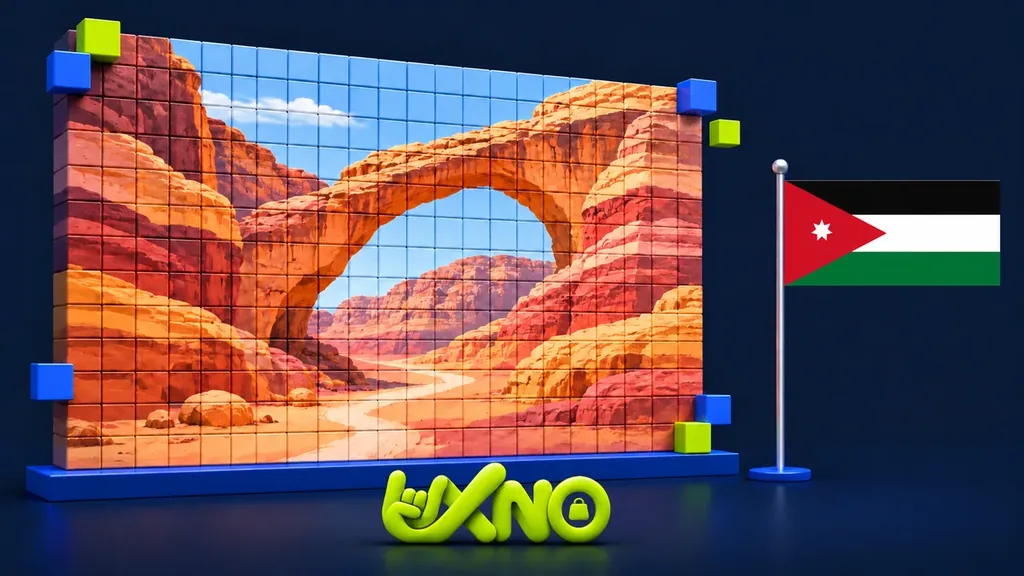
Give a completed lesson a visual marker on the EXNO Pixel Wall: one 1000×1000 wall of a million pixels, $1 per pixel, with rectangles starting at one pixel and a one-time payment. Submit an image or color, a title and an optional link. EXNO reviews submissions and fully refunds rejected ones. Accepted placements remain permanently, subject to law and platform rules. Sellers can pay from earnings; others use a card. EXNO pins the wall on its social accounts; purchases support its growth and better service for sellers, without a promise of traffic or sales.
Questions before you build the first edition
Start by resolving the part of the offer that changes the learner’s result or the client’s expectations.
Does a Madaba or As-Salt lesson need to be a full course?
No. A curve exercise with a demonstrated correction, or a stair-reading task with matched drawings and answers, can be a complete first edition. Define the starting knowledge and the result so the buyer can judge whether that limited lesson is useful.
Can I use a historic mosaic photograph as the product’s practice pattern?
Build your own practice pattern and use images you created or have suitable permission to use. A source citation explains where a factual statement came from; it does not grant permission to reproduce a photograph or someone else’s design. If a reference image is essential, establish the permitted use before including it in the download.
What should a Mansaf buyer know about the jameed used?
Identify the exact form used in your tested class and show the relevant stages in your own photographs. If another form behaves differently in your trials, document that tested variation rather than implying it follows the same sequence. This lets the learner compare their starting ingredient with the demonstrated one.
How do I keep Arabic and English editions equivalent?
Compare the operation, file set, answer material and support promise in both editions. Keep the same exercise identifiers, while adapting explanations and terminology naturally for each reader. Ask someone to follow each edition on its own; equivalent headings are not enough if a step disappears in translation.
Are the 2027 Ramadan and Eid dates ready for fixed promotional copy?
They are planning estimates, not confirmed dates. Leave room to revise scheduled copy and check Jordan’s official announcement before making a date-specific promise. Keep your actual delivery and support availability explicit even while the calendar date is provisional.
What should a client send before a mesh or formula appointment?
Request the relevant file, the application and version, the observed problem and the result they expect. For a workbook, a small redacted example with a known expected answer can make the fault easier to reproduce. Confirm that the requested outcome fits the listed service before accepting it.
Sources and factual boundaries
These references support local context and calendar facts. The proposed packages, audiences, previews and prices are editorial suggestions; no source is presented as evidence of product demand.
- Jordan Tourism Board — Just the Facts. Language, currency subdivision and the fixed Independence Day date. Checked .
- UNESCO — Madaba — UNESCO Creative Cities. The city’s mosaic teaching context; no sales or demand figures used. Checked .
- UNESCO World Heritage Centre — Petra. The distinction between built and rock-cut architecture. Checked .
- UNESCO World Heritage Centre — As-Salt — The Place of Tolerance and Urban Hospitality. The hillside setting and interconnected urban stair network. Checked .
- UNESCO Multimedia Archives — Al-Mansaf: A Festive Banquet and Its Social and Cultural Meanings. Mansaf’s cultural and food context; the archive description was read. Checked .
- Jordan Inbound Tour Operators Association (JITOA) — Jameed making, Mansaf preparing and eating experience. The described jameed preparation stage in a Karak experience. Checked .
- Jordan Tourism Board — Jerash Association for Handicrafts. The local context for hadab and colored-sand bottle work. Checked .
- UNESCO World Heritage Centre — Wadi Rum Protected Area. Sandstone landforms and surface features, without a simplified causal claim. Checked .
- Jordan News Agency (Petra) — Jordan announces Thursday as the first day of Ramadan. The official report establishing Jordan’s observed Ramadan start in 2026. Checked .
- Jordan News Agency (Petra) — Grand Mufti: Friday is the first day of Eid al-Fitr. The official report establishing Jordan’s observed Eid al-Fitr date in 2026. Checked .
- Jordan News Agency (Petra) — Amman report on the first day of Eid al-Adha. A dated first-day report establishing the observed Eid al-Adha date in 2026. Checked .
- timeanddate.com — Holidays and Observances in Jordan in 2027. Provisional 2027 lunar-calendar dates, clearly distinguished from confirmation. Checked .
- Travel Jordanian — Safi Crafts. The Ghor al-Safi textile workshop context; no recipe or affiliation claim. Checked .
Product ideas and example prices are illustrations, not earnings estimates.


Make one result easy to understand
Choose the exercise or service you can demonstrate confidently, finish its delivery, and let the preview show the decision it helps a buyer make.